
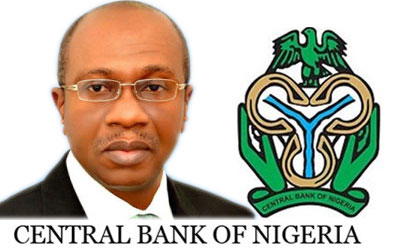
CBN Governor, Mr Godwin Emefiele
By Providence Obuh
The N220 billion Micro, Small and Medium Enterprises Development Fund (MSMEDF) also known as intervention fund is cumbered with so many issues and challenges that need to be addressed by the regulatory authorities.
Intervention fund

CBN Governor, Mr Godwin Emefiele
The fund is designed by the Central Bank of Nigeria (CBN) to support entrepreneurs and was launched by President Goodluck Jonathan, in 2014 as part of effort to address the N9.6 trillion financing gap identified in a joint report by the International Finance Corporation and McKinsey and unlock the potential of the MSMEs as an innovative way of improving access to finance, shoring up potentials for job creation, and enable poverty reduction within the country.
The guidelines for disbursement is 80:20 ratio for on-lending to micro enterprises, 60 percent is reserved for enterprises owned by women; two percent for persons living with disability and 10 percent for start-up businesses.
Criteria reviewed
Due to low access of the fund by operators of the sector, the Central Bank of Nigeria (CBN) decided to review the criteria for accessing the funds. The move is aimed at stimulating disbursement of the funds to targeted operators in the MSME sector of the economy so that by the end of this year, half of the fund would have been disbursed to target operators.
However, the apex bank expressed worry that since the fund was launched on August 19, 2014 only N40.3 billion has been disbursed to operators who have been discouraged by stringent conditions attached to accessing the funds.
At a seminar organised by Nigeria Deposit Insurance Corporation (NDIC) for Finance Correspondents Association of Nigeria (FICAN), Acting Director, Development Finance Department, CBN, Dr. Mudashir Olaitan, disclosed that nonchalant attitude of these PFIs to lend could be traced to 75 percent collateral requirement. “To get N10, you must have N7.5.”
Another challenge
Olaitan maintained that most of the MfBs have about 70 per cent Portfolio-At-Risk (PAR) with negative Shareholders’ Fund making them ineligible to access the fund. According to him, “the challenges in the micro finance industry have limited the ability of most microfinance banks to get fund from this funding vehicle. Most of them have 70 per cent PAR and negative shareholders funds.
It is worthy of note to state that financially sick MfBs cannot access this fund.” He hinted that the apex bank would not take physical assets as collateral to access the fund but would accept 50 per cent financial assets, which most MfBs and some participating institutions were unable to produce. To this end, he said that the idea was to safeguard the fund in a way that it would be paid as and when due without any delay.
Beneficiaries
Governor of the Central Bank of Nigeria (CBN) Mr. Godwin Emefiele pointed out that while the micro-loans would be administered through private or state-owned microfinance institutions, finance houses and cooperative finance agencies, the SME loans will be disbursed through the DMBs. Also that the State governments will be able to access up to N2 billion each for lending to eligible beneficiaries through participating financial institutions in their states.
National Collateral Registry
“We are collaborating with the CBN to establish the National Collateral Registry which will be launched by June,” said Project Manager, International Finance Corporation (IFC) Mr. Ubong Awah. He said that the collateral registry will provide part of the infrastructure for pushing the initiative ahead. “It needs some level of capacity that we are bringing to the table because we are involved in many projects on this.
We are collaborating with government to do this. So we are bringing expertise and experiences we have over the years and all over the world to make it available to credit offices with the understanding that they will be knowledgeable in this; better equipped and enabled to better drive the process,” he said.
Disclaimer
Comments expressed here do not reflect the opinions of Vanguard newspapers or any employee thereof.