
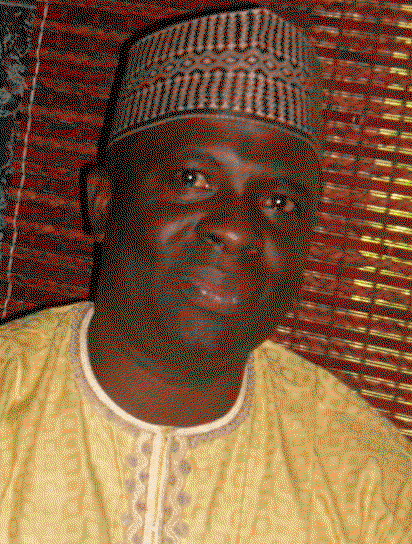
Mr. Sonji Adeniyi, UNICEF M&E.
By Chioma Obinna
How we have fared in terms of Emergency response

Mr. Sonji Adeniyi, UNICEF M&E.
We still have a long way to go. We are much better as we have been in the last 10 years. Since the flood in 2012, a lot more preparedness has taken place. National Emergency Agency has become stronger. They now have Zonal offices even at state levels where the risk is high.
We have identified successfully with them high- risk states. They have positioned themselves closer to the people in those states. As we are speaking now, flood awareness campaign is going on in the flood risk states.
So you can expect that even if we have the kind of challenges we had in 2012, we are unlikely to lose as many lives or as many properties as we lost in 2012 due to improved preparedness.
Infrastructure
There is need to make available Infrastructure that manages emergency with or without emergency. Spend more time in preparedness, set up those state Emergency Management Agencies and use them as an agent of communication before the crisis. The Agencies should be able to enlighten people on the risk in the environment. For instance, to avoid flood, you need to clear the drainages, expand water channels, and remove structures that are obstructing water flow.
They can be busy doing all of these, preparing the schools, the hospitals and everybody ahead of the crisis and then when the crisis comes, they know the stakeholders that they worked with and they can immediately work better in the response. But if they did not have that mechanism for preparedness, structure that is addressing the challenges of monitoring and implementing things that they have planned, then it will be almost impossible to achieve them when the crisis starts.
Challenges in the IDP Camps
As more and more camps are opening the response is getting better. And more support is coming from faith-based organisations, Civil Society organisations, and other international and national NGOs that are providing support in the camps that we have at the moment.
I would not say that the challenges are enormous but I will say that the standards are a challenge. Because globally there is a standard we need to follow because there is an amount of water per person per day, amount of food per day, sanitation per day for the period that they are there, those services are not being followed to the latter now but responses is going on.
Government response in the camps
Presently, humanitarian response has been fantastic. Everyone in the world that has been there must have seen a National Emergency Management Agency that has taken full responsibility. They may not have gotten it right n terms of the actual standard that supposed to be followed.
There is also what is called National pride in doing things the Nigerian way, so it s not necessary that we adhere too strictly to the guidelines that we may not have the cost to handle. For instance, if international standard say 50 people should use a latrine facility and we have 70 to 80 people using the latrine facility, it does not mean that we are completely out of process, it simply means that we can only construct 50 latrines in 8,000 displaced camps.
It does not mean that we are not aware of that standard but that is what our money can cover at that particular period. I would say we have done extremely well. You could score them 70 percent. If they had more technical support, resources, and more time to prepare may be they would have done better than that.
Disclaimer
Comments expressed here do not reflect the opinions of Vanguard newspapers or any employee thereof.