
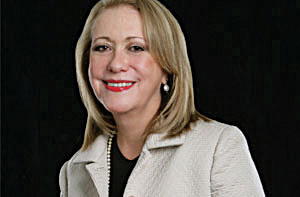
Ms. Vicky Colbert
By Ebele Orakpo
My vision is to see Escuela Nueva empower all children to become contributing members of their communities through quality education that promotes citizenship skills and democratic behaviours – Vicky Colbert
It is often said that the change you desire begins with you. If you need to change the world, start with the man in the mirror. We all have something the Creator deposited in us to deliver to the world and leave it better than we met it. This was not lost on Ms. Vicky Colbert who, against all odds, developed a model of education that has today transformed millions of lives around the world.
Ms. Colbert is the co-creator of the Escuela Nueva (New School) model, an educational model that combines flexible, modular curriculum with socialization and citizenship activities; working with children, teachers, families, and education administrators to improve the quality of basic education. Colbert who has won various awards, including WISE prize for Education and the first Clinton Global Citizenship Award, was the speaker at the American University of Nigeria’s 7th Commencement.
Excerpts:
Why Escuela Nueva?
Ms. Colbert sees the plight of children who are denied quality education due to no fault of theirs as injustice and inequity, and so, she went to work in the education sector to correct this injustice. The Sociology graduate whose main interest was to reduce inequalities and drive social change, taught Sociology of Education for some time in Colombia during which she came to the conclusion that quality basic education was crucial.

Ms. Vicky Colbert
As a teacher in Colombia, she realized the huge gap between what teachers learned in colleges of education and the reality of remote schools and wondered how they could teach what they do not know. “Everybody had the rhetoric but not the concrete instruments to make it really happen,” she said.
Having noted that the rote learning methods failed because they hindered pupils’ development of their curiosity and love of learning instead of engaging them, she got together with Beryl Levinger and Óscar Mogollónis in the mid 1970’s to develop the Escuela Nueva model, an educational model designed to improve the quality, relevance and effectiveness of Colombian schools.
This child-centered, collaborative learning approach improves academic achievements and fosters democratic behaviours, tolerance, citizenship and entrepreneurial skills becauase “it is a flexible educational model tailored to meet the needs of each individual child, allowing students to complete units and advance to higher grade levels at their own pace.”
As a graduate student at Stanford University, she understood how changes in the way students interact and solve problems in the classroom, could have an impact on society, especially in nurturing citizenship skills, attitudes and peaceful behaviours. “This is because of the intimate relationship between pedagogy and citizenship building. I realised that cultivating the soft skills of human capital is essential to produce engaged, responsible citizens,” she said, so on returning to Colombia, she continued to work with the poorest isolated rural schools.
“Most of them were multi-grade schools, where one or two teachers have to handle all the grades and these schools were invisible to educational planners, teachers colleges and funders despite the fact that they were 60% of the rural schools. “So, I decided to make these schools and their teachers visible because education is the core task of development; without quality basic education, no social, economic, peace or development could ever be achieved.”
Working with low income schools:
“I started to work in the poorest and isolated schools where the greatest inequalities exist. These schools exhibited high drop-out and repetition rates, no academic results, low self-esteem of children and low teacher morale, inefficient theoretical, expensive teacher training with no follow up mechanisms, overloaded, urban-biased curriculums, weak school- family-community relationships, conventional, rote memory, teacher-centered methods and teachers in multi-grade schools did not have any specific training to handle several grades simultaneously.
It was like a failed business. Today, the little mustard seed has become a giant tree. It started as a local innovation in Colombia where it has impacted over 20,000 schools and reached over five million learners in 16 countries including Zambia, East Timor and Vietnam through governments and support of international organisations.
For Colbert, learning goes beyond just cognitive achievements; it involves developing and practising civic, social and emotional skills, learning to be, to know, to do, and to live together. “These are the basis for peace and democracy. We need comprehensive and systemic thinking if we want to lead large scale reform.”
How it was made possible: “From the outset, the plan was to make this social innovation technically, politically and financially viable so that it could impact the national policy and reach great numbers. We demonstrated that it worked and started its dissemination in a bottom up, organic manner: from child to child, teacher to teacher, school to school, community to community and town to town. The real actors of change were children, teachers and communities themselves.
Escuela Nueva for IDPs :
As AUN battles with other agencies to feed, clothe and educate some of the displaced children in the North-East, Colbert believes strongly that Escuela Nueva model will help in giving them quality education. “We adapted the Escuela Nueva model for internally displaced children in Colombia through the Learning Circles, a transition from out-of-school to regular schooling.
The Escuela Nueva Learning Circles (ENLC) are learning spaces where groups of around 15 students work together with the aid of a tutor from the community, who facilitates learning and provides personalized attention until they are ready to transition into the formal, official school. The personalized and extra socio- affective support restores and strengthens children’s self-esteem, develops social and life skills as well as a joyful learning experience.
ENLCs operate off-site from mainstream formal schools, but are officially linked to them through shared academic calendars, grading systems and extracurricular activities. “Children are officially enrolled in school, but study in learning circles that can be set up in any communal space. The program does not create a parallel educational system; it is integrated to it and recognized by the Ministry of Education as an effective strategy to accelerate action on getting out- of-school children into school.
They provide marginalized children and youth a chance for inclusion, they accelerate enrollment and retention for out- of-school children, provide quality education through a relevant meaningful curriculum and provide a protective space for vulnerable children and youth at risk.
The evaluation of the program set up by Fundación Escuela Nueva in 2001 showed that in a period of nine months, the Learning Circles program achieved a significant increase in enrollment of out-of-school children, an 18.5% increase in their self-esteem and significant improvements in both Language and Math, placing these children 13.9 and 17.3 points above the national mean.
Constraints to opportunity:
“Frequently, people are pessimistic about the possibility of making transformational changes in society. However, our experience is different. All of those committed to this Escuela Nueva life project have been able to witness that it is possible to transform massively learning environments in thousands of schools and promote a pedagogical renewal for quality learning. We have done it and it can be done,” she said.
Disclaimer
Comments expressed here do not reflect the opinions of Vanguard newspapers or any employee thereof.