
By Ochereome Nnanna
THE taste of the pudding, they say, is in the eating. The All Progressives Congress (APC) will do well to heed the advice of their fallen People’s Democratic Party (PDP) foes:”talk less and think more”. The time has come for them to produce the “change” they campaigned for.
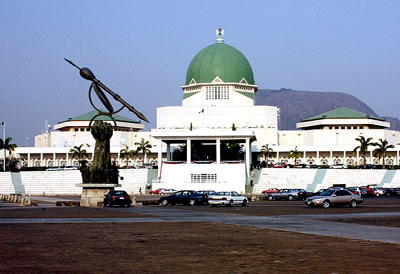
On May 29th 2015, the APC President, General Muhammadu Buhari, will collect the instrument of authority from Dr. Goodluck Jonathan. The Executive Branch will be effectively installed pending the appointment of the cabinet. Thereafter, the nation will turn its attention to the inauguration of the APC-dominated National Assembly – the Senate and House of Representatives. How the leadership of the Legislative Branch takes shape will go a long way in showcasing the APC Federal Government’s democratic credentials and seriousness to provide good and stable governance.
Even though the APC Federal Government will have its own share of teething problems, it will, however, benefit from the experience of Buhari as a former (albeit military) occupant of the seat of the Chief Executive of Nigeria. It might also fall back on the experiences and charted routes established by the PDP in the preceding sixteen years. Incidentally, many hands that will pilot the affairs of the APC Federal Government had been part of the PDP experience. It is now a question of whether they will have the good sense and patriotism to apply the lessons of the PDP past to ensure that they avoid miring themselves and the nation in in needless impasse due to the screaming blind ambition of individuals and party leaders.
In constituting the leadership of the Senate and the House of Representatives, it will be interesting to see how the party leadership will proceed. Will they adopt the PDP zoning method of ensuring that all the six geopolitical regions are given a chance to occupy elective and appointive offices in the National Assembly, such as President of the Senate, Deputy President, Senate Leader, Minority Leader, Majority and Minority Whip; as well as Speaker of the House of Representatives, Deputy Speaker, House Leader, Minority Leader, Majority and Minority Whip? Or will they throw it open to the legislators to choose from among themselves the most popular, experienced and acceptable leaders to occupy those positions? Left to me, I will prefer that the APC does not merely travel the road beaten by the PDP unless there are no two ways to an issue. Rather, they should come up with innovations that are uniquely those of the Party. We want innovative and thinking governance.
We have seen that while zoning gives every geopolitical region the opportunity to produce candidates who will have a slice of the “cake”, it also gives party leaders the opportunity to flex their political muscles and manipulate affairs of the Legislative Branch. It thus compromises the independence of the Legislature and predisposes it to instability and corruption. Prolonged instability due to manipulation in the National Assembly eventually produces an opposite reaction from the lawmakers: it turns them rebels. We saw how former President Obasanjo’s interferences led to the emergence of five Senate Presidents and three Speakers of the House of Reps in his eight years in power. When the lawmakers started rebelling, they defeated his third term, exposed his bribe cash on the floor of the Assembly and nearly got him impeached. In the same vein, an attempt by the President Jonathan regime to implement an unpopular zoning pattern in 2011 led to a rebellion that produced Speaker Aminu Tambuwal, who played a leading role in the loss of power by the PDP Federal Government.
But whenever the Senate and House of Representatives chose their leaders in those PDP-led turbulent years, the National Assembly was competently led and there was stability. This was evident when Senators Pius Anyim, Ken Nnamani and David Mark were in charge at the Senate. The same thing was obvious when Hon. Umar Ghali Na’Abba and Tambuwal presided over the House of Reps.
It is, therefore, worrisome, to see the unhealthy interest that a principal leader of the APC, Chief Bola Tinubu, has been showing in who emerges as Senate President and Speaker, House of Representatives. There are clear indications that Tinubu had initially wanted to push the candidacy of Senator George Akume from Benue State for the presidency of the Senate. Suddenly, Tinubu reportedly shifted his interest to the North East, where he is eyeing Senator Ahmed Lawan for Senate President to permit his homeboy, Hon. Femi Gbajabiamila, to emerge as the Speaker, House of Reps. What goes round comes round. What makes Tinubu think that the lawmakers will not pay him back in his own coin by going against his candidate, in the same manner that they went against the PDP’s choice for Speaker in 2011; a “coup” he (Tinubu) financed?
Is it not instructive that General Buhari, who is set to assume presidential power, has not been named as showing interest in those that will lead the parliament? If Tinubu does not take care, he might exhaust his goodwill among the APC legislators and leaders too early in the day.
Should the APC decide to go with zoning of offices, it is obvious that the Senate President must come from the North Central, where all six former PDP states went over to the APC, thus becoming the second strongest base of the Party after the North West. The Speaker should come from the North East, which like the SouthWest, gave the winning party four states.
The North East is the most politically marginalised of the six geopolitical zones in our renascent democracy. In terms of scale of influence in the past sixteen years, North West is indisputably tops. It has produced two Presidents and three Speakers of the House of Reps. It is followed by the South West, which has produced a President, a Vice President and two Speakers. Third is the South-South, which produced a President, Vice President and two Deputy Speakers. Next is the South East, which has produced five Senate Presidents in eight years, one Deputy Senate President and one Deputy Speaker, while the North Central has produced one Senate President for eight years and two Deputy Senate Presidents. The North East produced only one Vice President and two Deputy Speakers.
Time for affirmative action
A time comes when you apply affirmative action without necessarily compromising quality or competence. The North East requires this affirmative support due to its poor take in the zoning of principal offices of the Executive and Legislature since 1999. Powerful political forces outside the legislature should not try to prevent a candidate highly favoured by the members-elect, Hon. Yakubu Dogara from the North East, from emerging as the next Speaker. If Dogara, a Christian is blocked, the main offices of the Federation such as President, Senate President, Speaker House of Reps and Chief Justice of Nigeria will be occupied by Muslims, with Christians relegated to mere Deputies. It will confirm the APC Federal Government as Muslim-dominated. This will be the case if Tinubu imposes Lawan and Gbajabiamila as Senate President and Speaker of the House respectively.
The burden of sacrificial balancing is one that the APC will always have to carry with care until it can attract more adherents from the South East and South-South.
Disclaimer
Comments expressed here do not reflect the opinions of Vanguard newspapers or any employee thereof.