
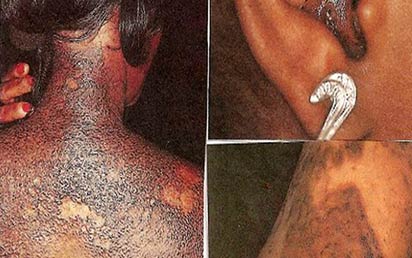
* In extreme cases of skin bleaching, the skin can become multi-coloured and marred with inflammation or scarring.
Just over a year after the National Pharmacovigilance Centre of the National Agency for Food Drugs Administration and Control, NAFDAC issued a public alert over the association of Paracetamol, a.k.a. Acetaminophen, with risk of a rare but serious skin reaction, the US Food and Drug Administration, FDA, has again warned about the potential hazard of the commonly used analgesic.
Paracetamol is the most common drug ingredient and is found in more than 600 different over-the-counter, OTC, and prescription medicines.
The drug is used to treat many conditions such as headache, muscle aches, arthritis, backache, toothaches, colds, and fevers. It relieves pain in mild arthritis but has no effect on the underlying inflammation and swelling of the joint.
Towards the end of November 2014, the FDA issued a “guidance for industry,” about the “rare but serious skin reaction” that can occur on the ingestion of paracetamol.
The reaction, it was gathered, can happen the very first time the drug is taken, or suddenly even if a person has taken paracetamol (or a drug containing paracetamol) many times before.
First there’s “acute generalised exanthematous pustulosis.” That looks like a form of psoriasis, with a pus-filled red rash that can appear on the upper part of your body and even on your face.
Then there’s Stevens-Johnson Syndrome, SJS, a devastating condition that usually begins with flu-like symptoms, followed by a painful purplish rash that can spread to the eyes and ears. This is followed by blisters and actual detachment of the upper layer of the skin!
“SJS is like a burn from the inside out, which is why people who suffer with it are often treated in hospital burn units,” it was gathered.
After this, the Toxic Epidermal Necrolysis,TENs, and Acute Generalised Exanthematous Pustulosis, AGEP, occurs. All are potentially fatal.
When the SJS skin lesions cover over 30 per cent of the body it’s called TENs, that can cause extensive peeling of the skin that’s so bad that some people do not survive. Common symptoms of the skin reaction are skin reddening, blisters and rash.
NAFDAC had warned that Acetaminophen, a common active ingredient to treat pain and reduce fever, that is included in many prescriptions and over the counter, OTC, products (including paracetamol) causes the mentioned skin reactions.
The Agency had observed the difficulty in determining how frequently serious skin reactions occur with acetaminophen, due to widespread use of the drug, differences in usage among individuals, and the long period of time the drug has been on the market.
“In view of the above, health care professionals should be aware of this risk and consider acetaminophen, along with other drugs already known to have such an association, when assessing patients with potentially drug induced skin reactions”, the NAFDAC had warned.
An overdose of paracetamol can cause serious harm. The maximum amount of paracetamol for adults is 1g (1000 mg) per dose and 4g (4000 mg) per day. Taking more paracetamol could cause damage to the liver.
Disclaimer
Comments expressed here do not reflect the opinions of Vanguard newspapers or any employee thereof.