
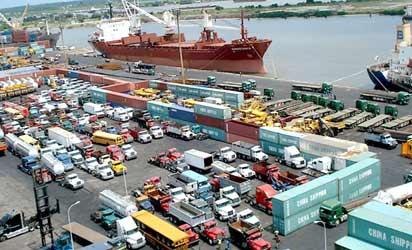
Sea port
The Executive Service of the Nigerian Shippers’ Council, NSC, Hassan Bello, recently spoke with Vanguard’s GODFREY BIVBERE on issues affecting the maritime industry. He spoke on the delay in the commencement of the Inland Container Depots, ICDs, role of the terminal operators, and the government agencies in port system and stressed the need for automation of port operations as solution to the many bottle neck hindering services.

It’s been months since the NSC was appointed the economic regulator of the industry, how has it been?
The NSC was mandated by the President early this year to be the regulator of the ports. Hitherto, NSC has been the intermediary agency in the ports operations that is representing cargo interest which is the demand side of the shipping industry. We receive complains from importers and exporters, we push for positive government policies, we handle infrastructure like the Inland Container Depots, ICDs, etc. But we it became apparent that the benefits of port reforms were being threatened by lack of regulatory activities, then it became imperative for government to appoint an economic regulator.
The function of the economic regulator is to be a coordinator of various varied interest in the port. Before that time, everybody was doing their business without a coordinator, without a supervisor and in port operations you need synergy, you need unison, you need a level playing field and you need somebody to coordinate the activities because they are all related.
Has the introduction of private sector in port operations yielded the desire result?
Government thinking in privatising the port was that private sector injection funds into port operations will bring efficiency and competitiveness. This we have archived to a large extent, especially in sea side operations and there are indicators to show that (turnaround time for ships).
Before, it took a long time for ships to come in but now it is shorter. Even the tonnage we have presently shows increase efficiency. However, it is the land side operation that is becoming a little bit difficult, affecting the efficiency of our port, in the sense that we have cumbersome clearing procedures. We have near primitive procedures, so many stops, some many papers, so many documents. This has resulted in a huge dwell time for cargoes from the port while the port is supposed to be a transit port for cargoes and that will not make our ports competitive because we should never forget that we are in competition with our neighboring ports. When people find neighbouring
ports clearing process simple or simplified, they will rather take their cargo there. So what we are trying to do is to make sure that the cost and the ease of doing business in Nigerian ports are up to the standard. We monitor the efficiency of all the parties; we try to streamline their processes and procedures to modernise them. What we are doing is putting in place short, medium and long term solutions.
The long term solution is the introduction of automation, technology into the port clearance system. We must be automated and modern, which means nobody has to go physically to the port, you sit down in the comfort of your office and do whatever you have to do. Nigeria has the competitive edge and means, Nigeria could be the hub for trade for the region because this is a function of efficiency.
Sir, you said earlier that the Council is working towards achieving streamless clearing process at the port through e-transaction, how soon should operators/Nigerians expect this?
It is not really how soon but a process, not the end product. One has to be careful when setting up a regulatory framework because it must be solid, it must be well thought out, and it must be a permanent solution. You will agree with me that the position of the port, the contribution of the maritime industry into the Nigerian economy is very important. In other countries, it is revenue from port that makes up about 80 percent but here it is oil. What we are saying is that with a well coordinated port and with the support of government, NSC should be able to turn that round.
Are Nigerians involved in the privatization process of port operations?
Nigerians are participating, some terminals are owned by Nigerians that compete favorably with other terminals. But of course you need an overall policy to make sure that Nigerians are participating in this business.
The local content act, just as you know, reserves certain aspects for Nigerian entrepreneurs and I think if this is followed, you will see more participation of Nigerians. If we do that, Nigerians will be empowered to have ships, to carry our own oil and this will also have effect on our banking, financial and insurance institutions. So you can imagine the ripple effect on employment, industries and so many others.
Is the Council doing anything as regards the dominance of shipping activities by foreigners?
This is receiving attention. The Indigenous ship owners Association and many other maritime operators have advocated for a change in that direction and I think the government will review that.
You see, in this capacity, we don’t handle freight. It is the atmosphere you create, the more competition you create, the more you open room for people to go and compete, and I think that sometimes, it is not good to be too protective. Even though we could be more catholic than the pope sometimes, but I think the more you compete, the more Nigerians will come.
What is the major challenge facing the Council presently?
The major challenge is bringing people, that is the players together and trying to advise certain industries. We have, for example, advocated that the trucking system should be changed. We can’t have an owner/operator truck going to the port to bring out goods. It is a negation of competitiveness. Those trucks are how many years old? The boxes may fall out, kill people, and obstruct movement. This is one and this is a very important area. We have also talked about the integration of the operators. You know, sometimes, there are unfair practices that are deliberately put so that money is accrued to some operators. We have unnecessary charges that are only found in Nigeria. They are not found anywhere else. What we are saying is that people should come around and obey the laws of Nigeria. No Nigerian should be exploited; that is a concrete thing and I think we have now come to terms. Don’t forget that we are disadvantaged in that the game has already started before we came in, but we are rising up to the challenge and I think that by the time we are through, changes will manifest. However, Nigeria Insurance Council will not be stampeded in taking regulatory actions.
The council is also the investment arm of the federal government. We went to Lekki about three weeks back and we had a long discussion. And as a result of our discussion, things are going on.
Disclaimer
Comments expressed here do not reflect the opinions of Vanguard newspapers or any employee thereof.