
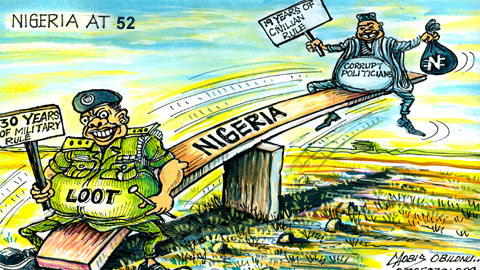
CORRUPTION is a global problem with various dimensions that many do not realise. The United Nations, UN, admits that much in its attempted definition of corruption and its consequences.
According to the UN, “Corruption is a complex social, political and economic phenomenon that affects all countries. Corruption undermines democratic institutions, slows economic development and contributes to governmental instability. Corruption attacks the foundation of democratic institutions by distorting electoral processes, perverting the rule of law and creating bureaucratic quagmires whose only reason for existing is the soliciting of bribes.
Economic development is stunted because foreign direct investment is discouraged and small businesses within the country often find it impossible to overcome the “start-up costs” required because of corruption”. Detailed as the definition is, it could not capture dimensions of corruption which vary for countries.
Neither corruption, nor the concern of the UN is new. On 31 October 2003 – 11 years ago – the General Assembly adopted the United Nations Convention against Corruption and through Resolution 58/4 designated 9 December as International Anti-Corruption Day, to raise awareness of corruption and of the role of the Convention in combating and preventing it. The Convention has been in force since December 2005.
Back home, 9 December passed rather quietly for the type of challenges we face with corruption. A few gatherings discussed the evils of corruption. Party primaries enjoyed more attention than corruption.
It is not surprising as expenditures around politics cannot measure to any meaningful scrutiny. The International Anti-Corruption Day is meant for political leaders, governments, legal bodies and lobby groups to work together against corruption, by promoting the day and the issues that surround this event, the UN said.
A recurring matter as Nigerian elites gathered to discuss corruption was impunity which was recognised as one of the numerous factors that promote corruption. Related to impunity are the ease with which officials circumvent laws, celebration of dubiously obtained wealth, and puny sanctions that are imposed in the few instances of successful prosecutions.
The distance governments have created between themselves and the people lead most Nigerians to believe that public resources belong to those in power, who accordingly dip deep into those resources for personal benefits. The attitude to corruption in the private sector is the same, maybe worse.
Corruption manifests in bribery, kickback, cronyism, embezzlement, nepotism, influence peddling, patronage and in electoral and judicial frauds. Existing laws have loopholes that do not recognise some of the listed flanges of corruption.
Strict implementations of anti-corruption laws and creation of systems that scrutinise acquisition of wealth could minimise corruption. Conflicting judgements that castrate the Freedom of Information Act are the latest assault on anti-corruption wars.
Disclaimer
Comments expressed here do not reflect the opinions of Vanguard newspapers or any employee thereof.