
By JAPHET ALAKAM
Religion has been a galvanizing force in most of the crisis in the world. In fact it is seen as the biggest obstacle to marriage. Though, both Christians and Muslims belief in one God, but when it comes to marriage, the way and manner they attack each other calls for a retreat. In real sense, matters of the heart, they say, do not involve social and religious issues.
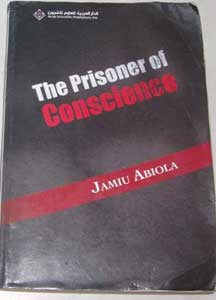
What really matters in marriage is that two people come together as one, doing every thing in common in love and understanding. In the case of Isaac and Mary, it was not so, as their desire to spend their live as husband and wife led them into series of problems that affected them and their families. This and other issues that made them prisoners of their own conscience are what Jamiu Abiola, a good muslim tries to unravel in his latest book entitled The Prisoner of Conscience.
The author who is not comfortable with the animosity between growing number of people from both religion especially in the third world countries, believed that there is the urgent need for muslims and Christians to live in peace so as to avoid the unnecessary problems which the two religions have caused.
The 318 pages book published by Arab Scientific Publishers and divided into three parts, apart from addressing the major issue which is clash of faiths, also showcases a bit of emotions, the unrest of civil troubles and the resolution of marital aspirations and its attendant problems.
Set in Lebanon at the period which slightly precedes the Lebanese civil war, which was due largely to the tension between Lebanon’s Christians and Muslims, the two major characters- Isaac, a Muslim and Mary, his Maronite Christian got a feel of love at first sight and agreed to marry but their fear that their plan will not receive the blessings of their parents forced them into taking a decision that landed into serious problems.
First, as a good story teller, Jamiu introduced the intrigues of love at the outset, employing elements of flashback that reveals his narrative technique as seen in the lives of the major characters.The novel also provides a window into Middle Eastern history and offers a plea for religious tolerance and forgiveness.
As the stories goes,their plan met the brick wall after its inception, as they were arrested by the immigration officers, an action that led to the death of Mary’s father. This made the would be couple to split, Mary immigrates to the United States with her mother and Isaac still engrossed with love for Mary decides to study a new path in Lebanon. It was not easy for both of them as they struggled to find their places in the world, thereby encountering losses and successes in very different environments.
Mary struggled with her father’s death, her internal battle with her conscience, her sojourn in the US; the eventual and painful death of her mother and grandmother, her groaning over the reality of love, the trappings of fulfilling her mother’s marital wishes, strength and finding fulfillment are some of the several interesting interplays in this beautiful narrative. Meanwhile, Isaac studies English in Lebanon and obsessively plans for a future in which he can beg Mary’s forgiveness and win her back. As events unfolds, he finally had his way to US where he met Mary and the rest was history as they finally married.
The prisoner of conscience can best be described as fiction full of facts. The author creatively infuses certain important details into this narrative, which one encounters as one read through the 65 chapters book. For example, a revelation of the Arab culture and temperaments, values that are of immense importance in the Arab socio-economic system, the similarity in a number of human actions and in actions, and expectations by parents from their children when it relates to certain critical decisions in their lives.
Although the story is fascinating, the love story is familiar but predictable. Despite what they encountered, their young love withstands the test of time, although Isaac’s passion is disturbing in its ferocity and feels vaguely threatening. It is a well-executed narrative as the author tries to make up for every loose end, but one thing he failed to do was how it ended. The author made it in a such a way that even from the beginning one knows how it will end which it actually did. Why was it that a young man left all other things in life only in pursuit of love even when he has nothing. Such is not healthy and need not be supported.
Another shortfall noticed is in his use of words, there were some loose ends that have to be put in order, but despite these, just like in his first outing, the style of the book is excellent and the presentation very good. I recommend it.
Disclaimer
Comments expressed here do not reflect the opinions of Vanguard newspapers or any employee thereof.