
BY EMEKA AGINAM
There appears to be a ray of hope via a new program that combines big data, cloud and wearable technologies to find better ways of detecting and treating Parkinson’s disease, the nervous system disorder that causes tremors and affects movement in an estimated six million people worldwide.
Available data has indicated that about 90,000 Nigerians suffering from Parkinson’s disease.

According to her findings, 67 out of every 100,000 Nigerians above 40 years old live with the disease.
Relevance of data in Parkinson’s disease:
Throwing more lights on the disease, Mental Health and Services Consultant, Dr. Femi Olugbile, while highlighting the relevance of data in Parkinson’s disease management and research, urged Nigerian clinicians to make the best of the new innovation in which he said lies the possibility of local remedies, noting also that Parkinson’s disease has a significant presence among the Nigerian population, especially the elderly.
“Clinicians and researchers on the cutting edge are looking at the possibilities represented by Gene Therapy, Stem Cell Transplantation, and the use of Neuroprotective Agents (principally glutamate antagonists and antioxidants) as the future treatments for this disabling neurodegenerative condition,” Olugbile said, while expatiating on opportunities that the new technology could deploy.
Also speaking on the innovation, a researcher and scientist, Dr. Dimeji Aliyu, a scientist with a research firm stated that the innovation is a welcome development and it would help to assist with early diagnosis of Parkinson’s disease.
Tracking the disease:
For nearly two decades, while researchers have been refining advanced genomics and proteomics techniques to create increasingly sophisticated cellular profiles of Parkinson’s disease pathology, advances in data collection and analysis now provide the opportunity to expand the value of this wealth of molecular data by correlating it with objective clinical characterization of the disease for use in the development of the drug.
Research findings have also shown that the potential to collect and analyze data from thousands of individuals on measurable features of Parkinson’s, such as slowness of movement, tremor and sleep quality, could enable researchers to assemble a better picture of the clinical progression of Parkinson’s and track its relationship to molecular changes.
Wearables can unobtrusively gather and transmit objective, experiential data in real time, 24 hours a day, seven days a week.
With this approach, researchers could go from looking at a very small number of data points and burdensome pencil-and-paper patient diaries collected sporadically to analyzing hundreds of readings per second from thousands of patients and attaining a critical mass of data to detect patterns and make new discoveries.
It is hoped that in the near future, the platform could store other types of data such as patient, genome and clinical trial data. It is also hoped that as well as enable other advanced techniques such as machine learning and graph analytics to deliver more accurate predictive models that researchers could use to detect change in symptoms disease.
MJFF and Intel’s technology intervention.
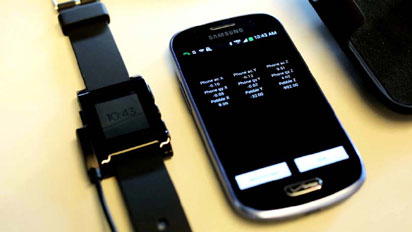
Perhaps giving credence to the saying that the greatest gift that technology has to offer is the power to improve people’s lives, the Michael J. Fox Foundation (MJFF) and Intel are attempting to achieve that with a new program that leverages the latest big data, cloud computing and wearable technologies to monitor Parkinson’s patients; something that researchers have agreed is a giant step towards finding a lasting cure for the ailment.
MJFF and Intel had earlier this year initiated a study to evaluate the usability and accuracy of wearable devices for tracking agreed physiological features from participants and using a big data analytics platform to collect and analyze the data.
The participants (16 Parkinson’s patients and nine control volunteers) wore the devices during two clinic visits and at home continuously over four days.
Speaking on the technology, Senior Vice President and General Manager of Intel’s Data Center Group, Diane Bryant said that, “The variability in Parkinson’s symptoms create unique challenges in monitoring progression of the disease,” adding that “emerging technologies can not only create a new paradigm for measurement of Parkinson’s, but as more data is made available to the medical community, it may also point to currently unidentified features of the disease that could lead to new areas of research.”.
Disclaimer
Comments expressed here do not reflect the opinions of Vanguard newspapers or any employee thereof.