
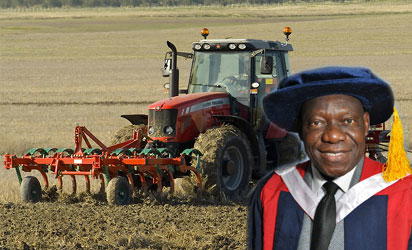
Prof. Lawson Olabosipo Adekoya
PBy PROF. LAWSON ADEKOYA
REAMBLE: The inaugural lecture of today is to formally inaugurate my 1997 Chair in Mechanical Engineering. It will educate the audience on machines, machine development and management; and chronicle my modest contributions to the development of the engineering profession in Nigeria.
Before graduation in 1975, I had secured three appointments with two private companies and a government ministry that were all located in Lagos. After the one-month post-National Youth Service leave in July 1976, I went to the organisations on Monday 2nd August with the aim of starting work. One after the other, they rejected me after being informed of my graduating result. Ironically, all the employers had found me appointable during interviews held before the final-year examinations. They all insisted that “people like you should go back to the university”. The only basis for this advice was that I had graduated with a First Class Honours degree in Agricultural Engineering. I was completely devastated by these rejections especially given the fact that I had not planned to take up a university appointment.

Prof. Lawson Olabosipo Adekoya
In the mean time, most of my contemporaries who had job offers in 1975 had resumed at their duty posts on 2nd August 1976. All the while, the department kept sending messages to me that I was being expected to come and start work and that my colleague, Mr. Obafemi Ajibola (now a retired Professor of Agricultural Engineering), who graduated with a similar result, had already assumed duties in the department.
I was clearly in a fix. After staying at home and being unemployed for two weeks, which were as long as eternity then, I had to quickly reappraise my plans. I came to the conclusion that, given the “discrimination” against my class of degree, I was not likely to secure any employment outside the universities!
Based on the standing invitation from the department and the encouragement, or rather insistence, of my senior brother Otunba Babatunde Adekoya, I finally reported in the department on 16th August 1976. I submitted a hand-written application, and was instantly offered an appointment as a Graduate Assistant. It was with great trepidation that I assumed duties the same day! Because I never planned to be in academics, my hidden agenda was to leave the University as soon as possible. However, one thing led to another, and I strongly believe that it is providential that I have been on this job for over 38 years!
MAN, MACHINES AND LABOURER
Man: It had been realised, since time immemorial, that man needed assistance of machines to live a productive life. According to history, the early man lived in existing caves. However, he soon realised that in order to survive, he needed to kill animals for meat, plant and harvest crops and transport self and goods.
To achieve these goals, he had to conceive and fabricate simple tools (which in essence are simple machines) from stones and wood. These multiplied his efforts, increased his work rates, and made him mobile. According to an ancient Egyptian legend, man was instructed on how to make agricultural tools by the great god Osiris (Quick and Buchele, 1978). As man developed, his ability to conceive and fabricate tools became more adroit.
Sophisticated machines
With time, man developed very sophisticated machines for planting, harvesting, handling and processing crops.
Machines: Generically, machines can be defined simply as devices used for performing tasks or for doing work. However, for the purpose of this inaugural lecture, it is more appropriate to define machines as mechanical devices (usually) with moving parts, that are powered by humans, engines, electricity, etc, and are capable of performing useful work. Machines play indispensable roles in the life of man. They exist in every facet of human endeavour, namely in sports, mechanised agriculture, food processing, education, medical services, transportation (air, land, and water), military, construction, banking and commerce, home, office, information/entertainment, water supply, and manufacturing, to mention a few. Machines have taken man to the end of the world and to the moon and back.
History is full of accounts of how machines have improved human activities. The Industrial Revolution, a major turning point in the history of man, was the process of change from an agrarian, handicraft economy to one dominated by industry and machine manufacture. This process began in England in the 18th century (from about 1760 to sometime between 1820 and 1840) and within a few decades spread to Western Europe and the United States (Encyclopaedia Britannica, 2014).
The main features involved in the Industrial Revolution were technological, socioeconomic, and cultural. The technological changes included the following: (1) the use of new basic materials, chiefly iron and steel, (2) the use of new energy sources, including both fuels and motive power, such as coal, the steam engine, electricity, petroleum, and the internal-combustion engine, (3) the invention of new machines, such as the spinning jenny and the power loom that permitted increased production with a smaller expenditure of human energy, (4) a new organization of work known as the factory system, which entailed increased division of labour and specialization of function, (5) important developments in transportation and communication, including the steam locomotive, steamship, automobile, airplane, telegraph, and radio, and (6) the increasing application of science to industry. These technological changes made possible a tremendously increased use of natural resources and the mass production of manufactured goods (Encyclopaedia Britannica, 2014).
The worker acquired new and distinctive skills, and his relation to his task shifted. Instead of being a craftsman working with hand tools, he became a machine operator, subject to factory discipline. Finally, there was a psychological change: man’s confidence in his ability to use resources and to master nature was heightened.
It is pertinent to note that the development of machines have generally been gradual, taking several years from conception to fruition. A typical chronology is in land transportation. Before the invention of the wheel, land transportation was by sledges. The invention of the wheel around 4000 BC marked a significant milestone in the evolution of land transportation. The two-wheeled cart evolved by fitting a pair of wheels to the sledge. Archaeological evidence suggests that the first vehicles were heavy two- or four-wheeled chariots that were pulled by oxen.
The development of light wheels with spokes and the introduction of the horse as the draft animal around 2000 BC was the final step in the evolution of the chariot into a military vehicle that revolutionised warfare in the ancient world by providing armies with unprecedented mobility.
In the 14th century the passenger coach, a modified version of the chariot pulled by one horse, began to evolve (Adekoya, 2013). The transition from horse-drawn carriages to the horseless carriage was not achieved until 1769 when Nicholas-JosephCugnot (1725-1804) invented a heavy, three-wheeled, steam-powered, clumsy vehicle.
Direct progenitor
The vehicle was slow, ponderous, and moved by fits and starts. In tests, it carried four passengers at a slow speed of a little over 3.2 km/h and had to stop every 20 minutes to build a fresh head of steam.
The direct progenitor of the modern car is based on a patent obtained in 1886 by Carl Benz (1844-1929) for his invention titled “A carriage with petrol engine”. This patent was based on a fragile, carriage-like, three-wheeler with tubular framework, mounted on a 0.75 kW, one-cylinder engine.
Even though Benz’s creation was awkward and frail, it incorporated some essential elements that characterise the modern car, namely: electric ignition, differential, mechanical valves, carburettor, engine cooling system, oil and grease cups for lubrication, and a braking system (Adekoya, 2013). The Benz Velo (Plate 1) was a four-wheel commercial version of the invention and was produced by Benz’s company from 1886-1893 (Wikipedia, 2014).
As the years rolled by, many inventions were incorporated in the car such that by 1929 the modern car was “mechanically complete”. The car we drive today was developed bit by bit from the ideas, imaginations, fantasies, and tinkering of hundreds of individuals through hundreds of years (Table 1). It is estimated that over 100,000 patents created the modern car (Adekoya, 2013).
Worldwide, cars have remained the major means by which individuals go to work, go shopping, and go visiting friends and relatives. Even in places with highly organised public transportation services, cars have made it possible for people to live lives independent of rail, bus, and air schedules. Cars have therefore become a necessity of life in contemporary living.
Labourer: A labourer is a person whose job involves hard physical strength and stamina (Oxford University Press, 2009). From the same dictionary, stamina is defined as enduring physical or mental energy and strength that allows somebody to do something for a long period of time.
Continuous power
According to Makanjuola (1977), man as a source of continuous power can work at a rate of not greater than 0.1 kW. This is not enough to cope with the really difficult jobs and cannot be sustained for long periods. By comparison, a small machine powered by a 0.1 kW electric motor will work continuously for several hours provided it is powered and well-maintained. Therefore, without machines, man can labour for only short durations, after which he will tire.
Man Minus Machines: Machines have become an integral part of our daily routines and in the process transformed our lives. Machines are used for farming, for life-support services in hospitals, and general processing of foods. They are used for manufacturing durable consumer goods such as cars, hand tools, washing machines, etc; industrial goods such machine tools, robots, etc; and consumables such as paper, soaps, toothpastes, tissues, etc.
Cars, buses, boats, ships, trains and airplanes have been taken for granted as transportation machines. Without them, travelling will be unimaginable. Hazardous tasks that cannot even be done by man are doable by machines such as industrial robots. Without machines, simple chores become laborious and the very difficult tasks become humanly impossible!
From the foregoing, it is apparent that without machines, man will labour a lot but will achieve only a little, and that life will be very tough, if not outright impossible! Mr. Vice-Chancellor, distinguished guests, ladies and gentlemen, I, therefore, hereby submit “mathematically” that: (Man) – (Machines) = (Labourer)……….. (1). This is the topic of my inaugural lecture, which can be written in prose as “Man minusmachines equals a labourer”. However, for man to effectively and efficiently carry out tasks, he needs the right or appropriate machines.
Appropriate machines
The qualities of the right or appropriate machines include affordability, safety, reliability, ease of maintenance, aesthetics, adequate strength, efficient performance, ease of operation and user-friendly technology, to mention a few. These qualities imply that appropriate machines are well-designed, perfectly-manufactured, and easily-managed (that is operated and maintained).
Machine Design, Manufacture and Management
Introduction: The engineering activities that produce every machine/structure are design and manufacture/construction. Engineering design is the process by which an engineer applies his knowledge, skills and point-of-view to the creation of functional, economical and otherwise satisfactory solutions to given real-life problems in accordance with some codes or standards. It is the central activity in the practice of engineering. It is one of the qualities that differentiate the engineer from other members of the engineering family! For the benefit of the general audience, the engineering family consists of engineers, technologists, technicians and craftsmen/artisans.
Machine Design: Machine design is a subset of engineering design. The classical machine design methodology consists of the following phases: recognition of need, problem formulation, creative design,preliminary design and development, detailed design, prototype building and testing, design for production and product release. The creative design phase is perhaps the most challenging and interesting part of the design process.
This is because it is at this stage that the engineer comes up with as many alternative solutions as possible to a given problem. The synthesis of various new and/or old ideas and concepts takes place in such a way as to produce an overall new idea or concept of solving the current problem.
One of the solutions generated in the creative design phase is then selected as the solution to be developed further. The bases of making this decision are many and varied. The techniques used include decision matrix, probability theory, optimisation technique, etc. The prototype building and testing phase normally ends the machine development process in a university research setting.
Design for Manufacture: In order to commercialise the machine, further work needs to be done in the form of design for development. This involves design changes that would be compatible with the best and often the most economical methods of production, and the selection of the best materials.
This process is called value analysis and is normally carried out outside of the university environment by companies that intend to commercialise the machine. Product release, which is the commercial marketing of the machine, follows the manufacture.
Machine Manufacture: Machines are made by manufacturing and assembling the components or parts of the machine. The components are made from a variety of materials by different manufacturing methods. For example, a typical family car is assembled from about 15,000 parts.
Of this number, 1,500 are synchronised to move together, many of them working within tolerances as small as 2.54×10⁻³ mm. Nearly 60 different materials, from cardboard, plastic, and rubber to platinum, are used in a car’s construction (The Reader’s Digest Association, 1981). A C-5A transport plane consists of more than 4 million parts, and a Boeing 747-400 has 6 million parts (Kalpakjian, 1997). It is noteworthy that each part of every machine is individually designed and manufactured.
Product Liability: Simply put, product liability is the legal term used to describe an action in which an injured party (plaintiff) seeks to recover damages for personal injury or loss of property from a seller (defendant) when it is alleged that the injuries resulted from a defective product.
Defective product
The term has also been used when a consumer or business enterprise has suffered commercial loss owing to the breakdown or inadequate performance of a product (Weinstein, et al, 1978). In most instances, an action based on product liability requires the establishment of a defect in the product.
Product defects arise from two sources. The first and most basic is production or manufacturing defect. This is a defect arising from an error occurring during the manufacture of the product. The classic example is the soft drink bottle that explodes as a result of either an imperfection in the glass structure of the bottle or of over-carbonisation.
In other words, a production defect arises when a product does not meet the manufacturer’s own standards for that product. This would presume that products that meet the manufacturer’s standards are not defective, at least from the viewpoint of the manufacturer.
The second type of product defect is called design defect. It occurs when a product that meets the manufacturer’s own standards does cause an injury, and it is alleged by the plaintiff that the design or the manufacturer’s standards were inferior and should be judged defective.
The following three basic legal principles can be used as the framework within which the plaintiff can bring an action in product liability: (i) Negligence: This principle tests the conduct of the defendant in the saga, (ii) Strict liability and implied warranty: This combined principle tests the quality of the product, and (iii) Express warranty and misrepresentation: This combined principle tests the performance of the product against the explicit representations made on its behalf by the manufacturer and sellers.
As if to make life more difficult for the design/production engineer (and his employer), courts have developed evidentiary rules to assist the plaintiff in proving his case in certain situations where it has been difficult to prove negligence of the manufacturer.
The most significant of these rules is the doctrine of res ipsa loquitor, which literarily means “the thing speaks for itself”. This is a rule of evidence that allows that the mere proof that an injury occurred establishes a presumption of negligence on the part of the defendant! (Weinstein, et al, 1978). Thus, the fear of product liability has become the beginning of wisdom for design/production engineers.
Machine Management: Machine management is the operation and maintenance of machines. The best machine in this world will malfunction if it is not correctly operated and/or properly and regularly maintained. Machine maintenance is the keeping of the machine in a specified operating condition or restoration of the machine to operational status after a breakdown, accident or wear.
The major objectives of machine maintenance are:
i. to extend the useful life of the machine,
ii. to assure the optimum availability of the machine for service or production and obtain maximum possible return on investment, and
iii. to ensure the safety of users/operators of the machine.
Machine maintenance can be conveniently classified into three major types: improvement, preventive and corrective maintenance. Preventive maintenance can be further sub-divided as shown in Figure 1.
Mr. Vice-Chancellor, kindly permit me to use this forum to correct a wrong notion about Nigerians. It is often said that Nigerians have no maintenance culture. This is a fallacious statement. From research, it has been established that Nigerians use their machines (and facilities) until they break down, at which point repair is carried out (Adekoya and Otono, 1990). It can, therefore, be posited that Nigerians practice corrective (or repair or breakdown) maintenance, which in any case is a form of maintenance. Thus, Nigerians have a maintenance culture! It is
Disclaimer
Comments expressed here do not reflect the opinions of Vanguard newspapers or any employee thereof.