
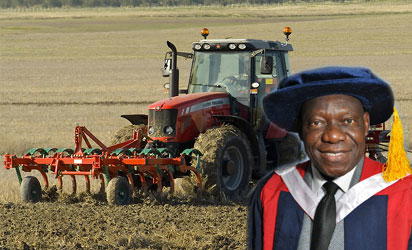
Prof. Lawson Olabosipo Adekoya
Being the second instalment of an inaugural lecture delivered by Lawson Olabosipo Adekoya, Professor of Mechanical Engineering, at Oduduwa Hall, Obafemi Awolowo University, Ile Ife
THE second type of product defect is called design defect. It occurs when a product that meets the manufacturer’s own standards does cause an injury, and it is alleged by the plaintiff that the design or the manufacturer’s standards were inferior and should be judged defective.
The following three basic legal principles can be used as the framework within which the plaintiff can bring an action in product liability: (i) Negligence: This principle tests the conduct of the defendant in the saga, (ii) Strict liability and implied warranty:

Prof. Lawson Olabosipo Adekoya
This combined principle tests the quality of the product, and (iii) Express warranty and misrepresentation: This combined principle tests the performance of the product against the explicit representations made on its behalf by the manufacturer and sellers.
As if to make life more difficult for the design/production engineer (and his employer), courts have developed evidentiary rules to assist the plaintiff in proving his case in certain situations where it has been difficult to prove negligence of the manufacturer. The most significant of these rules is the doctrine of res ipsa loquitor, which literarily means “the thing speaks for itself”.
This is a rule of evidence that allows that the mere proof that an injury occurred establishes a presumption of negligence on the part of the defendant! (Weinstein, et al, 1978). Thus, the fear of product liability has become the beginning of wisdom for design/production engineers.
Machine Management: Machine management is the operation and maintenance of machines. The best machine in this world will malfunction if it is not correctly operated and/or properly and regularly maintained. Machine maintenance is the keeping of the machine in a specified operating condition or restoration of the machine to operational status after a breakdown, accident or wear.
The major objectives of machine maintenance are:
i. to extend the useful life of the machine, ii. to assure the optimum availability of the machine for service or production and obtain maximum possible return on investment, and
iii. to ensure the safety of users/operators of the machine.
Machine maintenance can be conveniently classified into three major types: improvement, preventive and corrective maintenance. Preventive maintenance can be further sub-divided as shown in Figure 1.
Mr. Vice-Chancellor, kindly permit me to use this forum to correct a wrong notion about Nigerians. It is often said that Nigerians have no maintenance culture.
This is a fallacious statement. From research, it has been established that Nigerians use their machines (and facilities) until they break down, at which point repair is carried out (Adekoya and Otono, 1990).
Maintenance culture
It can, therefore, be posited that Nigerians practice corrective (or repair or breakdown) maintenance, which in any case is a form of maintenance. Thus, Nigerians have a maintenance culture! It is breakdown maintenance culture. Honestly, this is not the best type of maintenance culture. That notwithstanding, Nigerians should correctly be said to have poor maintenance culture!
Based on works carried out on the subject by Adekoya and Otono (1990) and Adekoya and Hart (1997), it is recommended that Nigerians should practice preventive maintenance.
The advantages of preventive maintenance include (1) prevention of breakdown at inopportune times, (2) prevention of injuries to users/operators, and (3) lowered cost of carrying out maintenance.
My contributions to machine development and management
Introduction: My research focus has been in Machine Development and Management. Machine Development consists of Machine Design, Production and Testing while Machine Management consists of Machine Operation and Maintenance. My interest in machine development dates back to 1974 when, as an undergraduate in this university, I stayed behind on campus during the long vacation of Part IV to commence work on my final-year project so that I could have enough time to complete it during the final year.
Here are some of my contributions to machine development and management over the years.
Machine Development
Cassava Planting: Cassava (Manihot esculenta Crantz) is grown mainly in the tropical parts of Africa and in Brazil, Malagasy, Indonesia, South India, Philippines, Malaysia, Thailand and China (Ajibola, 2000).
In the tropical part of Africa, cassava has become the most important crop in terms of both the total land area devoted to its production and the proportion it contributes to human diet.
Production of cassava
Jeon and Halos (1992) reported that 60% of root crop consumption in Africa is accounted for by cassava. Production of cassava on large acreages has been limited because of the high labour requirements for planting and harvesting.
My first attempt at machine development was done as a final-year project. It was the design, construction and testing of a low-cost mechanical cassava planter capable of planting stem cuttings on freshly-made ridges with minimum damage to the buds (on the stem cuttings), minimum crushing, minimum loss of time and capable of being manufactured locally.
The machine was operated as a semi-automatic planter and was drawn from a single hitch-point behind a conventional disc ridger to form a combined ridger-planter as shown in (Plates 2 and 3). Results of field tests (Table 2) showed that the machine was superior to hand-planting (Adekoya, 1975).
After more work on the machine by my supervisor, Dr. G. A. Makanjuola (now Emeritus Professor of Agricultural Engineering), the principle was patented by the University of Ife as “A device for planting stem cuttings”, British Patent No. 1591025 of 1981.
Tomato Harvesting: Tomatoes rank as the number one vegetable crop in California, USA (Sims et al, 1968). There are two types of tomatoes planted in the state, namely table and processing tomatoes. Table tomatoes are eaten raw as salads or as freshly-blended tomato drinks. Processing tomatoes are processed as tinned or bottled purees, ketchups, and sauces.
As at 1967, approximately 85% or 75 000 hectares of processing tomatoes were machine-harvested in the State of California, USA. In 1978, all the 105,000 hectares of processing tomatoes were harvested with machines (Sims et al, 1979). This quantity represented 86 per cent of the total US production of processing tomatoes.
As at the time of our work in this field there were four types of commercially-available processing tomato harvesters in use in California (Adekoya, 1979). These were the UC-Blackwelder harvester (based on a principle developed at the Department of Biological and Agricultural Engineering, University of California, Davis, and commercialised by Blackwelder Inc.), the Dask harvester, the Button-Johnson harvester and the FMC harvester.
The above machines used various principles to impart oscillatory motions to the fruit-vine system in order to detach the fruits from their vines as they travel on the shaker bed.
Irrespective of the principle used at the time, the following short-comings were observable:
i. the shaker beds for effective fruit-vine separation were long, resulting in long harvesters (See Plate 4),
ii. the imparted vibratory forces were high, resulting in significantly high forces being transmitted to the workers on the machines,
iii. the high imparted vibratory forces resulted in high accelerations to the fruits at the instant of detachment,
iv. the high accelerations at detachment resulted in high damages to the harvested fruits, and
v. the high transmitted forces resulted in high failures of machine components.
Previous researchers worked on various concepts to eliminate or at least ameliorate the above shortcomings. Previous works included those of Privette (1968), Hood et al (1975), Lorenzen and Hanna (1967), Deen and Hayslip (1968), and El Domiaty and Lorenzen (1967).
Contribution to the solution
My contribution to the solution of the problems still bedevilling tomato harvesting at that time was the work done on a rotary shaker as a device for fruit-vine separation (Adekoya, 1979; Adekoya and Studer, 1979).
The salient features of the shaker are shown in Plate 5. Essentially, a horizontal drum with a centrally-located shaft is driven back-and-forth through a specially-arranged sprocket-and-chain drive.
The drum was made from sheet aluminium and had forty-five radially-mounted hollow fingers on it. The fingers were arranged equidistantly in nine rows parallel to the drum’s longitudinal axis. Struts welded to the shaft and to circular channel bars on the inside surface of the drum, reinforced it (i.e. the drum). The final drum motion is made up of a constant velocity motion and an oscillatory motion. The constant velocity motion is used for vine movement while the oscillatory motion is used for fruit detachment.
The principle was tested with two varieties of processing tomatoes, namely VF 134 and 7879. The 7879 variety is easier to detach than VF 134. When compared with two popularcommercial harvesters (Table 3), it was observed that the accelerations required for virtually-complete fruit detachment using the rotary shaker were significantly smaller.
The principle was patented by the University of California, Davis as United States Patent No. 4232506 of November 11, 1980. The principle has now been adopted by all California manufacturers of tomato harvesters and is the only one available on California machines.
Because of its simplicity and the absence of fast-wearing parts, the principle virtually eliminates downtime due to shaker wear, adjustments, malfunction or failure during the harvest season. For these reasons, the work has made a profound impact on the industry (Biological and Agricultural Engineering Department, UC Davis, 1994).
Principle of rotary shaker
The principle of the rotary shaker has subsequently been adopted by various manufacturers in the commercial harvesting of blackberries, raspberries, black currants, wine grapes, raisins, coffee and cucumbers (Biological and Agricultural Engineering Department, UC Davis, 1994).
Zero-Tillage Planting: Tillage is the mechanical manipulation of the soil for any purpose. In agriculture its main objective is the provision of a desired soil structure for crop production. Tillage operations are either conventional or conservational. Conventional tillage consists of a series of primary and secondary operations. It is an energy-intensive operation. In conservation tillage, the degree and number of soil manipulations are reduced. Apart from the issue of high energy consumed during conventional tillage, it is also observed that the process makes the soil to be more susceptible to excessive erosion. Consequently, as far back as early 1970s, the concept of conservation tillage started to gain ground.
Conservation tillage is tillage carried out with a modified crop production objective to provide for effective soil erosion control and reduced mechanical and labour inputs. Conservation tillage reduces mechanical energy, labour requirements, number of trips over the field, erosion, and conserves moisture. Lal (1975) studied soil losses through water erosion in Nigeria and found them to be as high as 200 tonnes/ha per year on tilled soils of just 10% slope even when under a crop of maize. This erosion could be reduced by 98% by leaving the soil untilled. Water run-off was likewise reduced from 42% of rainfall falling on the bare soil to less than 2.5% on untilled soils.
A very effective way to reduce soil erosion on farmlands is to leave residue from previous crop on the soil surface, and to plant through the residue without any form of tillage.
This concept is called zero tillage and requires a new breed of planters which are drastically different from conventional planters. This is because research showed that plant residue, hard soil or sod, usually prevent conventional furrow openers from functioning properly on non-conventionally tilled soils (Erbach and Lovely, 1976).
Conventional planters
Planting depth, planting distance, seed metering and coverage are often erratic, resulting in non-uniform emergence, growth and maturity, harvesting delays and yield reductions (Erbach et al, 1980).
Several attempts have been made to solve some or all of the above problems with varying degrees of success. Previous workers include Ul’yanov and Ivzhenco (1968), Huang and Tayaputch (1973), Wilkins et al (1979), Wijewardene (1978) and Garman et al (1982).
My contribution to the solution of the problems was the design, fabrication and testing of a rolling injection planter with a side-opening mechanism (Adekoya, 1982; Adekoya and Buchele, 1987). The planter consisted of radially-mounted injectors on a wheel made up of two discs as shown in Plate 6. The machine punched holes in untilled soils with residue from previous crop on the surface, and then dropped a seed in each hole. Soil punching and seed dropping took place in one operation.
The machine was tested for planting maize on a farm with 75% residue cover from the previous crop at 5520 kg/ha (Plate 7). Results showed that the within-the-row spacing of the planted seeds was 25.7 cm (instead of the design value of 25.4 cm) and that the depth of planting was 4.3 cm (instead of the design value of 5.0 cm).
Soil punching and seed dropping
Neither statistic was affected by the travel speed of the machine. Ninety-one percent of the punched holes had a seed in them at a travel speed of 3.2 km/h. The percent emergence of the planted seeds was 81% as against the percent germination of 82% under laboratory conditions. Hence the machine did not significantly affect the viability of the seeds.
Grain Cleaning: The presence of foreign materials, especially stones, in locally-produced grains is a major reason for their poor acceptance by consumers. Popular grains in this category are maize, rice, and cowpea (beans).
Stones and other foreign matter are introduced into grains during harvesting and post-harvest operations such as threshing, drying, storage, etc. With respect to grain cleaning, stone is a generic term referring to sand and other similarly-sized gravels, limestone, clay, etc.
Previously-developed cleaning machines include sieve cleaners (Henderson and Perry, 1976), winnowers, inclined drapers, magnetic separators, electrostatic separators and specific gravity separators (Araullo et al, 1976), and aspirators and indented cylinders (Culpin, 1981).
Sieve cleaners separate grains from foreign matter on the basis of differences in size. However, particles having the same size with the grains will be retained. Winnowers separate foreign matter from grains based on weight differences.
Therefore, lighter-than-grain materials are easily removed, but particles having the same weight size with the grains may be retained.
In pneumatic separating machines, the grains are passed into a vertical air current which lifts the chaff, dust and other light contaminants, and allows the grains and other similarly-heavy foreign matter to fall through the air stream. It is therefore impossible to separate any stones from grains using pneumatic aspirating machines.
Disclaimer
Comments expressed here do not reflect the opinions of Vanguard newspapers or any employee thereof.