
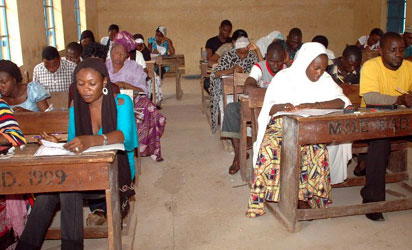
Soon, schools will resume for the new session and parents will be coughing out thousands, hundreds of thousands and millions of naira in school fees, depending on where they hung their hats. In addition, parents of new entrants are going to make the critical decision whether their children should be boarders or day students.

What factors guide parents in making that decision? The convenience and economic circumstances of some parents determine where the pendulum swings. In truth, school-runs can be very disruptive and inconveniencing for parents whose children are day students. But ideally the needs, strength and overall personality of the child in question should guide parents in taking a worthwhile decision.
Many children start secondary school between ages 10 and 12. Where the child is outgoing, sociable and secure, sending him/her to the dormitory is a less difficult decision. Schools with good boarding arrangements teach children at an early age to be independent, disciplined, organized and to relate well with people of different backgrounds and orientations.
They also help to build long-lasting bonds that can come handy in the future. But if the child is introverted, insecure and vulnerable, you need to take your time and find out if the child is ready for the outside world without parental cover.
You also need to consider the health status of your child before you send him/her to the dormitory. I will not encourage parents who have children with health challenges to send them to the dormitory, except the school has a high standard of care and excellent health facilities.
Also if the child is bed-wetting, can he/she survive the taunts that will inevitably come from other students? If he/she has a rhino-thick skin, then he/she can go to the dormitory, but if he/she is very sensitive, maybe he/she needs to be a day student until he/she stops bed-wetting.
In addition, if your son is very attractive or feminine-looking, you really need to tutor him on how to resist predators that abound in some secondary schools. They usually target good-looking and vulnerable young students. You might want to investigate whether such acts take place in the would-be school, but experience has shown that when you bunch people of the same sex in an enclosed environment over time (be it school or prison) homosexual tendency begins to emerge. It might not be obvious, but it is there.
Thankfully, many of these youngsters outgrow it when they get older and start interacting with the opposite sex. That is why I am against labeling such young, impressionable minds as homosexuals, the early tendency notwithstanding. But parents need to be sure that their children are strong-willed enough to fend off predators before sending them to the dormitory. Prevention, they say, is better than cure.
Did somebody say mixed schools to the rescue? Well, maybe, but they come with their own baggage and challenges, teenage pregnancies being an example. Moreover, are homosexual tendencies absent in all mixed schools?
Some schools are also filled with bullies; can your child survive the onslaught? Constant bullying can easily cause personality disorder. Some school children, not necessarily in the dormitory,in the US are known to have committed suicide as a result of bullying.
Even when some children survive the bullying, they imbibe it and bully their younger ones when they come home on holidays. Incidentally, some of these the schools are very good in academics and other areas, so parents are forced to stick with them and manage their children’s bullying attitude.
Some parents shirk their parental responsibilities at the early stages of their children’s development and push their ill-mannered children to the dormitory for reformation.
This is very common in mission schools. I do not know how these parents want a few clergy men and religious women, who oversee thousands of students, to accomplish what they, who oversee only three or four children, could not accomplish. Sometimes children from such homes become pollutants in the school environment.
Ensure that your child has that strength of character to counter their negative influences before you put him/her in the dormitory. It is not as if he/she is totally immune to bad external influences as a day student, but it is more when he/she is in the dormitory.
Sometimes parents keep their children at home for a while to enable the parents deepen certain values in them before sending them to the boarding house; sometimes it is to give the children more time to master their indigenous language. Some children are easily influenced and the parents decide they go to school from home to reduce bad external influences pending when they become self-assured.
I left home for secondary school when I was 11 years old. That was the first time of staying and sleeping outside my home. I was vulnerable, but my parents had no choice; there were very few secondary schools then and admission was hard to come by. Life in the hostel was tough.
A week later, when my father visited, I felt like going home with him but did not have the courage to tell him. Worsening my dormitory experience was a senior student who hated me at first sight. He practically turned my life upside down. He never flogged me, but that would have been preferable to the mental torture he put me through.
It was a horrendous introduction to the outside world. He eventually graduated and I also became a senior student and lived happily thereafter.
Whatever the challenges, no normal child remains under the protection of the parents for ever. At some point, the eaglet must leave the eagles’ nest. A stint in the dormitoryis good for a child’s all-round development. When? That is the issue. Keeping the best interest of your child in mind enhances your decision making.
Disclaimer
Comments expressed here do not reflect the opinions of Vanguard newspapers or any employee thereof.