
By Dele Sobowale
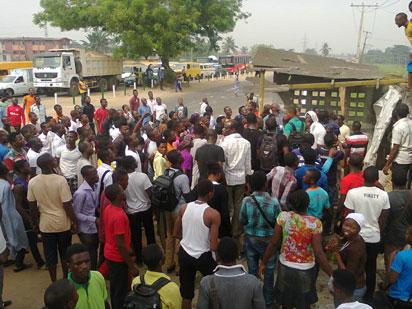
The students’ protest at Bowen University, Iwo, a private university, is not the first; neither will it be the last Nigeria would experience. University students protests are as old as the first university ever established on earth.


It might come as a surprise to many people; but the world s first university was not established in Europe, America or Asia; it was here in Africa that university education had its origin. The world s first university, the Karaouien University was established in Fez, Morocco in 859 A.D as a co-educational institution. That was, approximately, three hundred years before the University of Bologna and close to five hundred years before Cambridge and Oxford universities in Great Britain.
University students, then, were generally older than the teenagers we now pack off to tertiary institutions. In fact, they were more like young adults. Legend has it that the university s first upheaval resulted from disagreements between the authorities of the university and male students over visits to the female hostel housing less than fifty girls.
Pardon me for bringing back what was written as far back as March of this year when Bowen University, Iwo, Osun State, a faith-based university experienced an orgy of violence which led to temporary closure of the institution. As I predicted then, the incident at Bowen had been followed by others at Caleb University, Imota, Lagos State and Bingham University, New Karu, Nasarawa State.
One does not need to be a prophet of doom or possess the intelligence of a rocket scientist to predict other upheavals in the future in other faith-based institutions, not just universities, but especially universities irrespective of whether they are operated by Christians or Muslims. What should be of concern to all of us, because tertiary institutions ultimately should serve the needs of society at large, is the need to determine the causes of such disruptions to normal processes of education at the university level and the losses of properties and time (which is an economic resource very much as money and manpower are) which result from them.
The three universities had one thing in common. The disruptions to education occurred on account of the universities authorities attempt to enforce the regulations embodied in the universities handbooks and which were provided to the students on admission. So, one might assert that the university authorities were right to insist on total obedience to the rules and regulations otherwise, the university is inviting chaos. That is partly true.
However, one fact about university or other institutions handbooks is often overlooked the students receive admission first, accept the admission, pay the fees, enter the university and are then handed the handbooks. The rules and regulations which will govern their existence at the university are made known after they have been fully committed to the association. It is similar to those parking spaces which collect the car owners parking fees and he is confronted with a sign reading: PARKING AT OWNERS RISK.
While that sort of, to me, unethical business deal can be allowed at parking lots, they should not be condoned with regard to universities and other institutions. And, the problems which had led to disruptions in faith-based institutions had been closely linked with the failure of the universities to disclose their rules and regulations in advance. Let me quickly explain why the universities have the primary responsibility to avoid conflict.
FULL DISCLOSURE BY UNIVERSITIES REQUIRED
A Christian or Muslim university advertising for students enrollment owes it a responsibility to disclose that it is a Baptist, Pentecostal, Catholic, NASFAT, or Ahmaddiya university. Furthermore, it must disclose to prospective students how much latitude they will have with regard to practice of any other religion on the campus.
Any Christian or Muslim seeking admission to a university other than one operated by members of his/her faith and which does not allow much latitude in religious practice does so at his/her own risk. What should not be acceptable is for a university to fail to make full disclosure and then present the students with a handbook full of dos and don ts which amounts to forcing them to practice the faith of the university.
By, the time new students are enrolled in a university, they have invariably forfeited the opportunity to go elsewhere; at least that year. They have also lost part of the funds committed to the university. In America that sort of trade is called buying a pig in a poke that means paying for something whose quantity, quality or value is unknown to the buyer.
It is quite possible that a prospective student might opt for a university operated by people of other faiths usually because of established reputation for excellence but, a significant number might decide that attending a university operated by other faiths is not worth the trouble if it means denying their religious beliefs in the interim. That is why the matter of full disclosure should come first. Even a Catholic student might choose not to attend a university operated by the Anglican Communion if he is going to be compelled to worship the Anglican way.
I was at Iwo a few weeks ago, and my visit coincided with Ogbeni Aregbesola s campaign rally at Iwo, which took place at an open field directly opposite the university. Still, I managed to locate two students to interview, under conditions of anonymity, of course. One was comfortable with the regulations because she had been brought up living under those beliefs; the other was not. He had attended a Catholic secondary school and his father did not give a damn about religion.
So, to him the regulations were too restrictive. He was unaware of the conditions before applying and gaining admission; otherwise he would not have tried it. Incidentally, the girl also made the point that she could not possibly attend a Catholic university if she was forced to attend Mass on Sundays.
The point here is clear. Universities can reduce tension by making their positions clear in advance — and not after.
NEXT WEEK: THE NEED FOR FLEXIBILITY IN ENFORCEMENT.
Visit: www.delesobowale.com or Visit: www.facebook.com/biolasobowale
Disclaimer
Comments expressed here do not reflect the opinions of Vanguard newspapers or any employee thereof.