
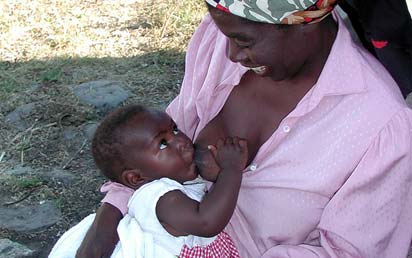
• Breastfeeding is the most cost effective source of reducing infant mortality and promoting a healthy life and especially for cognitive development.
Federalism is the “only guarantee that the country will grow evenly all over; we can spend the money we receive, the money we raise, in the direction best suited to us” – Sir Ahmadu Bello
NOT unexpectedly, the on-going National Conference has been caught in the web of the curse of “Feeding bottle federalism” and it is my prayer that the stalemate be broken by the time this piece is published.
The concept of “Feeding bottle federalism” was theorised by the Deputy President of the Senate, Senator Ike Ekweremadu in Canada at the sixth Oputa Lecture usually hosted by the Osgoode Hall Law School, York University in Toronto. In summary, “Feeding bottle federalism” is a scenario where the 36 states keep coming back monthly with their long, spongy beards to be bottle-fed like spoilt adults. Whenever there is a hiccup in the milk flow, they begin to cry aloud like irresponsible kids, tossing about in death throws like fish fetched from the river unto the hot, dry sandy beach.
Simon Kolawole’s narrative on Nigeria’s federalism throws more light on the Ekweremadu theory as it aptly captures the squabbles over the sharing formula at the confab. Egbon Simon wrote in 2012: “The story of Nigeria is like that of a father who has 36 children. He takes the income of his wealthy children to a central port and distributes it among his 36 children. A good father will encourage all his children to be creative and hardworking so that they can make the money to sustain themselves. A bad father will ignore the larger picture of every child being self-sustaining and insist on redistributing his children’s wealth. The ultimate danger is that you will have children who are extremely lazy and unwilling make good use of their talents and gifts. Every month, they will go to “papa” to give them their own share of the other children’s wealth. It will now reach a stage that they will start complaining that the money is not enough to buy the limousine of their dream.”
Today, the crux of the confab stalemate is the insistence of a section of the country to have “5 percent of revenue allocation, principally for the North-east, North-west and the North-central.” According to Prof. Ibrahim Gambari, it is to be called Funds for Stabilisation, Rehabilitation and Reconstruction. It’s all about extra share.
But why did our founding fathers opt for federalism? To Chief Awolowo, anything other than a federal constitution, “will be unsuitable and generate ever-recurring instability which may eventually lead to the complete disappearance of the Nigeria composite State”.
Dr. Azikiwe opined that Nigerian’s prosperity lay in the heterogeneity of both the composition and endowments of a federal structure for the unleashing of the energies of the federating units for national development.
Sir Ahmadu Bello reasoned it as the “only guarantee that the country will grow evenly all over; we can spend the money we receive, the money we raise, in the direction best suited to us”. We all saw the wonders the First Republic leaders did with proceeds from palm produce in the East, cocoa and rubber in the West; and groundnut in the North.
It was the General Yakubu Gowon’s Regime, which actually introduced the culture of robbing Peter to pay Paul. First, the percentage of accruals to federating units on the basis of derivation principle dropped from 50 per cent derivation at independence to 45 per cent between1969 to 1971.
The downward trend continued thereafter: 45 per cent (excluding offshore proceeds) from 1971 to 1975; 20 per cent (excluding offshore proceeds) from 1975 to 1979; 0 per cent (yes, zero per cent) from 1979 to 1981; 1.5 per cent from 1982 to 1992; 3 per cent from 1992 to 1999; and 13 per cent from 1999 till date. It has been a culture of creating more shareable/free monies for all, irrespective of their inputs into the federal purse. Still wonder why agriculture and industry are dead?
I read an interview by a North West Governor last year where he claimed that reinstating fiscal federalism would further impoverish his region.
He forgot that the North fared much better under fiscal federalism in the First Republic, but has retrogressed gravely since the coming of free oil money, which only oiled a few elite while leading to the abandonment of agriculture that provided both mass employment and foreign exchange for the entire Northern Region.
Textile headquarters
The North had so many bourgeoning industries and remained West Africa’s textile headquarters. Thanks to prudent and honest application of groundnut proceeds. Today, the factories have packed up under “feeding bottle federalism”. The warehouses are now mostly worship centres.
Yes, fiscal federalism will put some states, including my own State, Enugu, through temporary crucibles. But it will certainly challenge the federating units to put on their thinking caps, mobilize their abundant resources and unleash quantum potentials.
I summarised the data on the nationwide distribution of mineral resources per state as provided by Senator Ekweremadu: Abia-19, Adamawa -13, Akwa Ibom -11, Anambra – 8, Bauchi – 35, Bayelsa – 4, Benue – 32, Borno – 23, Cross River – 28, Delta- 12, Ebonyi – 8, Edo -11, Ekiti -13, Imo – 8, Jigawa – 10, Kaduna – 13, Kano – 20, Katsina – 23, Kebbi – 10, Kogi -14, Kwara -12, Lagos – 6, Nassarawa – 15, Niger -17, Ogun – 11, Ondo – 6, Osun -10, and Oyo- 13.
Others are: Plateau – 16, Rivers -5, Sokoto -10, Enugu – 11, FCT – 10, Gombe – 11, Taraba – 18, Yobe – 15, and Zamfara – 8. These do not include our rich farmlands and tourism potentials. Sadly, everything lies prostrate and unexploited because a Governor can afford to sleep for a whole moon only to return to a self-appointed Santa Claus called Federal Government to suckle at the feeding bottle by month end.
On the other hand, the United Arab Emirates, UAE, is an example of an oil-rich federal state, which has made the most of her resources due to the entrenchment of fiscal federalism. Perhaps, only a handful of Nigerians know that Dubai is not a country, but just one of the seven Emirates (states) making up the UAE. Dubai accounts for a tiny chunk of the UAE oil output compared to the oil rich Abu Dhabi Emirate, for example.
In fact, Dubai’s oil is also running out as I write, but the Emirate has no reason to worry itself or begrudge sister emirates. Its leaders have transformed it into an amazing financial, commercial, and tourism bride of the Middle East. The world is flocking into Dubai like suitors that ate a love portion. But Dubai’s spell is just her bubbling financial, business and tourism capacities. By the way, UAE’s GNI per capita is USD40,760 compared to our miserly USD1,280 (World Bank 2011) – no thanks to “Feeding bottle federalism”.
Let our leaders (North or South) note that we are in an era of knowledge-driven global economies. South Korea has no oil and other mineral resources, but it is the World’s 13th largest economy and the 3rd in Asia.
That country has no iron ore, but its steel company, POSCO, is among the top in the global steel industry. Unfortunately, we depend on importation of steel even though we are over-blessed with iron ore and limestone. According to the World Bank data (2012), South Korea’s GNI per capita is USD20, 270. Compare it to the USD1, 280 of an oil and mineral rich Nigeria.
It suffices to state, therefore, that the sharing formula stalemate at the confab not only lay credence to the notion that free oil money is actually the real gum binding this expansive land together, but that we are a nation living in denial.
Yes, no two federalisms are the same. But federalism has its irreducible minimums such as fiscal federalism, multilevel policing, etc. We cannot build a train, put it on the road, and expect it to run well. If it is not federalism, it cannot be like federalism. Like Benson Akintola, a political scientist let us pause to ponder: “What does a state amount to when it lacks the means to meet its basic financial obligations? A mere name? A pretension? A chimera? A buga-boo? A destitute?”
UCHE ANICHUKWU, a political analyst, lives in Abuja
Disclaimer
Comments expressed here do not reflect the opinions of Vanguard newspapers or any employee thereof.