
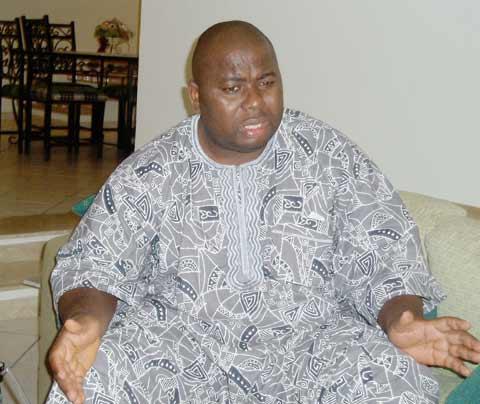
Asari Dokubo
By Muyiwa Adetiba
Everybody is misunderstood at some point by someone, somewhere. I have heard people described as aloof and arrogant simply because they are shy and withdrawn. People who have to deal with myriad of issues under pressure are often seen as hard and unfeeling, only to find in a different setting, that they are actually sensitive and caring. In a world of instant coffee and instant news, instant judgements come a dime a dozen.
Dr Goodluck Jonathan, our dear President, is probably a victim of this. But very few are as misread and misunderstood as Asari-Dokubo judging from the different emotions that accompany the mere mention of his name. He is viewed with disdain and contempt by many of the vocal elites in the North.
Many, who fear he might upset the apple-cart and alter the much cherished status quo with his utterances and actions, view him with fear and caution. Some, especially some power brokers in Aso Rock, regard him with warmth and affection for saying ‘some truths’ they might wish to say but for their positions which constrain them. To some, he is a liberator. To others, he is a traitor. To some, he is a terrorist at par almost, with Boko Haram.
A close friend of almost 40 years once carried a purported video recording of Dokubo on his smart phone for weeks and showed it to anybody who cared to watch with ‘I like what he is saying. This people need to be told some truth.’ On and on went the eulogy. I had to watch the video to see what the fuss was about. It was a scathing commentary on the antics and body language of some of our brothers in the North.
Yes, there was courage; but there was also brashness, cockiness and divisive comments that bordered on treason. My friend didn’t agree with me which shows that there are differences in opinion even among long time close friends when it comes to Asari-Dokubo.
So when the Sunday Vanguard advertised that it was carrying an extensive interview on him, I saw it as an opportunity to unravel this enigma. It was indeed extensive – a two part, four page write-up. I believe the editing could have been tighter and the questions a bit more probing given the number of pages devoted to him since a lot of the things in the write-up are already in the public space. But that is a different issue altogether.
My attempt at unravelling this enigma – and I must say the interpretation is entirely mine and therefore subjective- is as follows; Asari was born into a middle class family where he enjoyed certain indulgencies and a lot of free time; time enough to engage in rascality and youthful exuberance.
These inevitably led to conflicts with the school authorities at the University of Calabar where he was studying. He subsequently became, according to him, radicalised by Islam and hardened by incessant trips to different detention cells.
(True adherents of Islam must worry about the image their religion is being projected into young people’s minds because Asari chose Islam, not necessary because of its tenets, but because he felt it could radicalise him to fight injustice. He abandoned University and made his way to Libya obviously not because of a quest for higher education but to toughen his mind and body. You could say he succeeded since he came back a soldier of sorts.
I will not go as far as to call him a rebel without a cause to quote the famous cliché. His cause became—and still is— the Ijaw Nation. But it’s fair I think, to say he was a rebel in his youth looking for a cause and he found one easily, in his backyard.
The neglect of the Niger-Delta is well documented. All our successive governments are to be blamed for not having a comprehensive and transparent plan to tackle the neglect and pollution in the oil producing region. But the leaders of the region are also guilty. They are guilty of complicity; worse, they are guilty of exploiting their own people.
The story of Niger-Delta would have been different if the leaders were altruistic in their demands for the region. Today, we have rich leaders in the region but the decay continues. Asari, from all accounts, seems to have joined the rich elites. His schools are said to be worth billions of naira. You wonder where the money came from; and you wonder why they are not sighted in the region or even in Nigeria.
It seems clear from the interview, that Dokubo will stop at nothing to achieve the Ijaw Nation. But like many activists, even the more altruistic ones, he fails to articulate the hurdles ahead. Issues of boundaries, international acceptance and the inevitable conflict with the rest of the country over asset distribution are weighty issues.
But they pale almost into insignificance when confronted with the real issue of governing the new nation. And nobody should underestimate what will take place in a hardened region where guns and violence are common place. We only have to look at Sudan to realise that the battle for sovereignty is only half the problem. And the likes of Asari who have scant respect for constituted authorities would become more of a problem than the solution.
Asari also wants us to pick Dr Jonathan come 2015 warts and all because he is an Ijaw man; even when he concedes that he has not really improved the lot of the Ijaw Nation; even when he concedes that he has not exhibited the leadership and decisiveness necessary to tackle the Boko Haram insurgency.
Choosing tribalism over competence might make sense to a man who really does not care if the nation breaks up. But it is a hard sell to the rest of us.
Disclaimer
Comments expressed here do not reflect the opinions of Vanguard newspapers or any employee thereof.