
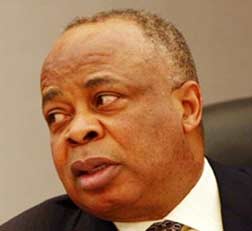
Ken Nnamani
Atiku: Employed jurisprudence to thwart whimsicality
Describing him as a cat with nine lives would not be out of place. An understanding of the travails of the then Vice President Atiku Abubakar speaks volume about how Atiku doggedly fought anti-democratic forces and came out unhurt.
As the number two man to a President, Chief Olusegun Obasanjo, widely regarded as dictatorial, Atiku had an overwhelming influence and relevance. So powerful was he that many state governors reportedly prevailed on him to run for presidency in 2003.

*Atiku Abubakar
The governors, it was gathered, were unhappy with ‘’Obasanjo’s brusque, crude and dictatorial style and wanted the more approachable, suave and liberal Atiku.’’
Obasanjo reportedly begged Atiku not to run. Atiku is on record as being among those who ensured that the rule of law thrived in a quasi-dictatorial democracy.
When Obasanjo commenced political and legal assault against Atiku, officials at Aso Rock Villa took sides. The men around the President tried to present the embattled Vice President as the provocateur of the face-off.
The travails of Atiku started shortly before the 2003 presidential primaries when information was released to the effect that the Vice President was moving to upstage his boss at the PDP national convention.
Obasanjo began to undermine the Office of the Vice President, stripping it of all powers, privileges and functions. The President made himself the Supreme Commander with powers to hire and fire any staff of the Vice President. All travels by the Vice President and his staff had to be approved by him or his designated authority.
So tough was the crisis between the duo that the President declared the Office of Vice President vacant. On the heels of that, a panel set up by the Federal Government indicted Atiku for corruption. Accordingly, he approached the courts where he was cleared of the charges against him.
Tinubu: The last man standing
Being the only Alliance for Democracy,AD, governor that was re-elected in 2003, stood Bola Tinubu out as an emerging political force. Same applies to his stance on the creation of additional local governments in Lagos State.
He particularly fought the Federal Government over the constitutional right of the states to create local government areas.
The import of the battle, won by Lagos State government, under him, was that the Constitution provides for a functional federal state.
Given that most members of the political class tend to align with the ruling party, dumping his party for the PDP at a time he was the only surviving AD governor would not have come a surprise. But Tinubu remained steadfast in providing inspirational leadership to the opposition.
With a rare courage and foresight, he led the onslaught against the determination of the ruling PDP to turn Nigeria into a one-party state. That eventually led to the formation of the Action Congress of Nigeria,ACN, which metamorphosed to All Progressives Congress,APC. Little wonder, he is widely regarded as the man who built and rebuilt the opposition in this dispensation.
Chis Ngige: Challenged godfatherism

Chris Ngige
Ignoring Chris Ngige any time the story of godfatherism in Nigerian politics is told would amount to a mistake. As governor of Anambra State, he displayed uncommon courage by fighting the powers that imposed him on the state.
The tussle between him and Chris Uba, his estranged godfather, resulted in his abduction and his alleged resignation on June 10, 2003. Following the failed ‘civilian coup’, Ngige, in a display of courage, battled the godfather, even though he was enjoying the support of the then presidency.
He proceeded to becoming the toast of his people through historic accomplishments in office in the three years he governed the state, just as he changed the style of governance as dictated by godfathers.
Though the Court of Appeal overturned his victory on March 15, 2006, Ngige has remained a reference point when discussing the nation’s democratic experience.
Rotimi Amaechi: Created a precedent
Having been the Speaker of Rivers State House of Assembly for two terms, Amaechi was well positioned to run for governorship.
It only took a pontification by the then President Olusegun Obasanjo to terminate Amaechi’s cruise to the Government House, even when he had won the primaries. The former President had said that Amaechi’s ticket had “K-leg”.
A cousin of Amaechi, Mr. Celestine Omehia, was later presented as the PDP candidate in the election. Amaechi won the election and was sworn in as governor. The fact that powerful forces stopped him from running for governorship was enough to have ended his quest for the position.
But instead of resigning to fate, he approached the court in pursuit of his case. Justice came his way when some months later, he was declared governor of Rivers State by the Supreme Court.
The court, in its ruling, affirmed that Amaechi, and not Omehia, was the one sponsored as the candidate by the PDP, and was the one that must be deemed to have won the April 14, 2007 governorship election in the state.
With the judgment setting an unusual legal and political precedent, it showed the failings of the 2007 April elections.
Amaechi, through his victory, demonstrated faith in the judicial process, even as it served as an encouragement to aggrieved politicians to always have recourse to the rule of law.
This unfailing belief in the law was recently displayed when he refused to surrender his victory at the last election of the Nigeria Governors Forum,NGF.
Obi: The man who rewrote electoral timetable
But for the judiciary, Peter Obi would not have made it to Anambra State Government House.
Obi contested as APGA candidate in the 2003 election, but Ngige was declared the winner by INEC.
After nearly three years of litigation, Ngige’s victory was overturned by the Court of Appeal on March 15, 2006, paving the way for Obi’s swearing in March 17, 2006. But after seven months in office, on November 2, 2006, he was impeached by the PDP-dominated state House of Assembly and replaced the next day by his then deputy, Virginia Etiaba, making her the first ever female state governor in Nigeria’s history.
Obi challenged the impeachment and was subsequently reinstated on February 9, 2007 by the Court of Appeal sitting in Enugu. Instructively, he laid a solid foundation for the development of Anambra, by ensuring that governance was taken to a pedestal it had never been.
David Mark: Enthroned stability in the Senate

David Mark entering Senate chamber
As an army officer, his name was loud as a result of the high profile positions he held. And same is playing out with his foray into politics.
His ascendency to the Senate presidency did not come without reservations from observers, who doubted that he had the needed democratic pedigree to head the upper chamber.
Coming at a time when the Senate presidency had suffered from deficit of respect due to the instability that characterized it between 1999 and 2007, mixed feelings trailed his emergence.
But since the four-star General became the numero uno in the upper legislative arm, he has brought stability to the Senate.
Since June 3, 2007, Mark has consolidated his hold on the Senate presidency and, in the process, sustained the relative calm that came with his leadership.
Ken Nnamani: Stopped a vaulting Third Term ambition
Unknown to many, Senator Ken Nnamani could pass as one of the unsung heroes of Nigeria’s 15 years of democratic rule.
Reason: A political water-weight before he became the chief beneficiary of the inglorious exit of Senator Adolphus Nwagbara as Senate President.
At the time he vacated office in 2011, he had become a rallying point for those seeking good governance.
Considering the sudden fall of his predecessors, who hailed from the South-east like him, it was easy for analysts to predict his early fall from power.
But that was never to be, as the Enugu State-born politician proved pundits wrong.
He presided over the Senate with forthrightness that was uncommon at that time.
Through the carriage and dignity he brought to bear on the office, it was not surprising that the Senate supported him on many issues.
As the Senate President at a time when Obasanjo reportedly wanted to elongate his tenure beyond the constitutionally allowed two terms, Nnamani was looked upon as the man who the future of the nation’s democracy depended upon.
There were reported efforts by pro-third term agents to recruit him into their camp, but that was not possible as he chose to stand on the side of posterity.
In a dignified manner he presided over the Senate on the day the proposed amendment to the 1999 Constitution to extend the tenure of Obasanjo and the 36 state governors was killed.
At the end of proceedings on the floor of the Senate, 42 senators spoke against the idea, surpassing the 37 needed to achieve the two-thirds to defeat the bid.
For standing up against tenure elongation, Nnamani was among the leaders that Obasanjo ensured were not given the opportunity in the PDP to test their popularity in the 2007 elections.
Like other senators of that era who were marginalized by the PDP leadership, Nnamani went back to private life.
A year after he left office, he established the Ken Nnamani Centre for Leadership and Development in Abuja with the goal of facilitating qualitative and transformative leadership and development in Africa.
Disclaimer
Comments expressed here do not reflect the opinions of Vanguard newspapers or any employee thereof.