
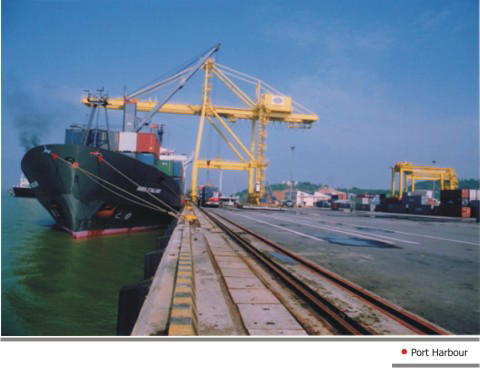
Maritime
Prior to the concession of the sea ports in Nigeria, Nigerian ports were nothing to write home about. The ports were bedevilled by numerous ills and challenges.
There were apparent lack of cargo handling equipment and in some terminals where they existed at all, they were inadequate. In some cases, they were dilapidated. Besides these, unnecessary delays in cargo clearance resulted in loss of huge sums of money in form of demurrage payment.
Part of the main challenges was also outright stealing of cargo that characterised the ports, including porous entry and exit points in the ports.
All these led to the initiative by the former President Olusegun Obasanjo’s administration for economic reform programmes which led to the concessioning of the nation’s sea ports.
The exercise which was handled by the Bureau for Public Enterprises (BPE), divested the management of Nigerian Ports Authority (NPA) from the day-to-day running of the ports located in Port Harcourt, Warri, Sapele, Lagos, Koko, Onne and Calabar. Though NPA remains a landlord maintaining common user services such as pilotage, the concessionaires are now in charge of cargo handling.
This is in line with the provisions of the agreement the concessionaires signed with the Federal Government through NPA. Since the signing of the agreement nearly a decade ago, parties involved have striven to fulfil their obligations.
However, in the absence of an independent port regulator following the refusal of the National Assembly to pass the Port and Harbour Bill into law, only those who use the port can give a veritable verdict on how far they have gone in carrying out their statutory roles and responsibilities. How far have the concessionaires gone in fulfilling the mandate given to them?
Are they doing well or not? If not, why? Is there any way they can be helped to achieve the Federal Government’s vision of the ports’ concession? It must be noted that prior to the concession of the ports in 2006, bidders were duly invited to note the individual characteristics of the ports as related to the classifications and designated cargoes to be handled in each of the ports.
Given the foregoing, it has become critical to note that in terms of making a difference, the Onne Port Complex, located within a dedicated Oil and Gas Free Zone (OGFZ), Onne, Rivers State, for instance, has become the flagship of Nigeria’s offshore logistics support industry. Prior to its classification by the Federal Government through NPA, the Onne Port Complex was like a junk yard.
Stakeholders, particularly port users who patronise it knew that it was a small unused and relatively underdeveloped port. That was about 30 years ago. Now its story has changed with its classification. Presently, it has grown to become the largest oil and gas free zone in the world, measured by physical area, number of clients or volume of investments.
Many firms doing business within and around Onne can attest to the fact that the burden of looking for modern cargo handling equipment, office and residential accommodation, catering, health, and infrastructural facilities have been taken off their neck due to the excellent provisions of these facilities by the concessionaire, Integrated Logistics Services Nigeria Limited (INTELS). Thanks to the ports classifications and designation.
INTELS has continued to strive for up-to-date standard. Recall that recently, the ABS Group, USA was at the Nigeria Oil and Gas Conference and Exhibition for 2014 to present to INTELS Nigeria, Integrated Management System certifications for ISO 9001:2008, OHSAS 18001:2007 AND ISO 14001:2004 which are the first of its kind in Nigeria.
Many stakeholders in the maritime sector of the economy have attested to the fact that today, Onne Port Complex , located within a dedicated OGFZ, is constantly developing and adapting to the advanced and sensitive demands of a rapidly developing oil and gas sector in the exploration and production activities in Nigeria.
President Goodluck Jonathan had in a keynote address he presented at the ground breaking ceremony of the second phase of the complex three years ago, confirmed the rapid development that has taken place in the area. Jonathan who was accompanied on the visit by top government officials including members of the federal executive council (FEC), and the diplomatic community, expressed delight at the enormous transformation that had taken place in the complex through government and private investors’ synergy and collaboration.
He specifically hailed the promoters of INTELS for the vision and foresight in putting in place facilities that can be compared to its kind anywhere in the globe. Industry players believe that this would not have been possible if the building of the modern infrastructure were done in a conventional ports system.
The Federal Government’s noble policy of public-private-partnership (PPP), ensures the special and professional development of ports infrastructure according to the specific needs and classifications of the designated ports that run into billions of dollars. Therefore, the argument in some quarters that some operators have monopoly of some cargo is not true.
Many stakeholders have averred that the strides made in Onne Port Complex OGFZ can be replicated in other ports in the country, especially in Greenfield development if the Federal Government takes concrete measures to put sound policies in place and muster the political will to implement them no matter what it takes.
Disclaimer
Comments expressed here do not reflect the opinions of Vanguard newspapers or any employee thereof.