
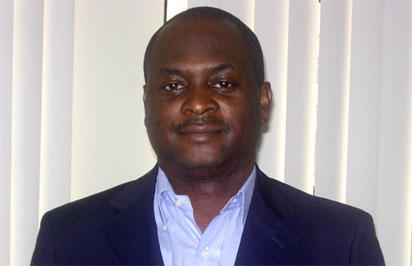
President, Nigerian Liquefied Petroleum Gas Association, NLPGA, Mr. Dayo Adeshina, in this interview with MICHAEL EBOH, speaks about the many challenges hindering the use of LPG by a vast majority of the population.
He also speaks on efforts by NLPGA to reverse this trend and on how governments at all levels can help in encouraging more people to use LPG. Excerpts:

Can you give us an overview of the LPG market in Nigeria?
In 2007, consumption of Liquefied Petroleum Gas, LPG, was 70,000 metric tonnes, MT, and it rose to about 170,000MT last year. In 2013, supply to the market was increased by about 50,000MT from about 150,000MT that was dedicated to the market by the Nigerian LNG Limited., NLNG.
Today, the supply situation is about 250,000MT, but market consumption is about 170,000MT.
We all know that gas supply is more and the gas available can be enough for the entire country, as long as there is awareness and a lot of the competing fuels are eradicated; competing fuels like kerosene which is subsidized by the government.
Once that is taken out of the equation we will then start to see a lot of movement in the direction of the LPG.
Also firewood is a big problem, along with charcoal and sawdust. The government needs to put down a policy where access to these competing fuels is limited;firewood in the North, for example.
Almost 19 states are suffering from desertification now, because people just go there and cut the firewood. This policy can stop desertification.
In Chad for example, it is a life sentence if you cut down a tree. They are doing something about it because the desertification is impacting negatively on their ecosystem. LPG is readily available; infrastructure is where the problem is.
Do you think the challenges confronting the LPG sector can be addressed only with policies?
These things will go hand in hand. People need to be stimulated to invest in a particular business.
If there are too many barriers to enter into that business, people would start to stay back. Even people that are already in it, if they don’t see a growth pattern, they will pull out of that industry. Consistently you have seen that it is a big disservice, having to subsidize kerosene that is not getting to the people for which it is subsidized. It is a total misnomer.
Do you think that the combustive nature of gas is one of the factors why people don’t use gas?
Yes and no. There is a big awareness problem that needs to be addressed.
If you look at Lagos State for example, I use Lagos because they have demonstrated the capacity and will-power to positively impact on their community or Lagosians, by taking it as a state policy to convert people from firewood and kerosene to LPG. Now they are doing annual projects in the 27 Local Government Areas.
They started with Surulere and Ikorodu. I think the next one would be Badagry and Epe.
If you go to Surulere today, all those people who are ‘mama put’ and other eateries that were cooking with kerosene and firewood have switched to LPG. It is cleaner, it is healthier for them and it is cheaper. This is because that N150 per bottle they were buying every other day is cumulatively more expensive than that 12.5 kilogramme (kg) cylinder of gas.
The awareness is essential. Every product is dangerous, it depends on the way you handle it, which is where awareness comes into play. People need to be sensitized within their association. We are partnering with Lagos state on this project.
One of the things we need to do is also to be able to give practical training to people on how to use LPG, the cylinders, the stoves and all those things. There is a leaflet that is going to be given out alongside the free cylinders Lagos state is going to be giving out.
The free cylinder stuff is a scheme, not for the urban areas but the rural areas which is trying to convert people from using all those dirty fuels to move to LPG. To convince them, we have to give them cylinders and stoves to go with them, but mostly cylinders.
This issue of creating awareness for the use of LPG has been on for some years, but still not much has been achieved. Why is it so?
When the sensitisation started, the first year they went round all the Local Government Areas, LGA.
It is like a campaign to say this is what is going to happen, this is how we want it to happen and when it starts you need to be a part of it. So Landlord’s association market women in those places, the traditional rulers and everybody were carried along.
It is like a road show where people would be sensitised and made aware of what is going to happen. It is not actually correct that the scheme has been on for two years. It has not because it was only just launched last year. Prior to that, there was a road show where people were been enlightened as to how the scheme would take place.
What are the challenges confronting the Nigerian Liquefied Petroleum Gas Association, NLPGA, as regards their effort in trying to make sure that all Nigerians embrace LPG?
The biggest challenge I will say is on the types of LPG equipment. Cylinders are the first entry point to LPG. The gas cylinders are what would hold the product. Others are cylinders hose, regulators, and LPG tanks etc.
The Duties on the products are extremely high, a minimum of 20 per cent. This duty is paid to bring them into Nigeria. By the time we add up all the charges of clearing, it comes to about 40 per cent on each product.
In the case of kerosene, you can use a bottle or tin to get it and it is sold everywhere, but LPG is sold in tanks or cylinders.
All these equipment and the tariff that you pay on them are excessive, that’s why the entry cost for anybody that wants to go into LPG today is quite high. If you are going to buy a brand new 12.5kg cylinder, you will spend nothing less than N10,000. If you are going to buy the stoves, you will spend at least N4,000 for burners or gas cooker.
Are you people making plans or working towards the production of this equipment in Nigeria?
Again, it is the case of tariffs. If you do not take a holistic approach of the situation, then you will not solve the problem. There were two cylinder manufacturing plant in this country prior to now. They both closed down because they could not compete with the imported cylinders.
The cost of manufacturing is very high because they also have to import flat steel. And if the tariff on flat steel is very high, they can only produce cheaper than what their cost of production would be. And if their cost of production is high then it becomes difficult to sell the product cheaper than the imported cylinders even with the high tariff that you have.
There is the need to take a holistic approach at all things that are affecting the sector and find ways to cushion the effects in the industry, so as to be able to make it better and stimulate the industry. That is what needs to happen.
Do you have statistics of how much Nigeria is losing as a result of the non-usage of LPG?
It is simple. How much are you spending on kerosene, for example? Let me use Indonesia as a test case. Indonesia was in the same case that we are in Nigeria. They were spending $9 billion a year on kerosene. They took a conscious effort to convert 56 homes in three years when they started their own conversion scheme.
They spent $2 billion to do this, by giving away cylinders and what they called starter kits (that is, 3kg cylinders and stoves). Today Indonesia has gone from 250,000MT market to five million-tonne market. They save $7 million by investing in those packages. Today their outlay on kerosene is on the barest minimum.
Nigeria needs to do the same to stop this investment on kerosene, because we can make more money on aviation fuel than from kerosene; than trying to use kerosene as domestic fuel. The savings we are going to make will be more.
We are even luckier because LPG is made here and exported, simply because the domestic market is not making use of the full capacity that is being produced here; a lot of it is being exported.
The savings that can come to us by making sure that LPG industry takes off would be significant.
Tax revenues will increase for the government, employment will increase. The multiplier effect will be that a lot more filling plant would be opened, a lot more logistics people would come to the business, also a lot more of marine people would come into the business. And we need to be able to make sure that LPG is everywhere in the country. Today, LPG comes to Lagos before it moves anywhere else which shouldn’t be.
On the issue of the transportation of LPG, the country has been faced with the challenge of transporting fuel through the pipelines. Are you considering piping LPG across Nigeria?
Today, LPG is not moved through pipeline, it is moved with trucks.
…But aren’t the trucks expensive?
Outside of that, what needs to happen is to have a lot more terminals outside of Lagos where vessels can discharge. And that is about to happen because there are quite a few projects from industry players outside of Lagos.
There are projects in Calabar, Port Harcourt, Delta, and also coastal terminals.Once these come into play, there will be other areas where you can lift the products from rather than from Lagos. Right now the pressure is heavily on Lagos.
There are insinuations that some LPG dealers are importing gas from Niger Republic. Could that be true and do you know why?
Is not just one company, there are probably about two or three companies importing gas from Niger Republic. The reason is that if they get it from Niger and go by road, within hours they are in Kano from the border. Niger is refining and it is market competition, it is a deregulated market.
Disclaimer
Comments expressed here do not reflect the opinions of Vanguard newspapers or any employee thereof.