
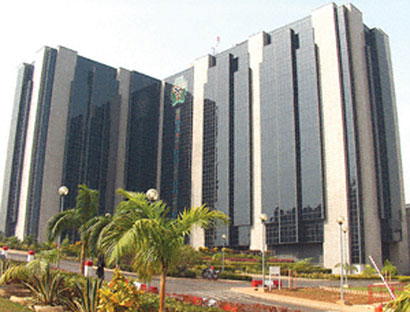
CBN Headquarters
BY NAOMI UZOR
The Lagos Chamber of Commerce and Industry, LCCI, has called on the Central Bank of Nigeria (CBN) to urgently and critically examine the problem of high cost of funds and Monetary Policy Tightening.
The President of LCCI, Alhaji Remi Bello at the first quarterly press conference, said, the chamber demands that the CBN Governor should urgently and critically examine the problem of high cost of funds in the economy as this is one of the major disconnecting points between the banks and the real economy, adding that, in most advanced economies in the world, single digit interest rate is the rule.
He lamented that a situation where investors in the Nigerian economy is borrowing at 25-35 per cent annum is unbearable and not in the best interest of the economy and does not help the productivity and competitiveness of the private sector and the advancement of the economy as a whole.
”The cost and access to credit by the small businesses remains a major problem in the economy. This group pays as high as 70 to 100 per cent interest rate per annum on loans. Most of the credits they get are from the microfinance banks, finance companies or the informal financial markets. The rates in these outlets are often atrocious.
Problem of access to credit by the SMEs is due partly to the risk associated with them. A credit guarantee scheme would mitigate the risk and improve their access to credit.
A Guarantee Scheme for SMEs would have a moderating effect on the cost of funds to them as the risk premium component of the interest rate would be reduced considerably.
Lending institutions would feel more comfortable lending to small business.
Needless to say, the SMEs more than any other economic group, have the capacity to create more jobs, promote equitable income distribution and alleviate poverty. This is a core developmental objective for the CBN” he stated.
Bello noted that the continuation of a tight monetary regime will perpetuate persistent high interest rate, capacity of enterprises to create jobs would continue to be impeded and therefore deepening the unemployment crisis, youth restlessness and further security challenge, financial intermediation role of the
banks will continue to be undermined, financial inclusion objective will be constrained, recovery of the real economy will remain sluggish and the capacity of banks to support the economy would remain inhibited.
”These are some of the likely outcomes of sustaining monetary tightening.
Disclaimer
Comments expressed here do not reflect the opinions of Vanguard newspapers or any employee thereof.