
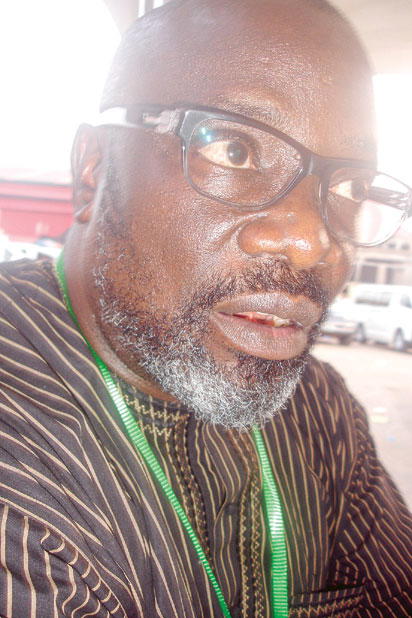
Dr. Ahmed Adekunle, is the Senior Special adviser to the Minister of Agriculture and Rural Development on Mechanisation, Chairman of the Advisory Ministerial Mechanization Committee, speaks on the federal government’s mechanisation project implementation. Excerpts:
By GABRIEL EWEPU
What is the main objective of the mechanisation project of the Federal Ministry of Agriculture and Rural Development?
The project is called the Private Sector Mechanisation Framework of the ministry. It is to provide mechanisation to small holder farmers, medium scale, and large scale at farm gates under the private sector arrangement. It is unlike the formertraditional mechanization where government buys agro-machineries and gives to farmers and at the end of the day, the objective is not achieved.
But here, what we are doing is to setup enterprises all over the nation that will provide mechanization in the rural area under the private sector partnership with the government, manufacturers of tractors and other agro-machineries. So the purpose of this project is to be able to deploy mechanization services to the small holder farmers most especially, because of the nature of our farming communities in fragmented land holding that we have, because 80 per cent of our farmers don’t have more than 1.5 to 2 hectares, so we are providing them with mechanization in their domain.
Not necessarily for them to own the technology or equipment but someone is there providing them with the services they would require. So, all they need is to walk into that centre, say ‘I need to weed, harrow, plough or I need to harvest, how much are you going to charge me per day?’, and they would pay.
Another objective of the project is that we are also using the centres to provide subsidized farming to the farmers, knowing that economically our farmers are a bit weak financially, so we are subsidising the service by 50 per cent.
For instance, let’s take an average of N30, 000 per day for a tractor and other sets of implement to go out and work and lets also take an average of three and half or four hectares per day is N30, 000, it means in the hiring centre, you will be paying only N15, 000, government will redeem the other N15,000 to the service provider.
You see, we are providing mechanization to small holder farmers and at the same time, he is getting it at a subsidized rate.
Another objective of the project is to create jobs for the youths, because the Minister, Dr. Akinwumi Adesina, desires that the youth will be the one to drive the management of the enterprise nationwide and also because the hiring centre is structured in such a way that we have the technical structure, administrative structure, management structure in line with the accounting system that will involve cash flow, business plan put in place and people who will maintain the tractors.
Then the operators, so the youths are the ones to manage this while other farmers will be taking their services at a subsidized rates. Also in the centre, youth organizations, NGOs, individuals that have the capacity can come together being sponsored by their parents or uncles to come up with the 20 per cent to procure the five units of tractors with various types of harvester equipment form the enterprise and run their businesses, provided they meet the criteria set up by the federal government, the Bank of Agriculture and the manufacturers as it has been structured in the tripartite arrangement.
Also we intend that by 2014 to 2016 to see that we have 5000 units of tractor available which will be capable of cultivating 2.6 million hectares, create 29,500 direct jobs while we will also establish another 20,000 indirect jobs and 13 million metric tons of food with increased production nationwide.
With the prospects you have outlined in this mechanisation project, do you have any plan to legalise this programme for continuity after this administration?
Yes, that is the aim and objective of the minister, to drive this project under a private sector platform and sustain it too. The whole objective behind the private sector enterprise is that within the period of two to three years, the private sector and the banks will see that the scheme can be trusted to generate returns on any investment in the enterprise and also generate enough money to pay back the portion of the loan to the government, vendors and the bank.
Within this period, the farmers are already being trained and youth capacity also has been built to realize that they don’t need to go and to wait for government to set up and sustain their hiring enterprise. The banks also have test-driven the intervention project and have seen that they can partner with the government, donor agencies, development partners such as the World Bank, the farmers service providers in the private sector to deliver; a window of investment opportunity that is friendly to both local and international direct investment is in place.
No past government has been able to do this before. So one of the strategies of Mr. President and the minister is to let us quickly drive this intervention programme, set up the private sector framework, stimulate the economy and then change the mindsets of the financial institutions that they also invest in mechanization in the agricultural sector of the economy.
There is a way they can invest in the sector and generate revenue, the moment that is done, though we have little control over government policy changes, you cannot control it, when government comes they will change the policy but if the private sector initiative is already in place and it is working very well, it will be very difficult changing our mind on what we think is working.
So if the private sector financial institutions see that they can invest in mechanizing the sector and generate sufficient revenue to pay back all loan portfolios within the sector, even if government changes, they would continue to invest. This is President Jonathan Ebele’s and the minister’s strategy for mechanization.
How many service centres should Nigerians expect as this programme is meant for them to take advantage of?
Good, we have N3.6 billion. Technically, if we go by the traditional way of mechanization; it will buy just 400 units of tractors, but with the partnership of the private sector and the banks, at the end when we deplete the money, it is going to give us 1050 tractors because the total amount of that money will serve as 35 per cent to the project.
So we are going to have over 200 centres at the end, but now in the first phase we are having 80 centres with 400 units of tractors implement and various harvest and post-harvest equipment. But remember that the moment this money goes out, 55 per cent refinance window by Bank of Agriculture is coming back into the mechanization revolving account of the Ministry domiciled with Bank of Agriculture. We shall immediately make another 400 units available and finally 250 units and the fund is finally depleted.
With the seriousness of the project, you need committed and trusted individuals that even after this administration is gone, they would be able to drive the project, have you gotten serious minded investors ready to take up the challenge?
Absolutely, we have serious minded investors, people whom we trust with the project implementation.
Disclaimer
Comments expressed here do not reflect the opinions of Vanguard newspapers or any employee thereof.