
By Rotimi Fasan
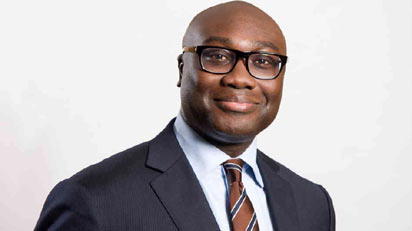
BEYOND the media image I know pretty little about the late Ghanaian-born BBC presenter, Komla Dumor.
This is the case with most people we get to know through the media in our fast changing information age. But by the time he passed on Saturday, January 18, 2014, Dumor had become a close part of our media experience, at least for listeners and watchers, of both the BBC radio and television around the world.
His death had a personal touch- much in the same manner one would feel about someone related or well-known to one. This testifies to the invasive power of the media.
Komla Dumor was well known to millions around the world. He was one of the better known faces on the BBC. Before this, his voice was to be heard on the now rested ‘Network Africa’ programme. Komla Dumor’s popularity extended,however, beyond the fact of his being on the BBC. He didn’t just have to rely on the staying power and reputation of the BBC. He carved a space for himself in the galaxy of BBC star presenters. It’s not often that a presenter rises up the ladder to gain worldwide visibility and respect within a relatively short period. But Komla Dumor did- at least at the BBC which he joined in 2006.
Before him there had been many whose voices woke up millions around the continent: Hilton Fyle, Bola Mosuro, Elizabeth Ohene, Josephine Hazeley, Max Bankole Jarret and Audrey Brown among others. Dumor came much later than many of these names in a different time when the BBC was spreading its dragnet into television and other multimedia format. The switch from radio into television looked smooth but without people like Dumor this would probably have been impossible.
Yet once the extension into television and online journalism took off in full steam, listeners got the added pleasure of wonderful visuals to accompany the usual radio voices. Indeed, one could then put a recognizable face to many of the voices to which one had conjured particular, even wrong images. In the last few years, the BBC became a ‘world service’, not only in terms of reach but also in terms of staff representation. Before the likes of Dumor broke the barrier, presenters on the ‘Africa Service’ were restricted to just that. They presented programmes directly connected to the different parts and regions of Africa. What one heard on prime time BBC programmes was the crisp accent of educated Britons- the so-called Received Pronunciation.
But once the BBC began its own internal reforms, the platform for news presentation was expanded to people from different parts of the world and with accents not necessarily associated with an Oxford or Cambridge education. This was all the opportunity people like Komla Dumor needed to shine. And shine he did. It must be said though that Komla Dumor’s story did not begin at the BBC.
That credit must go to Ghana, his home country, where he had worked in the media and had distinguished himself before England beckoned. He had the right passion and drive for his job. This couldn’t be otherwise for someone who gave up his study of medicine, abandoning the stethoscope for the microphone. He had presence- charisma and verve. And his imposing physique and deep baritone all worked to make him very visible to his superiors like Lyse Doucet who quickly saw the qualities they thought could win more viewers to the BBC and so insisted he be put on television.
He was both serious and dramatic. While reading the news on prime time, he was serious. But on the street, he was down to earth, getting down to bare knuckles as the occasion demanded. Humour was not far from him either. All of these qualities he brought to his presentations in varying degrees. Dumor had been part of the battery of reporters and presenters the BBC sent to South Africa to cover the funeral of Nelson Mandela.
His interviews with the Mandela children and grand children were at once sober, humorous and revealing. The last time I saw him on television was just two days or so before his sudden death. He was on ‘Focus on Africa’. Always well-dressed, he stood tall and dapper as he walked close to the cameras. In the true spirit of the BBC slogan, Komla Dumor lived the stories he reported. He was proudly African and as an African he told the African story with the balance of a professional. He enjoyed the job and exuded the confidence of someone sure of his calling.
On a group visit to the new BBC office in London last April, I had a glimpse of Komla Dumor as he walked back to his space with what looked like a lunch pack swinging from his hand. He had a bounce in his gait. He was in jacket and trousers and what looked like trainers below.
His movement was that of a singer who sang to himself often. He played the piano, we’ve since learned and one of his colleagues spoke of his love of hip-hop and classical music. These were unknown parts of the man that must have shaped his television persona- as was his commitment to the family. I had come to enjoy his presentations and, perhaps, taken it for granted that he would always be atop of his game.
For upon hearing of his death in the evening of 18 January, I tried to understand why it all felt so shocking and personal. It was then I realised how much he had become a personal aspect of my media experience, one of the high profile presenters whose work testified not only to his vast competence and knowledge of his trade but also to the joy he derived from it. Rest well Komla Afeke Dumor.
Disclaimer
Comments expressed here do not reflect the opinions of Vanguard newspapers or any employee thereof.