
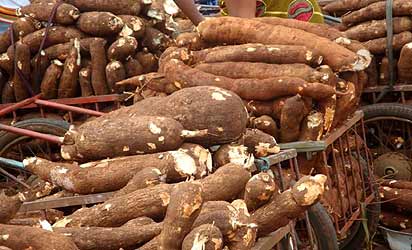
Cassava Tubers

A new multi-year project assessing sustainable weed management technologies for cassava-based farming systems in Nigeria has been launched by the International Institute of Tropical Agriculture (IITA) and its partners in Ibadan.
The project is seeking to find solutions to the labor-intensive weeding usually performed by women and children and to increase cassava productivity for 125,000 Nigerian farm families. The project has the potential to serve as a livelihood transformation model for all cassava-producing states in Nigeria.
Cassava is generally grown by smallholder farmers, who appreciate its tolerance of drought and poor soils. However, its prospects in Nigeria—the world’s largest producer—is being threatened by insufficiently developed weed management practices.
Hand and hoe weeding are the predominant weed control practices on smallholder cassava farms and takes 50-80 percent of the total labor budget of cassava growers with women contributing more than 90 percent of the labor and 69 percent of farm children between the ages of 5 and 14 are forced to leave school to perform weeding.
Disclaimer
Comments expressed here do not reflect the opinions of Vanguard newspapers or any employee thereof.