
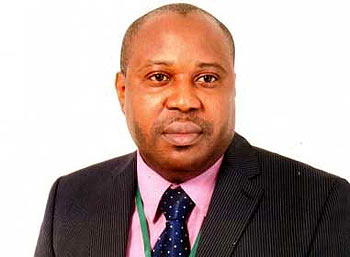
*Adegbite, EFCC’s Director of Operations
The Economic and Financial Crimes Commission (EFCC) was set up by former President Olusegun Obasanjo to curb financials crimes in the country to reposition the nation’s economy for tangible growth and development. Since its establishment, the Commission has prosecuted many individuals including former governors and influential business men in Nigeria.
Aside from investigation of cases on financial crimes, the Commission has also embarked on numerous awareness programmes to sensitise the citizens on the dangers of economic crimes and adverse consequences on the economy. EFCC’s Director of Operations, Mr. Olaolu Adegbite, speaks on activities of the Commission, its challenges and the need for the media to partner with the Commission on the war against corruption.
SOME experts are of the opinion that EFCC is moving on a very slow pace since the current chairman, Mr. Ibrahim Lamorde, took over the Commission. Do you share similar view?
I do not share such opinion because looking at it pragmatically the Commission is not slow in discharging its statutory responsibility. Our focus is to investigate financial crimes and prosecute the offenders according to the facts gathered in the process of investigation while the court has a duty to convict those found culpable of financial crimes.

*Adegbite, EFCC’s Director of Operations
Some people may be thinking that we are slow in handling various cases but that idea is erroneous. As trained investigators, we do not pass information that is not accurate to the public domain. So, we carry out thorough investigations into every complaint we receive to ensure prosecution. For instance, we just made eight arraignments in Lagos.
EFCC has many cases still pending in court and this is the reason people concluded that the Commission is inactive. But has EFCC gone to sleep?
That is not true. The Commission is very active because we are getting conviction every day. We are working tirelessly and a typical example is the case of $15million bribe. People should change their perception and see things positively about the effort of the Commission in tackling corruption in the country. The present government is determined more than ever to fight corruption in the system.
Our operations are carried out within the ambit of the law. As such, we do not talk much to the media on cases that are still pending in court because there are on-going investigations into those cases. So, due process of law must be allowed to take place. This implies that we keep vital information and must not disclose such details to the public, because a suspect may get certain details and tries to hide the asset in a way to disrupt our investigations.
Could you give us statistics on the number of cases you have pending in court now?
At present, we have about 300 cases still pending in court and there are no cases that we have not charged to court. And in a year we receive so many petitions but we dismissed some that are frivolous.
At times you have cases that are over 10 years still pending in court. Is incessant transfer of Judges affecting your cases?
Transfer of Judges is not affecting our cases because when Judges are transferred, they go with certain documents and other Judges are assigned to handle the cases. So, there is continuity in the system. Sometimes cases suffer delay in court when there are preliminary objections making us to start prosecution afresh. For instance, we have a lot of preliminary objections in the Supreme Court.
Could this delay also be attributed to shabby investigations of cases by the Commission?
That is not true. We often carry out thorough investigations on every case we handle because every judicial pronouncement is a law on it own. But when a case goes on in court for a period of 10 years, sometimes the witnesses may no longer be available and that poses a serious challenge also.
So far, about 15 governors are on trial by EFCC, when are they going to be convicted?
EFCC does not convict suspects but Judges do. Basically, what we do as public servants is to investigate every complaint we receive and prosecute the suspect involved financial crime.
Considering the number of cases you have in court now, don’t you think that EFCC needs a special court to fast track the prosecution process?
That is a constitutional matter. At the moment, we have designated Judges. Also, it is important to note that Judges must have special skills to be able to handle specific cases.
Is EFCC broke as people are already speculating?
EFCC is not broke but our financial capacity could be improved upon just like any other organisation.
Is it true that EFCC is only after those who have fallen out of favour with the government of the day?
That is not true. The Commission is not after those opposing the government rather we have a duty to investigate all financial crimes irrespective of the individuals or organisations involved. The notion that only those who have fallen out of favour with the powers that be are prosecuted and that EFCC has gone to sleep, are unfortunately the creation of the media.
Even with contrary evidence, a section of the press have been so swayed by this stereotype that they are not willing to shift their gaze in any way. This is quite unfortunate because corruption threatens every sector of the economy, the media inclusive. The media should lend its investigative skills to assist the Commission in its rage against corruption.
Disclaimer
Comments expressed here do not reflect the opinions of Vanguard newspapers or any employee thereof.