
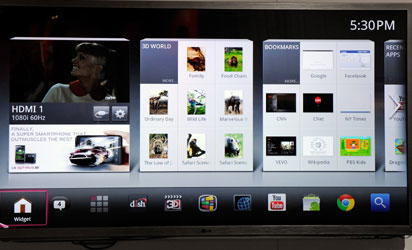
LAS VEGAS, NV – JANUARY 11: A G6 series LG Smart TV with Google TV is displayed at the LG Electronics booth at the 2012 International Consumer Electronics Show at the Las Vegas Convention Center January 11, 2012 in Las Vegas, Nevada. CES, the world’s largest annual consumer technology trade show, runs through January 13 and features more than 3,100 exhibitors showing off their latest products and services to about 140,000 attendees. AFP
By Prince Osuagwu
In the early days of display technology it was a bit difficultto read or view information and pictures from display devices such as TV, computer monitors and phones.
The early TV was black and white and had problems with maintaining clarity as they mostly required the user to tinker with external antenna to achieve some level of picture clarity. So also were the early mobile phones with a display composed of a yellow coloured screen and tiny texts that required the user to strain his or her eyes in order to decode information. The older versions of computer monitor were also known to have many drawbacks.
Picture quality has been a key determiner in the intent to purchase devices like TVs, smartphones, computer monitors and tablets. Simply put, we want images that play to our visual capabilities. What makes the 21st century more exciting is that we are beginning to see technological products hitting the market that are satisfying the most sophisticated and demanding of judges: our eyes.
Today, with the advancement in technology and with the numerous high-tech research being conducted all over the world, these devices are now expected to excel in colours as well as definition, enabling consumers have an instant connection with the product thereby making the devices a true companion.
The greatest leap in this journey, from the original black and white, through to traditional color TVs was when the personal computer jumped on the scene in the 1980s. Computer monitors borrowed heavily from their TV counterparts, although they soon made refineddistinctfrom the TV industry. Specifically, technologies were developed to optimize computer monitors for gaming purposes as well as professional graphics work and photo manipulation.
This merger between the TV and computer worlds threw down the gauntlet to engineers who set to work to bring color to the masses. Yet, they too began to head in distinct directions. The mobile world embraced touch screen technology, and also pioneered the development of new areas like Organic Light-Emitting Diode (OLED) displays which now form the basis of the new wave of advanced High Definition (HD) TVs that champion the evolution of the 21st century TV experience.
All over the world there is a majestic migration from the earliest versions of these technologies to the newer and advanced models.
In Nigeria, with the re-emergence of the middle class, many are going for devices with superior picture qualities be it smart phones, computer monitors and TVs. Owning the best of these devices has somewhat become a status symbol and distinguishing marks of upwardly-mobile individuals.
Strategically positioning themselves to satisfy this growing need, leading companies are investing in Research and Development.
So when some time in 2012 LG Electronics, introduced the ULTRA HD TV, it stoutly claimed that the product would redefineTV viewing,to itsresolution exceeding eight million pixels. In essence, that number isfour times that of conventional HD screens.
The LG ULTRA HD TV which was christened the ‘Magnificent TV’because of its features is generation of sets that boastofspectacular viewing experience. The84-inch ULTRA HD TV bworld firstbiggest UHD TV as at that time. But now, also added to that platform, another concept4KTV,which takes image clarity to a whole new level with pixel resolution that’s four times greater than Full HD.
Speaking at the launch in Nigeria, the General Manager, Home Entertainment division, LG Electronics, West Africa Operations, Mr. Steve Ryu said: “It is obvious that our industry is driven by innovation and Ultra High Definition which is why our latest invention will transform viewing experience. This is indeed a watershed moment in TV history because the Ultra HD 4K technology will make it possible for consumers to enjoy crystal clear picture quality”.
On a very closer look, the recent exponential growth of technologies which stand on the shoulders of the innovations of the past is nothing short of astounding. The advances made in TV technology in the last five years is remarkable and have changed the taste of consumers to clearer, brighter and real images. Truly, colour, is the game!
Disclaimer
Comments expressed here do not reflect the opinions of Vanguard newspapers or any employee thereof.