
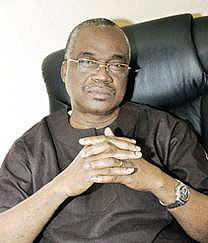
*Awa Kalu, SAN
By Awa Kalu, SAN
By ‘Those Verdicts,’ I mean the verdicts that have at different times caused public umbrage and outrage thus giving the impression that a Judge’s verdict (or the Jurors’ as the case may be) was at variance with what the public thought would be the case. By coincidence, the verdict in a Florida Court came almost at the same time with the Court of Appeal’s acquittal of Al Mustapha, General Abacha’s ex Chief Security Officer who was incarcerated for several years for allegedly masterminding the execution in public of late Kudirat Abiola by Police Officers.
The Florida Court acquitted one George Zimmerman who was arraigned and tried for the fatal shooting of an African-American teenager, Martin Trayvon.
That acquittal provoked riots across the U.S. and once more, has brought to the fore the cross fire and opprobrium that arises from the intervention of the criminal justice system in alleged racially induced crime. For the purpose of backgrounding, I have made a fairly lengthy excerpt from Johnnie Cochran’s Autobiography, A Lawyer’s Life, in which he meticulously documented his lifelong struggle to redress what he considered as Police bias against ethnic minorities such as blacks and Hispanics.
Johnnie Cochran, as you may recall, was the Lead Counsel of the ‘Dream Team’ – a crack multi-racial team of lawyers that defended the famous American football hero, O.J. Simpson who was charged with the brutal murder of his ex-wife, Nicole Simpson and a young man, Ron Goldman. O.J. Sampson’s acquittal in what was dubbed ‘trial of the century’ did not amuse a huge section of the American public. Johnie Cochran, in a Lawyer’s Life wrote that ‘sometimes it seemed like it was actually easier for an African-American to get justice in the criminal court than on civil litigation. The civil courts in Los Angeles just didn’t seem to think there was anything wrong with police officers shooting and choking black kids.

*Awa Kalu, SAN
There seemed to be an unspoken acceptance that the police were permitted to kill or maim a few innocent black kids if it made the streets safer for everybody else. One of the most outrageous cases of my career was the killing by two policemen of twenty-three-year-old Philip Eric Johns. Philip Johns was asleep in his own bed in his own apartment in Inglewood. He was a hardworking African-American; he wasn’t bothering anyone. He was sleeping and they broke into his apartment and shot him. They killed him’ continuing, Cochran noted that:
‘A fundamental right guaranteed by the Constitution of the United Sates is that the citizens of this country should be secure in their own homes. But two plainclothes policemen got a tip that a man accused of committing several robberies was hiding out in that apartment. It is so reminiscent of the killing of Amadou Diallo decades later. These cops quietly broke into the apartment- with their guns drawn- and stood over Philip Johns.
Guns drawn. This young man was asleep, one hand tucked under his pillow. To these policemen a young black man sleeping with his hand beneath a pillow seemed very suspicious; they claimed he appeared to be feigning sleep and hiding a weapon. The fact that the sleeping man might be innocent, might not have had anything to do with the robberies, apparently never occurred to these police officers’ Cochran urged his readers-
‘Just put yourself inside the mind of Philip Johns. You’re asleep in your own bed, knowing you’ve done absolutely nothing wrong, not feeling guilty about anything. Maybe you’re even dreaming. Suddenly someone shakes you awake. The police claim they indentified themselves, but there is no credible evidence to verify that. So you wake up and it’s the middle of the night and you’re groggy and the first thing you see is some guy wearing a regular shirt and pants standing over you, holding a gun inches from your face.
Grabbing the intruder’s gun
What the …. of course you react, just like Philip Johns did. He probably grabbed the intruder’s gun and tried to pull it away. The police officer fired. Philip Johns continued to struggle, fighting for his life. The cop fired again. Again. The second cop, standing at the end of the bed, opened up.
He shot him once. Twice. Bullets hit Philip Johns in his temple, in the middle of his back, the back of his upper right arm– and in his heart. He died on his own bed, never knowing he had been killed because two cops had broken into the wrong apartment. After a brief investigation, the LAPD decided it was a tragic accident, blaming it on the informant– an Inglewood police officer– who supposedly gave them the wrong address.
According to Police Chief Parker’s successor, Police Chief Ed Davis, there wasn’t enough evidence to take any disciplinary or criminal actions against the police officers. The whole African-American community was furious. Things have changed since the Watts riots. People just weren’t going to accept the same silly excuses that had once been forced on them”.
Johnny Cochran’s narrative shows that every coin has two sides and even in criminal trials, the judge, as well as the Jury (in a Jury trial), must weigh the facts and assess the credibility of the witnesses and the probability that the facts as presented point to no other conclusion than the guilt of the accused person who ordinarily is entitled to a fair trial. An unfair trial always leads to a miscarriage of justice.
The Supreme Court in State v. Gwonto [1983] N.S.C.C 104 held that failure of justice is much the same thing as miscarriage of justice. The court further explained that: “An accused person is entitled to a trial in which the relevant law is correctly explained and applied and the rules of procedure and evidence strictly followed. If there is any failure in any of these respects, and the appellant may thereby have lost a chance which was fairly open to him of being acquitted, there is in the eye of the law a miscarriage of justice. Justice has miscarried in such cases because the accused has not had what the law says he should have and justice is justice according to law.” Mraz v. The Queen (1954-56) 93 C.L.R. 493, 514. Per Fullagar J.
Disclaimer
Comments expressed here do not reflect the opinions of Vanguard newspapers or any employee thereof.