
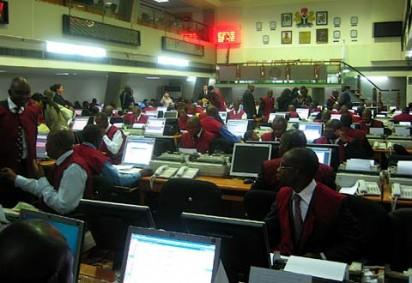
Nigerian Stock Exchange
By PETER EGWUATU
Usually companies sell shares to investors. But a company can also buy its shares from shareholders. When it does so, the company is said to have ‘Buy Back’ its shares. Many shareholders do not understand the concept of “share buyback”. It is simply the acquisition by a company of its own shares from its shareholders.
Generally, where a company buys back its own shares, it effectively reduces its issued share capital by reducing the number of shares held by the public such that even if the profits of such company were to remain the same, the company’s earnings per share would increase.
The expectation of the Securities and Exchange Commission (SEC) is that the application of the share buyback (particularly in present situation where the stock price of most quoted companies are depressed), would provide a viable means of revaluing the price of the stocks quoted on the Nigerian Stock Exchange (NSE).
In Nigeria, there is a restriction placed on public companies both by Companies and Allied Matters Act (CAMA) and SEC Rules to the effect that the company can only draw the cash needed for the repurchase of its own shares from a specific source. Moreover, the buyback can only be carried out in a certain manner within a certain time frame and within a certain proportion.
The justification for these rules is seen by reference to the history of company law and their inclusion in the CAMA. Historically, unscrupulous managers and promoters of a company could create an artificial “bubble” or impression of buoyancy of the shares of a company and fuel dangerous speculative trading of the shares by re purchasing those shares with loans.
In order to prevent the prevailing incidence of fraud committed on the unsuspecting members of the investing public by those who were running the affairs of the company, rules were developed in the history of corporate law practice, and the CAMA.
Particularly (Section 158 to 165) places a bar on companies acquiring their own issued shares or to taking advantage of any loan or financial assistance to acquire their own shares (Section 159 and 160 (1) CAMA). The rule is that in order to avoid the incidence of fraud, a company cannot buy its own shares or assist another to buy it, except there are legitimate circumstances such as those mentioned by CAMA.
This accords to best international practice and is meant to curb sharp practices of those controlling the affairs of the company (directors and controlling shareholders).
However, the regulatory framework of SEC under which share buyback can be done is as follows: That a company’s shares are trading below its expected value; that there are no better investment opportunities or better use/allocation of capital.
The first segment of this rule invites managers of the company’s business to act as good investors by buying the stocks only when they are being traded below expected value. This results in a transfer of wealth or maximising of value from selling shareholders to continuing shareholders.
The second segment addresses the company’s priorities as a value-maximising company to fund the highest return opportunity first, which may be re-invested in the business depending on the conditions of the market.
The exceptions to this general rule and their limitative conditions for application are stated in CAMA Sections 158, 160 (2) (3) to 164. “For instance, a buyback will be allowed for the purpose of redemption of redeemable preference shares; For the purpose of settling or compromising a debt or claim asserted by or against the company; For the purpose of eliminating fractional shares; For the purpose of complying with a court order; For the purpose of satisfying the claim of a dissenting shareholder.”
Disclaimer
Comments expressed here do not reflect the opinions of Vanguard newspapers or any employee thereof.