
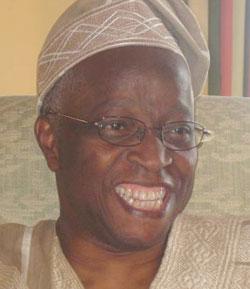
Prof Adamolekun
By AMA PEPPLE
GOVERNANCE challenges: The world is changing rapidly and the challenges of running nation states more effectively are tasking the political leaders and public servants as well as other key stakeholders to the limits. Nations all over the world are embarking on various measures to respond to this new challenge by undertaking reforms and redefining nation visions.
In Nigeria, following the re-establishment of democratic governance in 1999, a national vision with the goal of placing Nigeria among the twenty leading economies in the world by year 2020 had been developed which is currently being implemented under the Transformation Agenda of the current Administration.
Massive reforms
The massive reforms in all sectors of the economy which was launched by the Obasanjo Administration had also been consolidated. Recent efforts have focused on constitutional reforms, reform of the electoral system, reform of the security apparatus of the State, economic reforms and structural realignment to reduce the cost of governance. Other key challenges being addressed include rising incidents of poverty, terrorism, youth unemployment among others.


AMA PEPPLE
Overcoming these challenges requires a meeting of minds between public servants and their political masters in order to effectively harness the potentialities from the two divide for resolving urgent national concerns and strategic priorities.
The Public Service in Africa under the Conference of African Ministers of Public Service (CAMPS) of which Nigeria is a key member has recognised the need for advancing the cause of good governance in the continent. Under its long-term strategy on African Governance and Public Administration Programme, the overall thrust is to support the political leadership in each Member State of the African Union (AU) to build a capable developmental State.
‘The vision of the capable developmental State is one that is committed first to ensuring a better life for all its citizens; that promotes popular participation and the indigenous ownership of its entire developmental agenda; whose public service is people oriented, based on meritocracy and driven by service to its citizenry; that has sound systems of public administration at all levels of government; has transparency and accountability to its citizenry and to its institutions as central tenets; has a sound macro-economic framework that eradicates poverty and surpasses the minimum standards set by the MDGs, implements its continental commitments on governance and public administration; mobilises budgets and manages its public finances effectively; and is underpinned by democratic politics.

Prof Adamolekun
Heads of Government have made similar resolutions at the level of the African Union indicating some level of unanimity or a common purpose on the direction that African countries should be going in order to accelerate the pace of development on the continent. In a nutshell, both the political and bureaucratic leaders are in agreement that the challenges currently facing the nation and the ones that will emerge in the foreseeable future need to be addressed through the aggregation of the efforts of all and sundry, especially by functionaries of government in both elective and appointed positions.
Putting it in context
However, in view of the network of relationships which exists between higher public servants and their political masters which cannot be fully covered in this discourse, the focus will be on the relations between Ministers and Permanent Secretaries since they are key players in Government, the former being the political head of a Ministry or Department while the latter is the administrative head.
Understanding Mutual Perceptions: In spite of the need for the political leaders and public servants to see their roles as partners and not competitors in nation building, elected leaders may deride public servants as too bureaucratic, lethargic, incompetent, uncooperative, unproductive, obstructive and corrupt. Public servants may also see the political masters as inexperienced, pursuers of short-term political gains, impatient, immature, self-centred, greedy, uncaring, parochial, and equally corrupt. Accordingly, higher servants and their political masters are constantly in a struggle to fix each other in their pre-conceived mould of mental judgement which invariably breeds mutual suspicion, and sometimes apprehension, setting the stage for conflict. If this is not adequately checked, it may have untold consequences for the system by impacting it negatively.
May I at this juncture share my experience with you all in the Federal Ministry of Lands, Housing and Urban Development after I was appointed by the President as a Minister of the Federal Republic. In spite of the warm welcome I received in the Ministry on assumption of duty in July 2011, and the recognition that I was a former Head of the Civil Service of the Federation as well as a Permanent Secretary who had a distinguished record of serving in seven Ministries and the Senate of the National Assembly as its first female clerk, I could see from the signals emanating from the Ministry that I was perceived to have crossed to the other side of the divide as a political actor whose intentions needed to be properly understood before the officials of the Ministry could extend their hands of fellowship to me. The suspicion was accentuated because of the recognition that I knew both the public service rules and the system too well that I could not manipulated by any fairy tales about their application in conducting public affairs. On reflection, after one year on the job now, I am not so sure that I have fully enjoyed the cooperation of all the higher civil servants in the Ministry especially those who still believe that I am no longer one of them.
This is not unexpected as the suspicion is borne out of the role of the Public Service as the custodian of national interest and watchdog of the system, charged with the responsibility of acting impartially, professionally and courageously by speaking truth to power in order to uphold the public trust. Ministers of Government who are appreciative of this role need not react negatively but understand that this is a necessary process that they must undergo to secure the trust and confidence of the bureaucratic leadership in performing their duties.
Public servants
Public servants dealing with one of their colleagues in a new role of Minister also need not to be uncomfortable as long as they are prepared to conduct their affairs professionally and ethically since the Minister has equally been appointed to be a watchdog of the society by ensuring that in administering the affairs of the State, public servants act beyond reproach.
Relations between Ministers and other Officials: The guidelines in respect of the above are outlined in the ‘Guides to Administrative Procedures in the Federal Public Service ‘ as follows:
Ministers
(i)They are personally and politically responsible for each act and every act of their Ministries and are to work with their officials ,particularly the Permanent Secretary in carrying out their functions;
(ii)They are to seek impartial advice and information from the Permanent Secretary in reaching a decision on issues before them and this is possible only through building of confidence and trust between the two parties;
(iii) Ministers are entitled to the loyalty and willing cooperation of the officials in their Ministries, Departments and Agencies (MDAs) . In this connection, a Minister’s decision on any matter must be respected and implemented by his officials, including the Permanent Secretary even if they do not agree to it;
(iv) Ministers must avail themselves of the opportunity of getting to know not only their Permanent Secretaries but also other officials in their MDAs since they will be contributing in providing advice to them on a wide range of issues to enable them to take informed decisions; and
(v) Ministers have the responsibility of expounding government policy.
Being part of a speech delivered by Ms. Ama Pepple at the 70th birthday Celebration of Prof. Adamolekun recently.
Disclaimer
Comments expressed here do not reflect the opinions of Vanguard newspapers or any employee thereof.