
By Omoh Gabriel, Business Editor
WHEN the Central Bank of Nigeria CBN wanted to introduce the cash less policy its argument was that less than 10 per cent of the Nigeria population draws on the average that amount of money from the banking system thus placing the burden of cost of cash management on the banks and the CBN. Every entreaty to persuade the CBN out of it failed. The rest is now history.

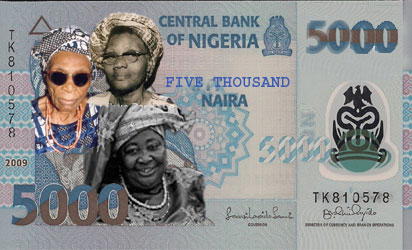
Today the apex bank has come up with yet another controversial policy, that of introducing N5, 000 note and the coinage of the lower denomination of the naira. Economic history has shown that several nations that travel this path have long abandon the use of higher currency denomination in favour of electronic transaction towing the cashless policy.
The move by the CBN to introduce the N5,000 into circulation in the face of its cashless policy is an admission of failure of the policy and is looking for a way out. The introduction and coinage of the lower denomination will have several unwanted effect on the economy. With the introduction of N5, 000 it is good business for those who are engaged in currency counterfeiting as it pays to do the business the higher the denomination in circulation.
In economic management, theory and practice, there are basically three motives for holding money: transaction, precaution, and speculative motives. A higher denominated currency will encourage individuals to hold money which in economic terms amount to hoarding thus depriving the economy of access to free funds for those who need it to finance production.
If the CBN had earlier promoted cash-less Nigeria which it has implemented half hazardly, this is a direct negation of the cashless Lagos and Nigeria. The move to restructure the country’s currency can best be described as cosmetic, a clear contradiction of the cashless policy that will induce inflation if not stopped.
The CBN had said that will introduce N5,000 note, redesign N50, N100, N200, N500 and N1,000 notes, while lower banknote denominations of N5, N10 and N20 will be coined, under its currency restructuring exercise, code-named Project Cure.
The CBN in recent times has taken two steps intended to address the menace of money laundering in the country; the know-your-customers revalidation exercise carried out by banks, and the on-going cashless Lagos.
The argument was that to effectively monitor illicit trafficking of money and other financial crimes, banks must ‘know their customers’ hence a revalidation of all banks’ customers in 2009/2010.
The Cashless Lagos Nigerians were made to understand was designed to reduce cost of managing cash; by so doing, help the nation to test run migration from paper-based monetary transaction to non-paper-based system. What Nigerians are yearning for is for the CBN to replace the polymer notes (N5, N10, N20, and N50) that seemed not to have secondhand value in terms of durability and not to introduce them as coins.
This policy which is aimed at reducing the use of cash had been justified by the need to reduce the burden of the cost of printing and distributing currency notes. The introduction of a high face value currency note actually does the opposite because by reducing the unit cost of printing and transportation, it actually would promote the use of cash.
The issuance of the new N5,000 currency note also runs counter to the government’s often repeated commitment to fight corruption. It is widely recognised that large scale corruption tends to be facilitated by the ease with which unrecorded and large cash transactions can be made.
In the market place, Nigerians have rejected coins. Once the new coins are introduced the first thing that will happen is that prices will be redenominated in N50.
This was what happened when the CBN introduced new coins that drove out the use of one naira, five kobo that were coined. This will be the beginning of hyper inflation. The CBN plan has no mechanism of revaluing the naira. The revaluation of the naira would have served a more useful purpose than the planned restructuring.
To be concluded tomorrow
Disclaimer
Comments expressed here do not reflect the opinions of Vanguard newspapers or any employee thereof.