
By Emmanuel Aziken
It was a sharp twist for a people repeatedly classed as the happiest people on earth. Nigerians were said to like life so much that they would rather suffer brutal dictators than allow themselves to be inconvenienced by tear gas from demonstrations against bad government. But no longer.
In the last year Nigeria turned into a haven for suicide bombers even conceiving the horrific idea of video recording a suicide bombing. The bombing of the Thisday, Abuja office complex by the group, Jama’atu Ahlis Sunna Lidda’awati Wal-Jihad, popularly known as Boko Haram on 26th April was the only known terrorist action of the group known to have been recorded on video camera. But it may not have been its most audacious.
While every single life taken away in the course of the groupfs violent actions have been heart wrenching, some actions, however, rise above the ordinary. Among the most daring actions of the group in the last year was the attack on the headquarters of the Nigerian Police in Abuja on June 16, 2011. That attack which missed the Inspector-General of Police by whiskers was believed to be the first act of suicide bombing ever recorded in Nigeria. The then Inspector General of Police, Hafiz Ringim had few weeks earlier publicly declared in the stronghold of the terrorist group in Maiduguiri, Borno State that the days of the group were numbered.


The terrorist group set itself firmly on the international watch list with the bombing of the United Nations building in Abuja on August 26. A car laced with explosives that Friday rammed through the protective barriers at the UN building and exploded killing at least 19 persons on the spot and causing grievous body damages to scores more.
“It is an attack on the global community,” Prof. Viola Onwuliri, the Minister of State for Foreign Affairs said that day as she joined rescuers and others who rushed to the scene that morning.
Her allusion to an attack against the global community was to be given fillip when President Goodluck Jonathan visited the scene the following day.
“Of course, where ever you have terrorist attack in any country Nigeria is not an isolated case. Many countries have suffered from terrorists attacks may be it is the turn of Nigeria.
But we are on top of the situation” the President sated. His comment that it was happening everywhere and in other lands was, however, to receive strong condemnation from his domestic critics some who noted that it was not happening in any of the countries neighbouring Nigeria. Repeated bombings and attacks using high caliber weapons continued to happen across many states of the north notably in the Northeast on a daily basis.
The bombing of a Roman Catholic Church building in Madalla during Christmas service on December 25 shook the nation and again reinforced international focus on the country. At least 25 worshippers were killed in that attack that inevitably stretched the patience of the Nigerian Christian community. Appeals for calm from some within the Christian community and the Muslim community helped to sooth tension and stop what some saw as an attempt to drag the country into a sectarian crisis. The Christian virtue of patience was further stretched in the first week of January 2012 with repeated almost daily attacks in Gombe, Adamawa and Adamawa States.
In a remarkable incident in early the first week of January members of the Igbo community who had gathered to plan burial arrangements for 3 members of the Igbo community killed by the terrorist group themselves came under attack leaving at least 19 of the mourners dead.
The tide of the attacks, however, lost religious colouration on January 20 when the terrorist group staged a daring attack against Police formations and other security offices in Kano leaving at least 185 persons killed out of whom 150 were civilians. It was an attack that shook the ancient and cosmopolitan city of Kano.
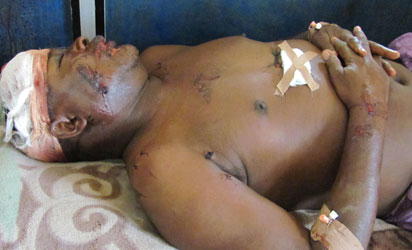
The traditional ruler of the ancient city, Alhaji Ado Bayero was brought to great distress over the incident. Among the civilians killed was Eneche Akogwu, the award winning broadcast journalist who worked for Channels Television.
The governmentfs response has been a zigzag of carrot and stick. With calls on the government to go into dialogue the administration has sometimes stretched out hand of dialogue but that has also been accompanied by retaliatory actions by the security agencies that have increasingly pinched away the strength of the terrorist group. Such actions have compelled the group to denounce the administration as insincere in its proclamation of dialogue.
Disclaimer
Comments expressed here do not reflect the opinions of Vanguard newspapers or any employee thereof.