
Despite the sacking of 788 doctors on May 4, 2012, the face-off between the Lagos State government and the Medical Guild continues unabated. Rather than wane, the discord between the two parties appears to be waxing stronger.
Following the sacking episode, the doctors dragged the state government before the Industrial Court to seek redress. Although the Court has urged the disputing parties to “settle amicably” the drums of war are still sounding. In the eye of the storm is the Consolidated Medical Salary Structure, CONMESS – a special salary scale designed to correct the wage disparity in doctors’ salaries relative to other professionals nationwide.
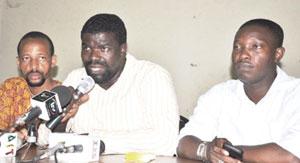
Over the last couple of years, the two parties have ceaslessly traded blames over an agreement they both signed for its full implementation. At every opportunity, the state government insists that CONMESS is being fully implemented, but the Medical Guild has consistently cried foul, alleging that the government reneged in fulfilling the agreement. In this encounter, with Sola Ogundipe & Chioma Obinna, Drs. Olumuyiwa Odusote and Idris Durojaiye, President and Secretary of the Medical Guild respectively, tell it all. Excerpts:
Genesis of CONMESS
In September 2009, following several years of negotiations between the Nigerian Medical Association and the Federal Government, the Consolidated Medical Salary Scale circular SWC/S/04/S.410/220 was released by the National Salaries, Incomes and Wages Commission.
The main principle of CONMESS is to serve as a minimum universal scale of remuneration for all doctors in Nigeria regardless of location or employer, in order to curb internal brain drain. CONMESS is also intended to correct the wage disparity that has seen doctors’ salaries being progressively reduced relative to other professionals over the years following repeated wage reviews.
Agitation of the Medical Guild
The Medical Guild had been agitating for implementation of CONMESS by the Lagos State Government since 2009 through several letters and representations to government. This culminated in the strike actions of August to November 2010, and February to March 2011.


An empty ward in a Lagos owned hospital due to the strike by the medical doctors
The Lagos State government dragged the Medical Guild to the National Industrial Court in August 2010 challenging the legality of our strike action. The President of the court, Justice Adejumo, however ruled that the Medical Guild did not err as it had given the government sufficient notice through several letters and meetings with government.
Agreement
In November 2011, the Lagos State Government agreed to pay CONMESS as approved in the Federal Government Circular stated above and committed itself to same via a signed document. This document specifically indicated government’s acceptance to pay and also not to place Lagos State doctors at any disadvantage whatsoever relative to their colleagues anywhere else in the country.
The government later rescinded on this agreement which led to the second strike of February to April of 2011. In late March 2011, an agreement was finally signed between the Lagos State Government and the Medical Guild to implement CONMESS in full. This agreement which was signed by His Excellency the Governor of Lagos State, Babatunde Raji Fashola, also included the cost of implementing CONMESS in full. The Medical Guild suspended its strike action in good faith, despite the earlier reneging of the Lagos State government, in order to allow government implement the agreement.
Failure by Govt
The Lagos State Government however failed to honour the agreement and however chose to implement only certain aspects of CONMESS. For the past one year, the Medical Guild has been writing, meeting and pleading with government to correct the shortfall in implementation of CONMESS. The government however only chose to shift and default on its promises.
Outstanding issues on CONMESS
Implementation of the CONMESS ran into troubled waters following the demotion of all doctors to lower steps on each grade level, thus leading to loss of seniority and income. According to the civil service rules and according to the agreements made with government, all doctors are to be laterally converted from the previous salary grade level and step to the corresponding salary grade level and step on the CONMESS scale.
The agreement on CONMESS signed by the Governor in March 2011 which led to our suspension of the strike included the cost implication of implementing CONMESS in full with lateral conversion of all doctors from the old (CONTISS) scale to the new CONMESS scale, level for level, step for step, without any form of demotion in step. Annex II of the CONMESS circular is very clear on conversion from CONTISS to CONMESS. All over the federation, migration to the CONMESS scale is level for level and step for step.
Even the attempt to demote officers by steps has been fraught with serious errors and caused total distortion in hierarchy, such that senior doctors now find themselves below their juniors. The Medical Guild had written severally to government to correct these anomalies yet nothing was done about it.
Demotion through steps
Demotion of grade level 15 specialists (Consultants) from step 4 and above to step 1. Entry level for specialists is GL 15 step 4 according to the civil service rules. However, specialists in Lagos State who were employed on GL 15 step 4 were demoted to step 1, and newly employed specialists are being placed GL 15 step 1. This is contrary to what obtains in the CONMESS circular and the extant civil service rules.
Employment of new consultants on GL 15 step 1: Points of entry for various cadres into the different salary scales are determined by the National Salaries and Wages Commission, which also determines salaries for holders of political office. The entry point for consultants has been stipulated as Grade Level 15, step 4. The Guild regards this as sacrosanct. Dropping this cadre to step 1 will amount to setting back the profession three years. This is not acceptable to us.
Pegging of GL 12 doctors in LASUTH on lower steps compared with their counterparts in the Health Service Commission (HSC) who are placed on higher steps. Normally, entry level of Medical Officers and Registrars is GL 12 step 2. Entry level for LASUTH registrars was fixed at step 1 and all registrars were pegged at steps 1 and 2. However, Medical Officers in HSC were appropriately placed on step 2 as entry level and higher according to the number of years in service. Therefore, GL 12 doctors in LASUTH have been at a disadvantage for the past one year.
Teaching allowance
Teaching allowance for House Officers (GL 10) and Medical Officers/Junior Registrars (GL 12): the cost implication for the above was calculated in detail and approved for payment by the Governor as part of the agreement with which we suspended our strike. We were therefore surprised that cost implications were still being recalculated 13 months after implementation should have started. This allowance is being paid by other state governments as contained in the CONMESS circular.
Excessive taxation
On the issue of excessive taxation, the Medical Guild argued that part of the agreement with government for suspending the strike last year, was that the excessive taxation would be reviewed downwards. “Contrary to this agreement, from October 2011 the tax paid by doctors was increased. Initially we attributed it to the bonus added to our salaries between October and December 2011. However, following return to our normal salaries in January 2012, the amount of tax we have been paying has remained at the inflated level. Despite our complaints about this anomaly no rectification has been made.
The warning strike
The Medical Guild was forced to seek other available and legal means to ensure that government implements CONMESS in full. Bearing in mind the prolonged suffering an indefinite strike action would cause Lagosians, the doctors opted for a 3-day warning strike between 11th and 13th April 2012. “This was intended to put pressure on government to do the needful and to alert the public on the unresolved issues. However, instead of government initiating moves to resolving the outstanding issues in the interest of industrial harmony and welfare of Lagosians, it embarked on a vendetta to punish the doctors by issuing queries and threatening to sack doctors for participating in the warning strike.
On receipt of the queries on 16th April 2012, we promptly informed all our members not to reply them since our strike was a labour issue and not an administrative matter.
The association replied the queries on behalf of our members stating clearly to government that the strike was legitimate as it was a resumption of our suspended strike action of March 2011. Another query was issued by government on 18th April 2012 threatening to discipline our members for not replying the first query. Still our members did not reply the second query.
Disciplinary panel
On Monday 23rd April 2012, the government invited all doctors to appear before Personnel Management Board meetings (disciplinary panel) at the Health Service Commission on Lagos Island and in LASUTH, Ikeja on Tuesday 24th April 2012 and Thursday 26th April 2012.
But the Medical Guild instructed all the invited doctors not to appear before any of the panels. However, they mobilised to appear together at the Health Service Commission on Lagos Island on Tuesday 24th April 2012 in solidarity with those who were summoned to face the panelon account of the 3-day warning strike.
Sacking of doctors
But on Monday 7th May 2012, the state government issued dismissal letters to 788 members of the Medical Guild for participating in the 3-day warning strike. The letters were dated 4th May 2012. We urged the government to immediately withdraw the sack letters and all queries issued to our members as it is totally in breach of labour laws since the warning strike was legitimate and a resumption of the suspended action of 2010/2011. Government should instead hasten to ensure implementation of the agreement and demonstrate its good will by promptly paying the appropriate salaries.
Disclaimer
Comments expressed here do not reflect the opinions of Vanguard newspapers or any employee thereof.