
By Jude Njoku
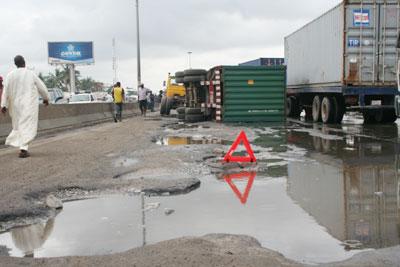
The Nigerian road network covers a total of 195,400 kilometers. This figure is made up of 34,300 kilometres of Federal roads, 30,500 kilometres and State roads and 130,600 kilometres of local government roads. But only a paltry 60,000 kilometres are paved and this falls short of the 300,000 kilometres of paved road required to meet vision 20-2020 target in the road sector.
Against this backdrop, the 19th National Council of Works, comprising the ministers and commissioners for works at the Federal and State levels and their key functionaries, last week in Lagos brainstormed on how to reform the road sector for socio-economic transformation.
Addressing the conference, Works Minister, Mike Onolememen, an Architect, restated his resolve to carry out sustainable reforms in the road sector as well as strengthening the institutional frameworks in line with global best practices and in a bid to attract private sector investments in the nation’s roads infrastructure development.
Onolememen explained that a committee of local and international experts set up by the government to reform the sector, has recommended the establishment of a Roads Fund and creation of a Federal Roads Authority.

These institutions, according to the Minister, will help drive road development through the Public-Private Partnership PPP initiative and other creative funding models. He disclosed that the proposed bills for the two institutions are currently being studied and reviewed before presentation to the Federal Executive Council for consideration and approval.
The Minister who decried the poor maintenance of existing roads across the country, stated that the dilapidation is exacerbated by the ineffectiveness of water and rail transportation.
“As at today, only about 35 percent of the paved roads in this country are in good motorable condition,” he lamented, adding that time has come when Nigeria must move away from the palliative approach to road development and take bold steps to develop the sector.
“Enhanced collaboration between the three tiers of government will help to produce the desired results and bring our country at par with emerging nations such as Indonesia, South-Africa, India, Mexico, Turkey and Saudi Arabia,” he said.
Onolememen disclosed that government’s collaboration with multilateral agencies such as the World Bank and Africa Development Bank ADB, has begun to yield positive results. According to him, the collaboration has attracted over USD300 million funding of road projects.
Road projects that have benefitted from the funding include: Enugu-Abakiliki road, Abakiliki -Ogoja road, Ogoja -Ikom road, and Ikom-Mfom road linking Nigeria with Cameroon while the Gombe Biu Bida -Jebba and Akure Ilesha roads will also benefit from the multilateral funding.
On the proceeds from SURE, he said the government has identified six critical roads that would be financed with proceeds from the partial deregulation of the petroleum sector. They include the completion of the dualization of Abuja-Abaji-Lokoja expressway, completion of the Loko-Oweto bridge, completion of the dualization of Kano-Maiduguri expressway, construction of 2nd Niger bridge, rehabilitation of Shagamu -Ore dual carriage way and Onitsha -Enugu dual carriage way.
Declaring the conference open, the Lagos State Governor, Mr. Babatunde Fashola declared his support for the Federal Government’s commitment to reactivate the rail transportation system in Nigeria, describing it as a critical step in Nigeria’s development agenda.
Fashola who was represented by his Deputy, Mrs Adejoke Orelope- Adefulire said the plan to reactivate the railways should be hastened t o compel those with heavy duty goods to use rail rather than roads.
Key decisions of National Council of Works
•Approved the use of bitumen emulsion in all road projects in line with the Kyoto protocol that discourages emission of gases
•Abolished use of kerosine on any road project in Nigeria with effect from January 1, 2013.
•Sought urgent action by the Federal government on the establishment of Roads Fund and Federal Roads Authority
•Wants government to put in place, a National Tolling policy to attract private investors
•Wants strict compliance with specifications for roads and bridges as well as adherence to guidelines for intervention by state governments on Federal highways in order to guarantee reimbursement
•Approved that all Federal roads with 5-10 kilometres radius from the city centre of the state capitals should be ceded to the states and form part of the state road network for its control and maintenance.
•Bridges are however exempted from this
•Decried encroachment on Federal highways Right of Way
Disclaimer
Comments expressed here do not reflect the opinions of Vanguard newspapers or any employee thereof.