
Dele Sobowale
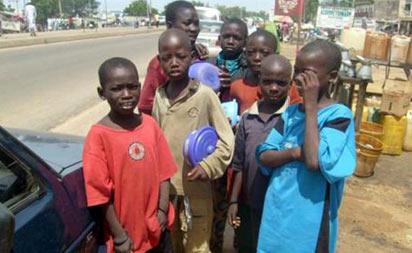
Despite her potential for prosperity, Nigeria has been listed as one of the five countries where half of the world’s malnourished live.”
THE PUNCH, February 21, 2012 p 3.
Today, MEND and Boko Haram torment us. In the future, other violent groups will rise against an increasingly vulnerable society – unless we take the war against poverty seriously. One solution that will not work is SURE – the new Federal Government’s mantra.
There is very little money provided in SURE, which is now a big joke to tackle this monster of a problem even if government has its way and increases the price of petrol to N141 per litre. Just before this article was sent to the Editor, the National Assembly approved the 2012 budget providing only N180 billion for SURE- less money than would be required to finish the East-West expressway. End of SURE; surely.
Few people need to be told that malnourished children experience retarded growth physically and mentally. A research study undertaken by me six years ago established, beyond reasonable doubt, that nutrition and ability to learn are directly related.
Is it any wonder that Gombe State, for instance, would send 5,000 candidates to sit for NECO exams and only seventeen would pass the exams – all seventeen from wealthy or comfortable families!!! Not a single one came from a poor family.
Meanwhile, another story in the same PUNCH on that day revealed part of the reason we are making no progress against poverty. Titled “Reps summon ex-presidential aide over N20bn NAPEP funds”, the story read as follows:
“The House of Representatives Committee on Public Accounts, on Monday, summoned a former senior special assistant to the President on Poverty, Dr Magnus Kpakol, over alleged misuse of N20bn voted for poverty alleviation projects between 2004 and 2009 by the Federal Government… Kpakol had doubled as the Coordinator of the National Poverty Eradication Programme.”
Two of Kpakol’s attributes, which can be observed at close range at seminars on poverty alleviation, and which render him the least likely person to fight the war against poverty are: vanity and a surprising lack of a good grasp of details of the programme for an economist.
Nigeria’s former poverty alleviation chief loves designer clothes – even when mingling with the poor. By contrast, his Indian counterpart walks around in jeans, T-shirts and sandals. The difference is clear as the advert told us years ago.
Clearly, the entire structure of government must be overhauled and a deliberate set of policies must be instituted aimed at significantly increasing the public share of expenditure to GRA II where the hatcheries for terrorists are situated.
Perhaps, because Dr Kale is a civil servant, he could not go too far in criticising his superiors. But, he provided sufficient information for those who are not squeamish about engaging government.
The bottom-line is clear to some of us- we either make a bold plan to reduce poverty or get ready to confront others or even the same violent groups in the future. Relative peace and incremental progress or perpetual war represents the two alternatives left to us and our kids. There is no third choice.
In making our decisions regarding poverty alleviation, we should bear in mind that there are more of the poor than the rest of us; and the cost of waging war is dropping. For a mere N500, a multi-million naira building can be reduced to rubble in seconds now.
The paradox should not be lost on us. While the cost of living goes up, the cost of destruction keeps going down. While millions or even billions might be accumulated over years, it requires very little money or time for the investment to go up in smoke. The tyranny of the poor is here. Go and ask the refugees from Maiduguri or Kano.
All of our previous attempts have been half-hearted and corruption-ridden. The Better Life for Rural Women Programme, initiated by Mrs Mariam Babangida, ended up being derisively called Better Women for Rural Life.
Every project to be launched in a rural area was attended by Mrs Babangida accompanied by the wives of Ministers, Governors, state Commissioners and Local Government Chairmen – all in gay attires – descending on people mostly in rags. Better Life ended with IBB’s wife.
Mrs Maryam Abacha’s Family Support Programme, FSP, was just as ridiculous. One mini-bus, costing less than N2 million, at the time, was delivered to the Old People’s Home in Lagos. The cost of delivering the bus was estimated at N20 million – all of which benefited the non-poor.
It was not the only swindle committed in the name of the poor. I spent a weekend in detention for querying why N20 million should be spent to deliver a N2 million bus which could have been driven to Yaba with less than N20 fuel; then ten more buses could have been purchased for the N20 million spent on the jamboree. FSP also went burst after Abacha died. Indeed, there is no trace of it left anywhere.
Poverty Alleviation Programme, PAP, under Obasanjo, was reduced to “come and eat” affair. The N10 billion allocated to it vanished without trace, (See “PDP :CORRUPTION INCORPORATED pp 137-138), and without any discernible impact on poverty alleviation.
Interestingly, Obasanjo was born in abject poverty, went to school shoeless but under a more benevolent British government. The British, before Nigeria became the world’s sixth largest oil producer, left the country with less than 40 per cent Nigerians living below poverty level; and many with hope for the future.
Nigerian rulers have driven us to almost double the percentage of Nigerians living in desperate circumstances and almost totally without hope.
Job creation, often mentioned as a possible solution, is perhaps the most convincing indication of our lack of seriousness about poverty alleviation. Every government, since the Structural Adjustment Programme, SAP, introduced by General Babangida, wiped out millions of jobs; had promised and failed to redeem their pledges.
That includes IBB (2 million); Abacha (5 million); Obasanjo (5 million) and Yar’Adua (10 million in May 2008 at a retreat). The cynicism of government officials making empty promises unknown to many of us have been matched by desperate youths nationwide.
In 2008, after government’s pronouncement about creating 10 million jobs, an unemployed graduate, six years after Youth Service, announced openly that if he failed to get a job in six months, he would get a gun and go into armed robbery. Unlike government, he made good his promise.
Two and a half years after, he had been involved in fifteen robbery operations with his all-graduates gang in which twelve people were killed. On his last night on earth, he and his gang took two police officers to their graves with them. Poverty Time Bomb? Forget it. Time and bomb are here.
Disclaimer
Comments expressed here do not reflect the opinions of Vanguard newspapers or any employee thereof.