
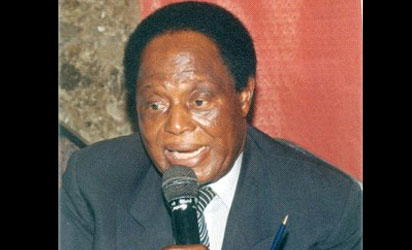
Dr. Matthew Mbu…self made man
By Donu Kogbara
IN 2010, on the eve of the 50th anniversary of Nigeria’s liberation from British colonialism, I interviewed Dr. (Ambassador) Matthew Tawo (M.T) Mbu, the grand old national icon who passed away abroad earlier on this week. He had been the Minister of State for Defence on October 1, 1960 and I wanted to hear his opinions about the Independence era and its aftermath.
It is always fascinating to interact with anyone who has personally made history or witnessed significant events at close quarters. And my conversation with the distinguished and extremely well-spoken Mbu was a privilege I will never forget. He told me that before he joined Tafewa Balewa’s Cabinet, he had been the High Commissioner to London and had, in 1957, been invited to Rotterdam (in Holland) to ceremonially discharge the first consignment of Nigerian crude oil.
As a fellow Niger Deltan, Mbu shared my then delight that the local government area that had produced this symbolic first consignment also later became the local government area that eventually produced President Goodluck Jonathan.
Goodbye to colonial overlords
Talking to Mbu was like talking to a history book and I particularly enjoyed hearing how he and his colleagues had euphorically danced till dawn – “and until we almost dropped” – the day they officially said “goodbye” to colonial overlords.
And he spoke on behalf of his peers when he said, in a bemused tone of voice and still sounding rather taken aback, that “we had absolutely no idea, at the time, that oil would become such a major source of income”.
But he wasn’t too thrilled about the way things had turned out and echoed the views of millions of disappointed citizens of all social classes, age groups and ethnic origins when he sadly pointed out that though oil has been “a blessing in the sense that it has enabled the country to amass a fortune” and avoid chronic poverty and famines, oil has also been a terrible curse in the sense that: “The expectations that some of us had have not been matched. Corruption, which has increased in magnitude since 1960, has given us a rotten image internationally and prevented us from fulfilling our potential in areas like social welfare and infrastructural development.”
There are people who do not have any reservations about speaking ill of the dead before they have even been buried; and I discovered, when I trawled the internet for reactions to Mbu demise that some folks blame Mbu himself – as well as his pioneering post-Independence generation and the various elite groups to which he belonged – for sowing the seeds of the decay he complained about. But I continue to hold Mbu in high esteem and pray that he rests in peace.
I also think that it’s heinously unfair to heap problems that have been caused by multitudes on mere individuals; and I’ve long been convinced that ALL segments of our society – and everyone who has been anywhere near adulthood since l960 – should share responsibility for the paralysing rot that has engulfed us and prevented Nigeria from becoming the global success story that it could be.
Please don’t get me wrong. I am not saying that every Nigerian above a certain age is equally culpable for the moral deterioration and practical failures that scar our existences. It is obvious that thieving government officials, for example, have inflicted much more damage than suffering villagers, for example.
BUT Alexis De Tocqueville, the French philosopher, famously said that we get the leadership we deserve. And I totally agree with him. Nigerians are always setting ridiculously low standards for their leaders and have made a habit of letting their leaders off the hook, so it is hardly surprising that their leaders treat them with contempt!
If you are laughably easy to please, placate, ignore, manipulate, emotionally blackmail or “settle”, those who lack consciences will treat you shabbily!
Disclaimer
Comments expressed here do not reflect the opinions of Vanguard newspapers or any employee thereof.