
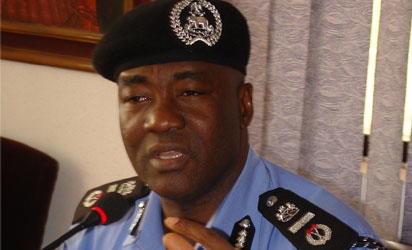
Ex IGP, M D Abubakar
By Ochereome Nnann
AS soon as the news of the removal of former Inspector General of Police, Mr. Hafiz Ringim filtered into the Web, I got a ping from one Victor Otisi who lives in Cotonou, Benin Republic. He pronounced me a “prophet”. In one of my articles of last week Monday, I had said I would be surprised if Ringim was still in office by the time the write-up was printed.
Well, it does not need a prophet to foresee the career of Ringim ending ignobly the way it did. There was simply no other way when the real “al Zawahiri” of Nigeria’s Al Qaeda (the Boko Haram) slipped through the fingers of police escorts though he was reportedly handcuffed.
Before Mohammed Dikko Abubakar was announced as the new Acting Inspector General of Police following Ringim’s forced terminal leave, there were only two major options before President Goodluck Jonathan: appoint one of the six Deputy Inspectors-General of Police or retire all of them and get a new IG from among the ranks of the Assistant Inspectors-General (AIG’s).
Among the DIG’s two were front runners: Arochokwu-born Ivy Uche Okoronkwo who was next in rank to the IG and Ozu Item-born Azubuko Udah, the DIG in charge of Administration. Udah was well ahead of Okoronkwo because of his proven abilities and track record of competence throughout his career. He was a long time personal friend of President Jonathan, and at times like these a leader usually wants those he could trust on the job. The case of Jonathan was more so, because of the alarm he raised that the entire estates of the realm were full of Boko Haram sponsors and sympathisers.
Political considerations
However, there were serious political constraints standing between Azubuko and the seat of IG of Police. In Nigeria, more heed is given to political considerations in putting people on jobs that govern the life, death and wellbeing of Nigerians rather than competence, integrity and patriotism. In appointing Ringim IG, President Jonathan had demonstrated that when familiarity, politics and competence are competing for his attention he would take politics first and familiarity next.
A close examination of Ringim’s job tours showed he had little to offer in terms of abilities to solve crime.
It was during his days as the AIG in charge of Eastern Zones that kidnapping, armed robbery and violent crimes were highest and it required the invitation of the Army to bring criminals to heel. In spite of these, Jonathan only remembered that when he was Governor, Ringim was his Commissioner of Police who became his friend.
Settling for Abubakar was primarily deference to political expediencies. Hiring Udah for the job would have meant having two Igbos occupying two top security positions, since General Azubike Ihejirika is already the Chief of Army Staff. That would not have been an innovation, anyway. When Umar Yar’ Adua was the President the core North had Lt Gen Abdulrahman Danbazzau as Chief of Army Staff and Alhaji Abdullahi Inde Dikko as Comptroller-General of Customs, and nobody raised any Cain about it.
GEJ is anxious not to give the core North the impression that they are being altogether shut out of the security circles because of the Boko Haram challenge. It is a sound political consideration. We should not visit the sins of a few evil people from a section of the country on the whole section, even if they did it to others in the past when they were in charge. Someone has to show there are better ways to do things by breaking a vicious circle.
Unfortunately, however, Abubakar is to the job with bold question marks hanging around his head. Is there no way of getting a northerner whose past records had gone unblemished? Why was it that fine police officers like Malam Nuhu Ribadu could not have stayed long enough in the Force to compete for this prized position based on their track records of competence and integrity?
Abubakar reminds one of Malam Zakari Biu, the serially disgraced former Commissioner of Police in charge of the Force Criminal Investigation Department (FCID) who is answering questions about the circumstances surrounding the escape of Christmas Day church bomber, Kabiru Sokoto. Biu was indicted by the Oputa Panel and recommended for dismissal and prosecution for crimes against humanity. Rather, the police authorities suspended him only to sneak him back into the Force for him to continue his terrorist activities from where he had left off during the Abacha days.
In a similar vein, the Justice Nikki Tobi Judicial Panel of Enquiry into the communal riots in Jos in 2001 indicted Abubakar for his unprofessional handling of the Jos crisis and sponsorship of Islamic militants in the war with the natives. The Panel asked that he be dismissed from the Force. But nothing of the sort happened. A man indicted and recommended for dismissal is now the nation’s top cop! Also, just like Ringim, Abubakar recently served in the Boko Haram hotbeds of the North East, where arrested terrorists were often reported to escape from lawful custody.
However, Abubakar is coming to the job with something that nobody credited Ringim with. He is known to be a thoroughbred “operations man” (though he did not seem to exhibit much of that in his last duty post in Bauchi). Media reports had it that the consultations the President made before going for him yielded a flush of approval ratings from his former bosses. I am also aware that when Abubakar happened briefly around the Lagos axis, he was well spoken of, and many security experts predicted he would likely end up an IG.
The ball is now squarely in Abubakar’s court. We watch to see what he does with it. He has only two choices in the war on terrorism: fight for Nigeria or fight for Boko Haram. We are watching. His period of honeymoon will be extremely brief. The question marks from his past records in Jos and the Bauchi theatres are challenges he can easily overcome once he is able to restore the confidence of Nigerians in the ability of the Force to solve our security problems and see this country as a nation for all Nigerians to be the best they can be.
My prayer is for IG MD Abubakar to do his best. It is now up to him to do the rest.
Political considerations
However, there were serious political constraints standing between Azubuko and the seat of IG of Police. In Nigeria, more heed is given to political considerations in putting people on jobs that govern the life, death and wellbeing of Nigerians rather than competence, integrity and patriotism. In appointing Ringim IG, President Jonathan had demonstrated that when familiarity, politics and competence are competing for his attention he would take politics first and familiarity next.
A close examination of Ringim’s job tours showed he had little to offer in terms of abilities to solve crime.
It was during his days as the AIG in charge of Eastern Zones that kidnapping, armed robbery and violent crimes were highest and it required the invitation of the Army to bring criminals to heel. In spite of these, Jonathan only remembered that when he was Governor, Ringim was his Commissioner of Police who became his friend.
Settling for Abubakar was primarily deference to political expediencies. Hiring Udah for the job would have meant having two Igbos occupying two top security positions, since General Azubike Ihejirika is already the Chief of Army Staff. That would not have been an innovation, anyway. When Umar Yar’ Adua was the President the core North had Lt Gen Abdulrahman Danbazzau as Chief of Army Staff and Alhaji Abdullahi Inde Dikko as Comptroller-General of Customs, and nobody raised any Cain about it.
GEJ is anxious not to give the core North the impression that they are being altogether shut out of the security circles because of the Boko Haram challenge. It is a sound political consideration. We should not visit the sins of a few evil people from a section of the country on the whole section, even if they did it to others in the past when they were in charge. Someone has to show there are better ways to do things by breaking a vicious circle.
Unfortunately, however, Abubakar is to the job with bold question marks hanging around his head. Is there no way of getting a northerner whose past records had gone unblemished? Why was it that fine police officers like Malam Nuhu Ribadu could not have stayed long enough in the Force to compete for this prized position based on their track records of competence and integrity?
Abubakar reminds one of Malam Zakari Biu, the serially disgraced former Commissioner of Police in charge of the Force Criminal Investigation Department (FCID) who is answering questions about the circumstances surrounding the escape of Christmas Day church bomber, Kabiru Sokoto. Biu was indicted by the Oputa Panel and recommended for dismissal and prosecution for crimes against humanity. Rather, the police authorities suspended him only to sneak him back into the Force for him to continue his terrorist activities from where he had left off during the Abacha days.
In a similar vein, the Justice Nikki Tobi Judicial Panel of Enquiry into the communal riots in Jos in 2001 indicted Abubakar for his unprofessional handling of the Jos crisis and sponsorship of Islamic militants in the war with the natives. The Panel asked that he be dismissed from the Force.
But nothing of the sort happened. A man indicted and recommended for dismissal is now the nation’s top cop! Also, just like Ringim, Abubakar recently served in the Boko Haram hotbeds of the North East, where arrested terrorists were often reported to escape from lawful custody.
However, Abubakar is coming to the job with something that nobody credited Ringim with. He is known to be a thoroughbred “operations man” (though he did not seem to exhibit much of that in his last duty post in Bauchi). Media reports had it that the consultations the President made before going for him yielded a flush of approval ratings from his former bosses. I am also aware that when Abubakar happened briefly around the Lagos axis, he was well spoken of, and many security experts predicted he would likely end up an IG.
The ball is now squarely in Abubakar’s court. We watch to see what he does with it. He has only two choices in the war on terrorism: fight for Nigeria or fight for Boko Haram. We are watching. His period of honeymoon will be extremely brief. The question marks from his past records in Jos and the Bauchi theatres are challenges he can easily overcome once he is able to restore the confidence of Nigerians in the ability of the Force to solve our security problems and see this country as a nation for all Nigerians to be the best they can be.
My prayer is for IG MD Abubakar to do his best. It is now up to him to do the rest.
Ethnic row over Onitsha Bridgehead ejections
RECENTLY, the Anambra State Government gave all occupants of the stretch of road from the River Niger Bridge to the Upper Iweka Roundabout an ultimatum to quit their trading activities and move into alternative sites that government says it has provided for them.
Some non-indigenes, especially Hausa and Yoruba traders who operate on this stretch, through their leaders, Alhaji Tanimu Ibrahim and Chief Lateef Balogun, raised an alarm, alleging “ethnic cleansing”. According to them, they had been tenants of the Federal Ministry of (Works) “for over forty years”, with “valid receipts” of payments to the FMOW.
However, in a clarification, the state Commissioner for Information, Culture and Tourism, Chief Majah Umeh, said the ejection was to enable the state to carry out a long-overdue beautification of the “Kilometre Zero – Three” of the Onitsha/Enugu Expressway as it is the gateway to the state. He made it clear that alternative markets have been provided for the traders to relocate.
My word on this storm-in-a-teacup is simple. If indeed, the alternative sites have been provided, all traders occupying that area illegally must relocate, irrespective of their states or ethnic backgrounds. I am aware that Igbo traders operating on that three kilometre stretch are far more in number and have permanent structures for their businesses compared to others who operate in makeshift shanties.
Igbo businesses include the many luxury bus stations, fuel stations and so on. Everybody must move. The fact that some officers in the FMOW might have been illegally collecting rents on this federal property is neither here nor there.
I am aware that the Anambra State Government since the days of Dr. Chris Ngige as governor has been lobbying the federal government to develop the gateway into the East and South-South but to no avail. The Peter Obi administration renewed the request and even offered to fund the project from the state’s lean purse.
Obi in a conversation with me when I raised the issue of the dirty gateway into his state declared his readiness to commence work following the approval of the federal government. Similar projects are ongoing around the country, prime of which is the Lagos/Badagry road and rail project which the Fashola regime has embarked on with massive demolition of buildings belonging to both indigenes and non-indigenes. Nobody raised unholy alarms.
On the other hand, the Anambra State Government must invite all the market leaders including the non-indigenes and reassure them that there is no ulterior motive. The government must work with the people for development and not to give anyone reason to feel victimised on ethnic or religious grounds.
Disclaimer
Comments expressed here do not reflect the opinions of Vanguard newspapers or any employee thereof.