
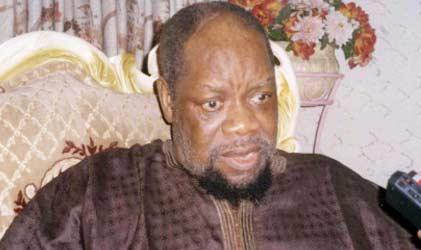
Late Chief Chukwuemeka Odumegwu-Ojukwu
By Ochereome Nnanna
NIGERIA is a country ruled by mindless, myopic and opportunistic selfish pursuits by individuals and groups. Few are willing to stand up for the truth and justice irrespective of the cost.
One of such few was His Excellency, Lt Col Francis Adekunle Fajuyi, the late first Military Governor of Western Region, who opted to pay the supreme price rather than betray his visiting boss, General Aguiyi-Ironsi, who was in Ibadan as part of his nationwide “pacification” tour.
If Fajuyi had willingly handed over Ironsi to his assassins, he would certainly have retired as one of the fat-cat post-civil war multi-millionaire generals, perhaps with oil blocks as part of his reward. But what did he get for his noble sacrifices? It was only about a decade ago that a prominent street in Ibadan was named after him. Has any government in the former Eastern Region thought fit to immortalise this exceptional Nigerian for his uncommon acts of courage?
For that matter, no government in any part of the East (South East in particular) has picked up the courage to name streets after Dim Chukwuemeka Odumegwu Ojukwu. On the other hand, Northerners such as Generals Yakubu Gowon, Murtala Mohammed, Ibrahim Babangida, Sani Abacha, Presidents Shehu Shagari and Umaru Yar’ Adua have streets and monuments named after them all over the East. The only Southern beneficiary is General Olusegun Obasanjo, who has a long street in Port Harcourt bearing his name.
The only roles they played in getting the honour was that (apart from Yar’ Adua) they played leading roles in the conquest and rule of Eastern Nigeria. Shagari even got given two under-aged concubines during his campaign for re-election in Rivers State in 1983! Those were the days when the people of the former Eastern Region grovelled at the feet of the North for crumbs from the master’s table, even though the entire nation was sustained almost exclusively from the riches of their land. At a time, the Igbos and their minority neighbours fought each other to be considered more suitable for the disposable political and economic crumbs from the master’s table.
Ojukwu was able to wrest a collegiate interim presidency and quasi-confederal arrangement from his colleagues of the Supreme Military Council at the meeting in Aburi in January 1967. When Gowon decided to dishonour the agreement and the Eastern Regional Government insisted on the Aburi accord he lost interest in any equity-based negotiated settlement.
All subsequent actions he took were aimed at drastically removing the Igbo as part of the national “tripod”. It was now a case of take it or do your worst. It was not until Gowon had secured the support he needed from all other Nigerian groups in his war against the Igbos that he returned to the negotiation table, but this time as a victorious overlord making “magnanimous” offers.
He had played classic divide-and-rule game for which the British colonialists were very adept, which convinced many analysts that Britain was behind those manoeuvres. The creation of the 12 states was a double-impact masterstroke. It took away the coast from the newly declared Republic of Biafra. It gave to the Eastern Minorities two states instead of one, which they had agitated for in vain for about 15 years. It also gave the federal side the opportunity to install sea blockade of Biafra, thus drastically cutting off supplies.
At about the same time, Gowon turned to placate the West. He offered amnesty to imprisoned Chief Obafemi Awolowo, and appointed him Vice Chairman of his cabinet. Awolowo was offered on a platter the Finance portfolio, which he had been so interested in that he once offered Dr Azikiwe the Premiership if he would appoint him Finance Minister during the aborted 1964 accord. The final straw that pushed the Yoruba wholesale into the “federal” coalition was the invasion of the Western Region by Biafran troops. Joining the coalition was like a win-win situation for them because the West was the biggest beneficiary of Igbo absence from Nigeria for 30 months.
And for the first time, the non-Muslim groups in the North had an uncommon opportunity to enrol in the army in large numbers. They, in fact, did a greater amount of the hand-to-hand combat for the federal side.
For the benefits they derived from being part of the war “to keep Nigeria one”, I do not think that any of these groups regretted joining the coalition. The Eastern Minorities gained in political accretion en route to their present situation of political self-determinism. The Yorubas skyrocketed in political stature because post-war power struggle was now between them and the North. Even though they went through sweat and blood, they have produced elected presidents three times and been sworn into the highest office of the land three times. Before the war, the struggle for the number one spot was between the North and the East.
For the non-Muslim North, the situation is a bit less flattering. They went into the war against the Igbos in the full belief that they were part of One North. But after the war, they discovered that being non-Muslim was not being Northerners enough. Merely five years after the war, the difference between the two sides blew out in bloody intra-armed forces power struggles and later, communal clashes that have persisted till date. The Yorubas also found out that they were junior partners after the war. They were given plum jobs and massive economic and bureaucratic concessions but there was no vacancy in the presidency for them.
The Eastern Minorities also discovered that the North was only interested in their oil and their use to keep the Igbo away from power. The rapacious exploitation of their resources led them to pick up arms and start “rebelling” just as Ojukwu did 40 years earlier.
The good thing was that Ojukwu lived long enough to see all the chicken come home to roost.
Disclaimer
Comments expressed here do not reflect the opinions of Vanguard newspapers or any employee thereof.