
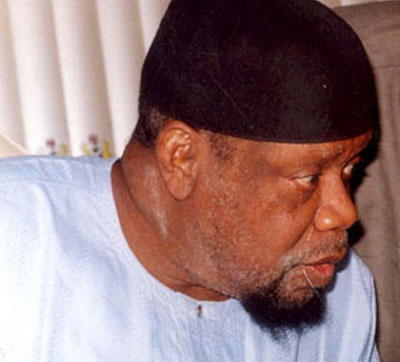
Dim Chukwuemeka Odumegwu Ojukwu
By Ochereome Nnanna
There were many things Nigerian groups did not know about one another as the fight for independence raged in the 1950’s. One of them was our peculiar diversity.
Father of Nigeria’s nationalism, Dr Nnamdi Azikiwe’s exchange with the leader of the Northern establishment, Alhaji Ahmadu Bello, is often referred to. “Zik” urged Nigerians to “forget” their differences and build a great nation.
Bello, the Sardauna of Sokoto corrected him, saying Nigerians should “understand” their differences, for it was the only way to build a great nation. The third leg in the Nigerian traditional tripod, Chief Obafemi Awolowo, chipped in by observing that Nigeria was “a mere geographical expression”. That Nigerians have never shared national interests is all too evident through our history.
The 1960’s decade, our first after independence from colonial Britain, was a critical period when, through practical politics, our diversity was put to test. The result showed that the “Zik” model of diversity management (“forgetting”, or “rising above” the diversity) failed. It started with his own failure to assume executive leadership of Nigeria after leading the independence struggle. Nigeria became the only example of such on the African continent. The Igbo/Eastern Nigerian political leadership, riding on the nationalist philosophy of the National Council for Nigerian Citizens (NCNC) did not understand the agendas of their coalition partners from the North and West. They “forgot” our differences. They acted as if those differences did not exist and were taken out of the tripod for forty years.
This factor obviously (mis)guided young military officers from the South to plot the January 15th 1966 military coup. The naive idea was to remove a “corrupt and inept” elected federal government controlled by political leaders from the North and hand over power to a perceived left-of-centre leadership (with Chief Awolowo generally touted) in line with the general ideological drift in most of decolonised Africa and Latin America. However, in carrying it out, the demons that were to haunt Nigeria till date were let loose. The cream of the political leaders from the North and their political allies in the West were killed, while not a single politician from the East suffered a similar fate.
Even if it was not an ethnic coup, events between January 15th and July 29th 1966 made it seem so, and hence the justification for an equally ethno-section reprisal which brought Gowon to power. I am not interested in the blame game here because both the East and the North did not do well for Nigeria in the two coups. The real issue here is that when Gowon took over, he did not pursue genuine national reconciliation. Rather, he engaged in entrenching himself and the North in power and masquerading this as a national agenda.
Between January and July 1966, the North was faced with two choices: run away from Nigeria or stay and fight back. They were initially inclined to take the former option (the campaign for araba). But their British godfathers told them to stand and fight. They already had control of the Army’s fighting force. The Igbo/East only dominated the officer cadres, and most of their senior officers were educated tradesmen (lawyers, doctors, engineers) while the majority of the generally less educated Northern officers were combatants. Besides, the North running away meant losing the great prize bequeathed to them by the ex-colonial masters. The East would walk away with its rich territory overflowing with oil and gas, while the West would pocket its equally well endowed geographical advantages (outlets to the sea and outside world). The North would be a glorified Niger Republic.
There was much to lose by running away and everything to gain by staying to brazen it out. It only required that essential steps be taken to isolate the Igbos, the major threat to the North and British interests. Britain was there to supply the tactical, military and technical know-how to achieve the creation of a national coalition against the Igbos with a view to taking them out of the equation. The North must be re-empowered by all means and at all costs. It was no longer a question of looking for a solution to the crises and healing the wounds of the nation.
Once Lt Col Yakubu Gowon (the man who succeeded the murdered General Ironsi) got this message, the rest of the events to achieve the mission were on a rollercoaster. The very issue of the irregular succession of General Ironsi by Gowon without following the strict military hierarchy as Ojukwu insisted on was part of this plan.
Ojukwu’s struggles between July 29th 1966 when Ironsi’s government was overthrown and May 30th 1967 when he announced the secession of the Eastern Region and the creation of the Republic of Biafra were failed attempts to restore equity in the polity and prevent the isolation of the Igbos. He found himself fighting a losing battle – alone. The meetings of the Supreme Military Council (SMC) in Aburi, Ghana on January 4th and 5th 1967, which Lt Gen Joseph Ankrah, the Ghanaian military Head of State offered to host, could easily have resulted in the restoration of equity and put Nigeria on the path to national reconciliation.
Ojukwu’s forceful powers of negotiation drove the agenda. He was able to extract from his colleagues far reaching concessions, such as the establishment of regional Area Commands for the military with the regional Military Governors being primarily in charge while the collegiate SMC under the Head of State would control the forces at the federal level.
The Gowon-led Federal Military Government threw overboard the Aburi agreement as soon as he returned to Lagos after listening to the “wise counsel” of Britain and senior civil servants, who told him he had just endorsed “confederation” and empowered the Regions to break away if they wished. Gowon was told that he had given up his supreme powers as the Head of the Federal Military Government to the SMC.
For the first and only time in the history of military governance in Nigeria, the recommendations of civilian advisers were allowed to override the decisions of the Supreme Military Council, which were voluntarily reached by the members in consultation with their advisers. The tail started wagging the dog.
Gowon started distancing his government from the Aburi Accord, while Ojukwu and the government of the Eastern Region insisted: “On Aburi We Stand”.
On Thursday, we will discuss the steps Gowon took after this and their short and long term effects on the peace, stability and progress of the nation.
Let me conclude this by pointing out that Gowon never officially issued a statement backing out of the Aburi Accord. There were no further meetings of the SMC to reverse or annul the Accord, let alone that Ojukwu did not attend or approve of such meetings. Rather, Gowon’s Federal Government started taking steps that were contrary to the spirit and letters of the Accord. He allowed civilians to “overrule” the Accord. He refused to implement any of its decisions.
Today, Nigeria is a country where government’s word of honour stands for nothing. From that precedent established by Gowon and his advisers, the Federal Government (and other governments subsequently) regularly sign agreements with vested interests (such as Labour) and never implement them.
The government is the greatest liar there is. Nigerians have lost their trust in government. If you want something from government you don’t talk to it. It won’t listen unless you start killing Nigerians and destroying public property or disrupting services.
Even if it makes promises it never does as it says. Workers unions and ethnic militants have since discovered this and regularly deploy the strong arm tactics. No peaceful dialogue with government produces any useful outcome.
Ojukwu fought for government to abide by its own voluntarily agreed pacts but lost. And here we all are.
Disclaimer
Comments expressed here do not reflect the opinions of Vanguard newspapers or any employee thereof.