
By Morenike Taire
With entertainment dominating television in the last decade, Big Money has gone more into financing the ambitions of would be singers and dancers via a dozen and one reality shows. Name the multinational- if they are doing television, they doing song, dance and reality. It was only a matter of time before fashion would catch the attention it deserves.
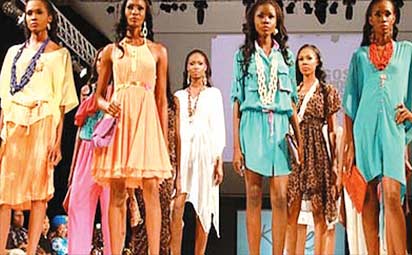
“The nation has got style and the telecommunication giant sure does know it!”noted representatives of the telecoms giant last week at the press briefing which preceeded the MTN organized fashion and design week, which ran from 26 through 29 October this year.

Fashion Models
At the press briefing which took place just as the designers began setting up their wears, wares and furniture pieces for the first exhibit, MTN explained that the aim of the event is to “bring together media, industry, buyer and consumer to view the current collections of designers” in Lagos, the fashion capital of Africa’s most populous nation.
International investment
First Ladies in Bayelsa and Benue notably have invested in fashion over the years. Television has devoted plenty of airtime and, more recently, we can boast of some sort of international investment, with many non Nigerians entering the scene in more recent times in areas of couture as well as commerce.
Nigerian designers have become regular features on some of the world’s runways, and Lagos has surpassed Johannesburg and Abidjan as the fashion capital of the African continent.
Otunba Segun Runsewe , the administer general of tourism in Nigeria, has since admitted Nigerian fashion as a support Industry that is capable of generating visitors into the country.
What had begun as the Nigerian Fashion show has grown into this gigantic thing, but can it really still be called an industry? Where are the farms? Where are the factories? Where are the glossies? Where are the stores? Modelling has come a long way, but where are the stars, the household names?
Fashion representatives and organizers of the event who spoke at the MTN fashion show briefing said they hoped the event would help young, aspiring designers as well as established fashion gurus “establish the business of fashion in Nigeria.” They agreed that while the fashion industry is growing and becoming more renowned, the designers are yet to reap the financial reward of their creativity.
What MTN aspires to is the same thing the industry aspires to everywhere in the world. While fashion has become multibillion dollar industries elsewhere, it has remained largely fragmented in Nigeria, suffering mainly from lack of internal or external patronage.
At the fashion week in London in September, Nigerian designers- and inspirations, were largely absent. There are also the structural issues, with there being no clear distinction between couture and the street, resulting in the failure to create a balance via the mass market. The result of this is that raw materials are still being sourced from abroad, instead of creating a hub.
But perhaps the most serious quandary plaguing the industry in Nigeria is too little recognition and funding from government, which does not even have a clear industry policy. Victor Eburajolo ,the Deputy Managing Director of Afprint, a now defunct, once leading local textile manufacturer, says Nigeria’s membership of the World Trade Organization (WTO), subscribed to by one time Finance minister Anthony Ani, was the last straw that conspired with other factors to break the back of our once vibrant textile industry.
Ankara fabrics
Truth be told, most of the old factory did not actually make the Ankara fabrics and merely printed on plain imports. Still, this must be better than the current situation where millions upon millions of bales of Ankara and lace fabrics are brought in and sold to Nigerians at tidy profits, which are repatriated out. It is unacceptable that while Lagos is a confirmed fashion capital, Nigerian fashion is glaringly absent from high streets everywhere.
It is to be hoped that in nearer future, more big Nigerian and continental brands will want to associate with Nigerian fashion and that, ultimately, government will harness it to create those sorely needed jobs.
Disclaimer
Comments expressed here do not reflect the opinions of Vanguard newspapers or any employee thereof.