
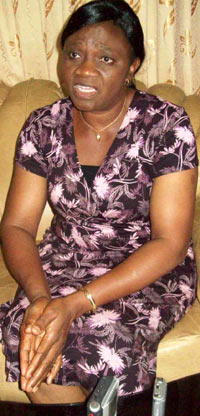
By Ola Ajayi, Ibadan
How the Federal College of Agriculture, Ibadan, aka Moor Plantation, at 90, continues to help the nation overcome its agricultural challenges, according to the provost, Dr Foluke Oluwatoyinbo
THIS college is 90 years old? What are the major things it has contributed to the Nigerian growth?
The mandate of the college is to train and produce highly skilled middle level manpower for the agricultural sector to strengthen the economy. It has pursued this mandate among other activities like helping our students, training farmers from time to time, training youths and we have long and short term courses for them.
The college, over the years, has produced eminent personalities both in the field of agriculture and in other sectors of the economy.
We have actually formed the Foundation of Agricultural Education not just in Nigeria but in West Africa because we learned from history that when the college was founded, the trainees were not just coming from Nigeria, they were also coming from other parts of West Africa. So, this college has been benefiting not only to Nigeria but also West Africa as a whole.
Having done this for about 90years, which branch of agriculture would you say is more suitable for the Nigerian economy and how do you think government can explore agriculture to develop the non-oil sector?

*Dr Foluke Oluwatoyinbo
When you talk about agriculture, you cannot say it is this branch that is more suitable to the economy, it is just like when you are talking about human nutrition and you say which food nutrient is more important. It has to be balanced and that is the same with agriculture as a field and as a sector.
All sections and all branches of agriculture are equally important. Whether you are talking about livestock or crop production, we have so many that are captured under it like export crops, vegetables, seedlings, cassava, yam and potato. The economy needs all of these.
We also have other areas like production, processing, value addition, packaging, prevention from decaying and rotting, infestation and others. Agriculture is vast and every area is valuable. The college has contributed to the growth of Nigeria in a lot of ways.
Our students are expected to go out and introduce to farmers modern technologies, other ways of producing crops, other ways of rearing animals and, when you talk about modern methods, these are scientifically proven technologies.
Our students are diseminators of technologies, increasing the hope of livestock and food stocks; increasing the quality and, by so doing, it leads to the enhancement of health, longevity of life, improvement of the social life of the country and we have our students all over.
Many of them are managing the big farms in the country and outside the country. We have many of them in the educational institutions. Many have become lecturers, professors, vice chancellors. They work in agricultural organisations, banks, military and para-military. In the police, for instance, we have a lot of our graduates working in their agricultural departments and there are many of them on their own too that have established their own farms.
Most of the graduates of agriculture don’t want to practise. Can you tell us one or two of the ways you have devised to attract your graduates into agriculture?
We are laying our hands on certain things. One, we have tried to acquire some lands because, most of the years, infrastructural facilities have taken over our college lands, with the result that the students have just little land to practice. We have gone out to a local government not far from us to acquire about 200 acres of land.
Now, we can get these students to handle what we call farms rather than practical farms. If they handle it themselves, it gives them confidence; it encourages them and they see what is coming out of it. This will motivate them to want to have something like that when they are out of school.
Apart from that, we have gone into post harvest technology. Currently, we produce Garri and we produce it not just as it is done in the villages or in the open market, good quality Garri done under a hygienic environment, well packaged, well labeled.
We are also teaching them how to add value to Garri by putting soya beans, chocolate. We send them thinking to improve on what we are doing here, we are teaching them how to roast fish and package it properly, make it attractive and decent , and there are other things we are laying our hands on and we are getting very good feedback from them.
If you look round the South-West, the governors are working round the clock to resuscitate the farm settlements. What advice do you have for them?
Revamping the farm settlements is a right step in the right direction and we have said this several times. If this happens, it is going to solve a lot of problems like food problem, problem of unemployment. It is going to boost our economy because, if we revamp our farms, we will have the capacity to produce a wide range of agricultural products in this country. We can export; we don’t have to live just on oil or petroleum and we will not continue to live in a fool’s paradise that oil will continue to serve our economy.
Advice for the governors
They should not allow anything to discourage them. Secondly, they should put round pegs in round holes. They should put the right people in the right place. No matter how beautiful or how good your plan is; if you put it in the hands of people that are not driven by the same passion; if you put it in the hands of those people that don’t see clearly those visions that you have seen, it will all go wrong and we will all be back in square one.
How do you think government can overcome the teething problems being experienced by farmers in the country to boost food production?
One of the problems is land clearing. The government should acquire the necessary equipment and tools, not tractors alone, everything that will make the farming work easier because there is nothing wrong for government to have centres where farmers can come and pay a token for equipment to use them and return them later.
Another area is the issue of land. In fact, this is the area where our own products have problems because they are young and don’t have access to land. It is only a few of them whose fathers are wealthy or are chiefs in their villages that have access to land that they can start something with.
If the government wants to solve the problem of land, it should make land available, may be, on lease to anybody who is interested in setting up a farm and there should be adequate monitoring that what they want to use the land for is what they are using it to do. Also, in the provision of inputs, there are agro chemicals, good seeds. If farmers have all these things, it will not be difficult for them to produce.
What are the remarkable things you can pinpoint as the major achievements of this college in the last 90 years?
Most of the people you find in the agricultural sector today either started from Moor Plantation or they are its products or passed through people who passed through Moor Plantation. This college is the foundation of agricultural education in Nigeria and I have told you that people come across the borders of Nigeria to study and we have produced a lot of prominent people such as governors, members of the National Assembly, military men, academics. This place has served as a reference point for big time farmers directly or indirectly.
Former governor of Kwara State, Senator Bukola Saraki, delivered the anniversary lecture. Why him?
We were trying to look for somebody who not only has the theoretical knowledge of agriculture but also somebody who has impacted on the agricultural economy in Nigeria at every level and Senator Bukola Saraki fits in because of the feat he performed in the agriculture sector of Kwara State.
He brought in the white farmers evicted from Zimbabwe and their farms today have become a sort of Mecca for people both in Nigeria and outside Nigeria. So, we wanted him to come and tell us what is the secret? How can it impact on the economy of Nigeria?
As the provost, what are your plans for the college in the next ten years?
I am looking forward to a Federal College of Agriculture that has expanded programs. Currently, we are running four major programmes-crop production technology, agriculture technology, agriculture engineering technology.
Recently, we got approval for post harvest technology. We are looking forward to a Federal College of Agriculture where we are going to have a programme in pest management technology, horticulture and landscape design, land surveying, agric business, where we are going to have programmes in every area of agriculture so that our impact can be felt at every area and at every level.
I am looking forward to a college that has state of the art facilities both for production, for processing and for training, I am looking forward to a college that will become an international centre of learning for agriculture.
Disclaimer
Comments expressed here do not reflect the opinions of Vanguard newspapers or any employee thereof.