
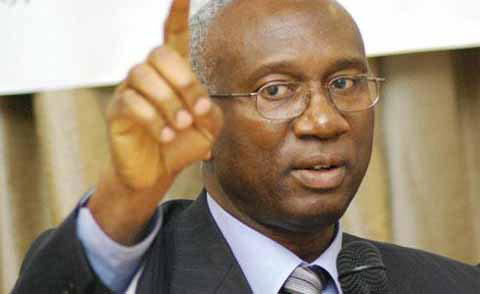
Ndukwe, Former NCC Boss
By Prince Osuagwu
The Nigerian Communications Commission, last week rolled out the drums to celebrate a successful eight years hosting of the consumer parliament and a decade of telecom revolution in Nigeria. For the NCC, the celebration was not to show that all is well in the industry but to assess how far the industry has moved within the time it came in real contact with telecom developments and what chances there are to move even faster in the next decade.
To do this, it assembled relevant stakeholders who have played and are still playing important roles to the success story the country’s telecom landscape has so far, become. Former regulators, operators industry associations and the media were present. The event took the x-ray of the industry in the last ten years revealing some of the regrettable events and those worth celebrating.
Effects of NITEL’s failure
Former Executive Vice Chairman of the Nigerian Communications Commission, NCC, Engr Ernest Ndukwe, who was keynote speaker at the event, revealed that the failure of NITEL and the consequent collapse of M-Tel resulted into the beginning of network congestion which telecommunications users in Nigeria are facing even at the moment.
In a paper titled “A decade of telecom revolution”. Ndukwe, said that the migration of subscribers of NITEL and the mobile arm, Mtel to the newly licensed operators in 2001, put a burden to their networks and congestion began its journey which has not ended as at today.
Revealing efforts to support the national carrier to take up business potentials of the telecom revolution as it was unfolding during the license auctions, Ndukwe said that the commission has delayed licensing any long distant carrier for over three years to enable NITEL recover itself and take up the frontline in the business.
However, he noted that NITEL was not forthcoming even with all that delay and the commission had to put out the licenses for auction. He said “we refrained from licensing long distance operator sfor almost three years just to see if NItel could take the challenge, which could have actually made it a strong company today.
But when we saw that it could delay the revolution and economic transformation that telecom was poised to bring to the nation, we had no option than to go ahead with licensing long distance operators.
No rocket science here
Meanwhile, Ndukwe also said that solution to the challenges of sustaining the telecom revolution and keeping operators on their toes to deliver quality services to consumers is not rocket science.
For him, there is need to take services to all nooks and cranny of the nation. There is also need to encourage the operators to extend their services through the releases of necessary infrastructure especially spectrum that would enable them to do so.
He noted that spectrum is actually the lubricant to robust telecom transformation.
“Nigeria, needs to grow it’s teledensity and of course extend data and voice services to every nook and cranny of the country. We also need to increase Internet speed within the country, because the services today are still slow”.
He warned against states and territories that still do not see investments of the operators in their localities as a way of leveraging their statuses and emancipating their people from the adverse effects of digital divide but as a way of earning more revenue through different taxes and levies. He said this could kill the goose that lays the golden egg.
He advocated a consistent mobilisation, education and lobby against such obnoxious acts that can stunt further growth in the sector.
Operators list challenges
Immediately after Ndukwe’s speech, a charged audience, began to query the operators, seeking to know why their services remained epileptic. That actually was the opportunity, the operators were waiting for to list horde of huddles militating against their smooth operation in the country.
For Globacom, Power, roads, poor infrastructure regulatory problems and interconnect rates should be improved if expectations of the quality services are to be met.
Globacom’s representative at the event, Director Customer Care, Maria Svensson, particularly harped on the loss of subscriber base which the operators are apparently going through, following six months period the sim registration exercise.
According to her, “a lot of things are not working in our favour. The power situation in the country is affecting our business. There are poor roads and poor infrastructure which militate against our growth. Even the last SIM registration exercise has also made us lose subscribers.
Chasing the subscribers
All of us are running like mad dogs chasing the subscribers. In fact we don’t know how many are not registered as at today. NCC needs to know that the six months was not enough” she added

Ndukwe, Former NCC Boss
However, MTN’s Corporate Services Executive Mr Wale Goodluck took over from Svensson and noted that a lot of proactive policies needed to be in place to help operators realise their potentials. Although he did not buy the idea that after ten years of successful operation in Nigeria, that Operators should hide under the excuses of poor power supply, infrastructure and bad road networks as reasons for non performance.
However, Goodluck, maintained that multiple regulation, multiple taxation was killing the operators. “In 2001 to power the sites we located and bring them live, took about six months but today it takes up to 18 months.
He also noted that even in building a base station, there were conflicting regulations between 5 meters 10 meters which do not help the economy of the operators.
ATCON, ALTON worry
Meanwhile, advocacy groups and umbrella association of these operators, the Association of Telecom Companies of Nigeria, ATCON and the Association of Licensed Telecom Operators of Nigeria, ALTON admitted that their members have gone through tough times to get to where they are today and advocates a more liberal and proper regulated industry in the next decade.
For ATCON President Engr Titi Omo-Ettu, “the problem actually stems from the fact that we liberalized but did not had the support sectors like the Aviation sector and the energy sector, also liberalized.
The questions we should be asking is what are the things we have not done properly and to me the answer is that we have not been able to put a cost to our in-actions . For instance, when NITEL failed to maintain the long distance network it was supposed to, we did not put a cost to that inaction and look at how to recoup the loss”.
“Again, when NCC licensed the second National operator, it failed to regulate what aspect of services that it provides. It was a loss that instead of the SNO to provide that long distance service that was lacking it also went into rolling out telecom services and NCC did not have answer to that loss”.
ALTON’s Chairman, Engr Gbenga Adebayo also corroborated Omo-Ettu. He said, “in ability of having a good law that protects operators’ infrastructure and facilities, has created a lot of these challenges. In the days of NItel, it was a punishable offence to tamper with telecom equipments but today vandals do their thing at will and go scot free”.
Juwah says future is bright
Earlier in his opening remarks, the incumbent EVC of NCC, Dr Eugene Juwah promised that the commission under his watch would do everything possible to sustain growth, adding that “ what is paramount to us at the NCC is to have a telecom industry that is robust, vibrant and efficient and which will be an impetus for greater economic development of the country.
Disclaimer
Comments expressed here do not reflect the opinions of Vanguard newspapers or any employee thereof.