
By Pini Jason
MY instinctive reaction when Nigeria declared that we want to be one of the 20 biggest economies in the world in the year 2020 was to look up the members of the G-20.
They are Argentina, Australia, Brazil, Canada, China, France, European Union, Germany, India, Indonesia, Italy and Japan. Others are Mexico, Russia, Saudi Arabia, South Africa, South Korea, Turkey, United Kingdom and United States. The first question was, which of these economies can Nigeria displace from this list in year 2020, just nine years away?
Nigerians recall with justifiable skepticism previous Vision targets dates. In the eighties, the mantra was Health for All in year 2000; House for All in year 2000; wife for all in year 2000! But come year 2000, our attention was diverted with the Y2K propaganda and year 2000 slipped by. We didn’t have health or house in 2000 and the computers neither crashed nor sent us back to the Stone Age! We abandoned Vision 2010 even before we got there. Many Nigerians, therefore, have a sense of déjà vu about the 20: 2020.
I, however, think that it is possible to become one of the largest economies in the world in 2020. Some of the members of the G-20 were at par economically with Nigeria two, three decades ago. South Korea is a country that some Nigerians were responsible for turning their economy from an agrarian to industrial one. A few years ago everybody in China wore the Chairman Mao tunic. Today Chinese strut across the world’s fashion runways. In 1993 when I visited Dubai, it was no more than a glorified Apapa Elemu! Today Dubai is a financial and real estate hub of the world. I saw South Africa in 1993 and I came back and called Nigeria’s attention to the challenges of emerging free South Africa.
Absence of rule of law
Given the energy and creativity of Nigerians, it is possible for us to squeeze our country into the G-20 and make it G-21! It is possible once we become a law and order nation! President Umaru Musa Yar’Adua made rule of law the cardinal principle of his administration and some people jeered at him. But I think Yar’Adua had the correct diagnosis of our problem.
The present uproar in this nation of constant hysteria and histrionics borders on the absence of rule of law. But I will take it further to insist on law and order.
Rule of law is like a mere statement of the desideratum, but law and order is putting rule of law into action, making people pay for the infraction of the law no matter their station in life! Many Nigerians have said that all we need to actualize 20:2020 is constant power.
That may be so. But we may not get steady power if, for example, people can sabotage the power project and get away with it; if people can pocket the money meant for power and get away with it. You can relate the level of law enforcement in any country to the level of its development. The discipline we need to develop our country can only come from strict enforcement of our laws. I shall return to this issue in greater details another time.
If you told me that in the year 2020 Nigeria will be one of the 20 biggest economies in the world, I would expect that in year 2020, certain things will be done in Nigeria as they are done in say, South Africa or South Korea; that Nigerians will enjoy some of the basic things a big economy offers in the G-20 nations. One of such expectations, or success indicators, if you like, for 20:2020, would be jobs for Nigerians who want to work.
Job creation
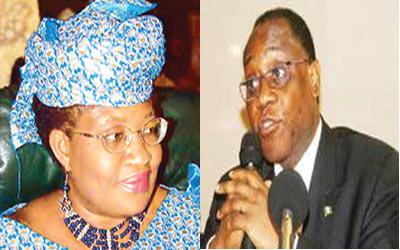
I take the issue of jobs because it has preoccupied our economic managers in recent times. President Jonathan has made statements about job creation. The Minister of Trade and Investment, Olusegun Aganga, said at a retreat of the ministry that the Federal Government will create three million jobs in three years (Vanguard Wednesday 10 August 2011, page 6). The Minister of Finance, Dr. Ngozi Okonjo-Iweala last week said that the thrust of the transformation agenda is to create jobs.
Unemployment in Nigeria is a product of national laziness. How can a nation that has so much to do and an army of unemployed be talking of “job creation”? The jobs are there. We have only refused to do them or we have not recognized them as necessary. I believe Nigeria can “create” more than six million jobs right now if we make up our minds that, in line with 20:2020, we must do certain things.
For example, if we are going to be one of the 20 biggest economies in 2020, it is expected that our environment must be as clean as in South Africa, a fellow African nation. But have we as a nation agreed that clean, healthy and orderly environment is a necessary index of development?
Have we agreed that we must live like other civilized nations not like animals? For how long shall we live in squalor, rationalize why we live in filth and still expect to rank among the biggest economies in the world?
If we as a nation decide to tackle environmental decay and life of chaos, we can create as many jobs as we want doing that. Apart from direct jobs arising from waste management, sanitation has a huge industry that creates jobs. If for example we decide that, a man who drives into Nigeria must not encounter a cultural shock on our roads, that decision alone can create millions of jobs.
If on the average you say three cities in each of the 36 states must have the roads marked all year round as in other countries and you put 1000 Nigerians per city on the job. That will put 108,000 Nigerians on the job! Yet these jobs are there, but we have decided not to do them because we are not convinced we deserve to live like others. Yet Nigerians troop to other countries where the environment is clean and orderly at a huge loss of our foreign exchange.
Agricultural policy
Another area we have not made up our mind is in agriculture. Every now and then we talk about how agriculture can create jobs but not why it should create such jobs. What is the target of our agricultural policy? If you go to a grocery store in South Africa, you can immediately appreciate the target of agricultural policy of the country, which is that the citizens must eat well!
A few years ago, eminent economist, Dr Pius Okigbo, in a lecture at the Nigerian Institute of International Affairs, reeled out statistics that showed that the unit of protein intake in many African countries is higher than Nigeria’s.
If we are funding agriculture, it must be so that Nigerians can eat well, go to a restaurant and order beef, chicken, fish or spare ribs served with rice or French fries produced in Nigeria, and not rice or eba with a thumbnail size of meat! And he must not pay through the nose for quality food!
Our agricultural policy must target our stomachs not some esoteric micro and macro-economic indices. In 20:2020, the success story must not be about the percentage growth in the agricultural sector. The success story must be evident in the number of eggs every Nigerian child can eat without the parents robbing a bank.
A Nigerian should be able to enter a grocery store and fill her basket with fresh vegetables and fruits no matter the season and not pay for the ones wasted by spoilage. Everything that goes into delivering this expectation to Nigerians will put millions of Nigerians on the job in agro-allied industries! The economic policy that works for people is one that puts money in their pockets and quality food in their stomach!
The railway system
Every nation had at one time or the other tackled a giant project that transformed its economy. As a developing economy, I keep wondering why we still think we can transform our economy with deciduous roads and fragile aviation! We have just talked about the rail system, wasted huge resources on it but refused to tackle it as the bedrock of our economic development. The jobs are there in the railway system waiting for us to pick them up and do them. I shall illustrate.
What we need is not to continue fooling around with and siphoning money through the linear rail system that served the objectives of the colonial masters. Fifty years of independence should have seen us develop a dendritic railway system that criss-cross the country like a spider’s web.
We can put six million Nigerians on the job, laying rail tracks all over the country, linking all the state capitals if we want. The technology of laying the tracks is basic. We can open this vast country up to great economic boom through the railways. Every place designated a railway station is a potential new city, with new economic opportunities. Moving millions of Nigerians and goods round the country in relative ease and cheaply will generate an unbelievable economic growth. We cannot do that with our present roads or aviation.
Next question
The next question to ask is do we have the money to put Nigerians on these jobs? Yes, we do. The problem is that whatever is left of our oil revenue after the bad arithmetic in NNPC is subjected to massive corruption. Huge resources are available from taxes but have remained largely untapped. Our weak tax system remains an incentive for corruption.
Effective tax system moderates the greed that fuels corruption in other societies. That is why the fear of IRS in the United States is the beginning of wisdom. If you cheat on tax you go to jail. That is the law. I know that Dr Okonjo-Iweala will always favour free market. Okay. Market forces can still operate while we moderate the greed of the elite and get the money off them and pay Nigerian workers. In my view, at our level of development certain luxury goods have no place in our country. But if some Nigerians must have them, then we must tax them heavily.
Growth of nations is not an accident. It is a product of law and order and the discipline they create. Growth will not happen if we continue to indulge ourselves in sybaritic lifestyle as if we are a rich country. We will simply be like a farmer who eats up his yam seedling before he plants it! China closed its doors and ears to World Trade Organisation, World Bank and IMF and put Chinese on the jobs in the rice fields and on roads construction. Why can’t we?
Disclaimer
Comments expressed here do not reflect the opinions of Vanguard newspapers or any employee thereof.