
By Obi Nwakanma
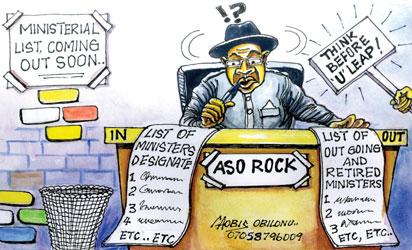
Mr. President: as you begin to constitute your administration, I think it proper that you take a moment and reflect on aspects of your own journey to the Presidency. You once painted a picture of your humble background from the backwoods of Otueke, where you grew up, went through school barefoot, without the luxuries of the official chauffeur, and certainly without the benefits of the so-called silver-spoon.
In your summation of that life, you noted that if you could go through life in those circumstances and still emerge to become president, then, anyone else could do so. It only required a little of “goodluck” and a little of hard work and a perhaps a dash of, whatchmacalit, shrewdness. Nigeria is a land of opportunities – in your view.
I’m afraid this is not quite so. I might, in fact, say it’s a view borne of naïveté and romanticism. Nigeria is not yet the land of opportunities. It certainly could be. But the Nigerian child – and you are a very lucky survivor – with the limited opportunities available to it is left with only two choices these days: he or she either succumbs to fierce religion or to crime. The middle ground is the space of hopelessness and indeterminacy. I begin on this note, Mr. President, to remind you of your past, and the challenges of conscience as well as of consciousness. You are a poster child for survival.
But, as a matter, of course, you must ensure that the social and historical conditions that almost undermined your survival as a child, which has in this current generation become exponential, is eliminated for the sake of the Nigerian child. Providence has thrust upon you the power to change the life of the poor Nigerian, your true kinsman. I do subscribe to the karmic principle, and I would say, if in your term of office, you fail to hearken to the voice of the poor, among whom you once counted, and for whom you have been elected to serve, the recompense would be heavy and eternal.
But, I would, of course, dispense with the mystical for the more practical and make certain propositions to you. First, if you wish to succeed in your presidency, you must keep the distance counsel of certain characters in Nigerian public life, among them, Mr. Olusegun Obasanjo. He belongs to the museum of Nigerian politics having stayed so long on the scene of national politics and having become the litmus to political failure. In one generation – his generation – Nigeria went from great possibility as a post-colonial nation to great decay and degeneration. Nothing good can come out of Ota. I say this because of the chatter currently coming out of the discussions around the selection of your ministers and the distribution of other public positions. The pressure is on, certainly.
Indeed, one reads with amusement the open letter written by Mr. Ikedi Ohakim, the soon-to-be quondam governor of Imo State, defeated in the elections in spite of your public support, for incompetence and for his failures as a public administrator. He is putting himself forward for consideration as a minister in your government. He will make a poor addition to your team. My friendly advise is that you must assume the full authority of your presidency, show some backbone and maintain clear independence of mind and purpose.
You must seek men and women of sterling qualities. You must learn from the current American president, Mr. Barrack Obama. On assuming office, he scoured the best technical team from America’s best universities and public institutions. They were not only Democrats. Indeed, the party had very little to do with his decisions. Competence did.
He saw the challenge of his presidency as the call to heal America and once again put it on the path of fortitude after the Bush era. He chose a highly technical team beyond the confines of party politics. Mr. President, the times call on you to act with the same insight. Seek within Nigeria, beyond the patronage system of the Peoples Democratic Party, a team of highly accomplished and driven Nigerians from the academia and industry to constitute your team.
You must reduce the number of cabinet positions and eliminate the excesses of state administration. There are seven areas to which you must pay particular attention: Education and Culture, Health and Human Services, Industry and Technology, Trade and Economic Development, Home Affairs and National Security; Labour, Employment and Establishment, Agriculture, the Environment and Natural Resources. As a former educator, you understand the problems of Nigeria’s public education. This key area ought to drive Nigeria’s economic and social growth.
It demands a radical revaluation and funding regime of Nigeria’s public schools. You must constitute a Universities Reform Commission urgently to deal with the situation of Nigeria’s public universities with the aim of repositioning them and re-attracting Nigeria’s massive intellectual capital from the “Diaspora” to reignite and re-energise Nigeria’s knowledge-making sector and prepare it for the challenges of the 21st century.
You must constitute a very broad Police Reform Commission to reform, reorganise and rebuild the Nigerian police system into a modern and civilised police service prepared for law enforcement and the protection of the lives and property of Nigerians nationwide. The recent post-election riots exposed the terrible state of the Nigerian police, particularly its intelligence gathering and deterrent capacities.
Its failure to anticipate the riots or protect the lives, particularly the lives of young Nigerians on national service is a matter of outrage. The outrage for me is even more so that the president had to move troops onto the street. The Nigerian military is not, or should not be a law-enforcement agency. It should be kept in top form for the defence of the nation against any external aggression.
A reform of the police services must also call for a reform of the justice system. The president must urgently introduce an executive bill before parliament to begin a thorough constitutional reorganisation of Nigeria’s Judicial Services for a more efficient court and justice systems. This administration must expand the mandates of the Manpower Development Board, create new employment opportunities, and re-introduce the National Students Loans Scheme to be administered at the county or community levels with federal grants.
You must also create the New Entrepreneurs Loans and Credit Grant, a government-funded mandate to provide easy and cheap credit to young Nigerians intent on developing new businesses and start-ups. These start-ups will create jobs and absorb new energies and expand opportunities. But, finally, there is urgent need to reform the Nigerian Civil Service and create a merit-based service.
At the core of corruption and failure of great national policies is an incompetent and corrupt service. If you want to run a successful administration, you must rebuild the service into a formidable, accountable, efficient, and patriotic civil service. Such a service might as well be your lasting legacy. It is impossible in the small space of a newspaper column to exhaust or flesh out these propositions, but you do get the idea, Mr. President. Nigerians have invested great hope in you. You dare not fail them.
Disclaimer
Comments expressed here do not reflect the opinions of Vanguard newspapers or any employee thereof.