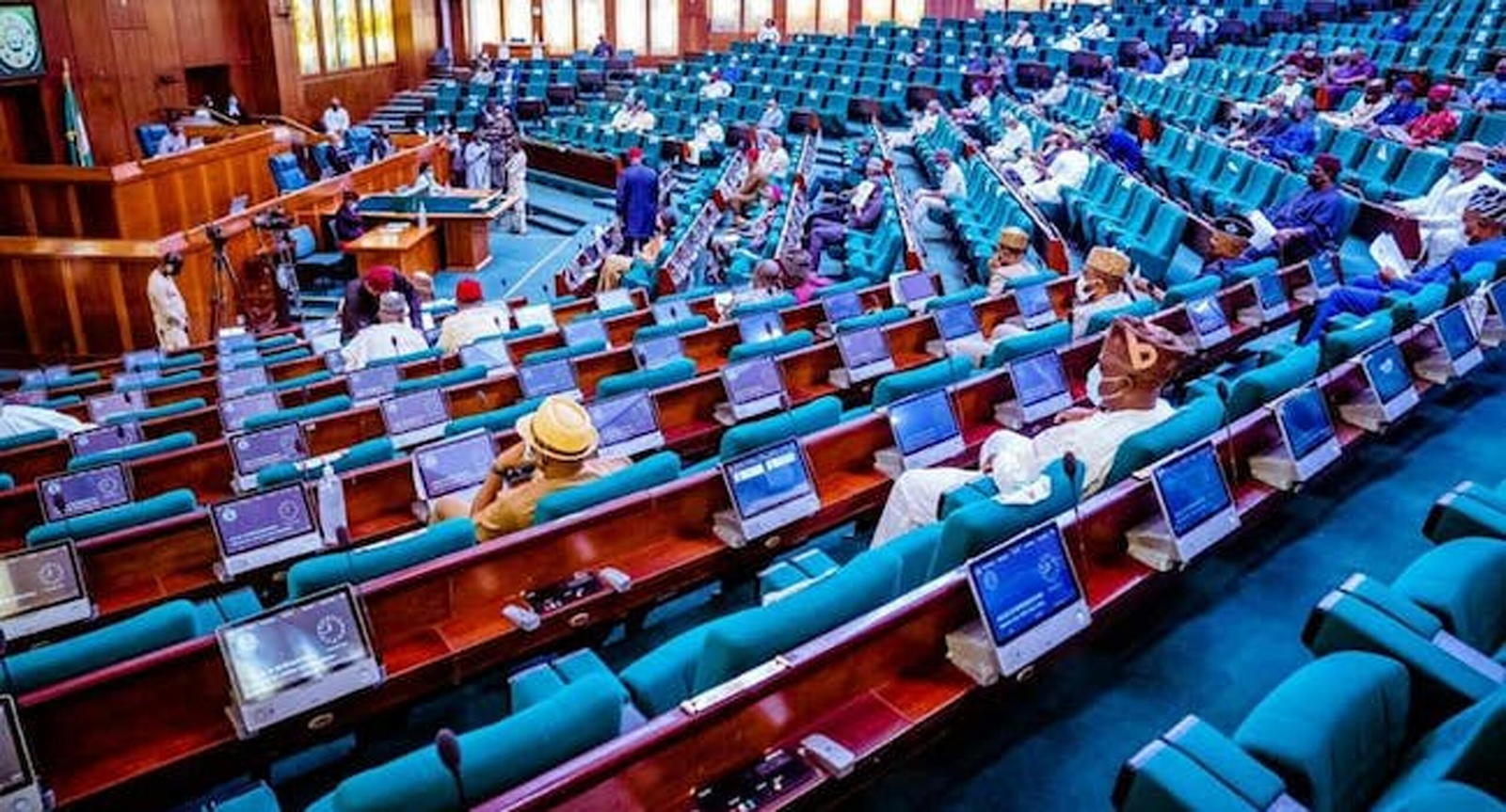
National Assembly
BY OPEMIPO ADEBANJO & HABIB SHEIDU
There is a peculiar institution operating within the Federal Republic of Nigeria that, in recent years, has attracted growing criticism over the pace and quality of its legislative work. It is the National Assembly, whose constitutional responsibilities include lawmaking, oversight and representation.
Critics argue that the 10th National Assembly has sometimes appeared more comfortable with prolonged processes than decisive legislative action. The concerns range from the number of days spent away from plenary to questions surrounding budgetary insertions, transparency, pending bills and the implementation of its own Legislative Agenda.
Between June 2023 and March 2026, the National Assembly reportedly spent 581 of its first 1,003 calendar days on recess, compared with 422 days of plenary activity. In 2025 alone, it reportedly sat for 141 days, 40 days below the constitutional benchmark of 181 sitting days. By the end of March 2026, lawmakers had recorded 17 sitting days for the year.
It is important to note that lawmakers perform committee and other legislative duties outside plenary. However, questions about the availability of comprehensive attendance records have made it difficult for members of the public to independently assess the extent of such activities.
The Guest of Honour: A Controversial Council
One issue that has drawn particular attention is the Presidential Foreign Intervention Promotion Council, PFIPC.
Adeniyi Adeyemi Matthew reportedly presented himself as the council’s Director-General. Subsequent official statements from the Presidency reportedly questioned the legal basis for the council, stating that it had not been established through a known law, presidential instrument or other recognised government process.
Yet reports indicated that the organisation operated from premises within the Federal Secretariat, received administrative recognition and obtained a federal waiver relating to the recruitment of 300 employees.
More significantly, a provision of approximately ₦1.303 billion appeared in the 2026 Appropriation Act in connection with the organisation. The amount was reportedly divided into approximately ₦802.98 million for personnel, ₦200 million for overheads and ₦300 million for capital expenditure.
There is, however, an important qualification. The Budget Office and the Office of the Accountant-General reportedly maintained that the amount was not released because the necessary financial and payment approvals were not completed.
That distinction matters. It means the issue is not that the entire ₦1.3 billion was spent by the organisation. The more fundamental question is how an organisation whose legal status was subsequently questioned could have progressed through the administrative and legislative processes sufficiently to appear in the Appropriation Act.
The House of Representatives subsequently established an ad hoc committee to investigate the matter. The Senate, according to reports, opted to await the outcome of an investigation by the Independent Corrupt Practices and Other Related Offences Commission, ICPC, following a presidential directive.
The episode nevertheless raises legitimate questions about the checks that should precede the inclusion of public institutions and agencies in the national budget.
The Appropriation Question
The PFIPC controversy should also be viewed against the broader debate over legislative additions to the federal budget.
BudgIT’s analysis of the 2025 federal budget identified 11,122 projects valued at ₦6.93 trillion as legislative insertions. It also identified ₦3.18 trillion in capital supplementation, putting the broader value of the additions it examined at approximately ₦9.11 trillion.
Among the projects identified were 1,477 street-light projects, 538 boreholes and 2,122 ICT-related projects.
Not every legislative addition is necessarily inappropriate. Lawmakers represent constituencies with legitimate infrastructure and development needs, and the Constitution gives the legislature an important role in the appropriation process.
The concern is about transparency, prioritisation and implementation. Where thousands of projects are added to a national budget, citizens should be able to establish why they were selected, where they are located, how contractors were selected and whether the projects were ultimately delivered.
Nigeria’s challenge is therefore not simply the number of projects contained in its budgets. It is also the ability of government institutions to demonstrate that appropriated funds translate into measurable public value.
Budgets That Refuse to Die
Nigeria’s budget implementation process has also generated recurring concerns about extensions and overlapping fiscal commitments.
In April 2026, President Bola Tinubu signed a ₦68.32 trillion budget while the implementation of the 2025 capital budget was reportedly extended to June 30, 2026. The 2026 budget was approximately ₦10 trillion higher than the original ₦58.18 trillion executive proposal.
Meanwhile, by the end of September 2025, reports indicated that only about 18 per cent of the capital allocation for that year had been utilised.
The situation raises an important accountability question: when implementation of one capital budget extends well into another fiscal year, citizens can find it difficult to determine which appropriation is responsible for a particular project and when that project should reasonably be completed.
A budget should ideally provide a clear and measurable framework for public expenditure. Where implementation timelines overlap substantially, transparency becomes even more important.
The Question of Attendance Records
When AdvoKC submitted a Freedom of Information request on June 19, 2026, seeking attendance, absence, apology and voting-participation records for members of both chambers, the organisation said it did not receive a response within the statutory seven-day period.
Following a notice of non-compliance and the threat of legal proceedings, the National Assembly reportedly responded, stating that the requested records constituted “evidence of proceedings” protected by legislative privilege and could only be released with the authorisation of the Senate President, Speaker or relevant committee chairman.
The position raises an important public-interest question: to what extent should attendance information relating to elected public officials be available to citizens?
Legislative privilege is intended to protect parliamentary functions and free legislative debate. The argument for transparency is that administrative information concerning attendance should, where legally permissible, be sufficiently accessible to enable citizens to assess institutional performance.
The issue is particularly relevant because the National Assembly exercises extensive oversight powers over other public institutions.
The Legislative Agenda: Where Promises Go
The Tajudeen Abbas-led House of Representatives began its tenure with a Legislative Agenda containing specific commitments arranged under short-, medium- and long-term timelines.
The agenda covered governance, justice, security, education, healthcare, electoral administration, public participation and institutional transparency.
Three years into the Assembly’s tenure, AdvoKC’s Legislative Agenda Meter reported that the House had fulfilled 13 of 56 tracked commitments, compromised four and classified 39 as unfulfilled, producing a weighted fulfilment score of 26.8 per cent.
Its reported score for Governance and Political Reform was approximately six per cent, while Economic Development and Jobs recorded zero.
The Senate reportedly performed better, with a score of 44.11 per cent, comprising nine fulfilled commitments, 12 compromised commitments and 13 classified as unfulfilled.
These figures should be understood as an assessment by AdvoKC rather than an official performance rating issued by the National Assembly.
The Assembly has nevertheless undertaken substantial legislative activity. The House reported introducing 2,747 bills and passing 363 within three years. The Senate’s official dashboard recorded 1,033 bills introduced by April 2026, with 106 passed and 424 still before committees.
The distinction is important. A high number of bills introduced does not necessarily demonstrate that the specific commitments contained in the Legislative Agenda have been fulfilled.
Bills Awaiting Action
Local government autonomy illustrates the complexity of the legislative process.
The Legislative Agenda promised to recognise local government as an independent tier with greater financial and operational autonomy. HB 2121 was introduced to strengthen local administration and had reached the committee stage.
At the same time, HB 1215, within the broader constitutional-review process, proposed changes to the constitutional status and funding arrangements of local governments.
The existence of differing proposals demonstrates that the issue remains subject to debate within the legislature. It also highlights the importance of resolving major policy questions through clear legislative outcomes rather than allowing them to remain indefinitely within the committee process.
The Gender and Equitable Opportunities Bill has also experienced a lengthy legislative journey.
An earlier version was rejected by the Senate in 2016, while another attempt had its second reading stepped down in 2021. The current version, SB 401, received first reading in March 2024 and has reportedly remained listed as awaiting second reading.
For advocates of greater gender representation and equality of opportunity, the length of the legislative process has become a source of frustration.
Other commitments relating to inclusive education, judicial digitisation, international human-rights instruments, electoral administration, air passenger rights, public procurement, electronic surveillance and online petitions have similarly generated questions about the pace of implementation.
Public Procurement Reform
Public procurement reform provides another illustration.
Previous amendment proposals have remained at various stages of consideration, while SB 1059, a further amendment to the Public Procurement Act, was introduced in July 2026 and was reportedly still awaiting second reading.
The repeated introduction of proposals without corresponding legislative conclusion underscores the need for clearer timelines and greater transparency around the committee process.
Electoral Reform and the Network Question
Electoral reform provides an example of both progress and continuing debate.
The Electoral Act 2026 introduced changes that gave statutory recognition to BVAS and the INEC Result Viewing Portal, provided for electronic transmission of polling-unit results and established penalties relating to the obstruction of result transmission.
However, the legislation also provides for situations in which communication difficulties affect electronic transmission, allowing manually completed results to play a role in the collation process.
The provision has generated debate about how “communication failure” should be established and verified.
The broader issue is straightforward: if electronic transmission is intended to strengthen electoral transparency, the system should provide clear procedures for verifying technical failures and preventing disputes over whether transmission was genuinely impossible.
The Act also changed the legal position concerning certain cases involving the disqualification of candidates, providing for another election rather than automatically transferring victory to another candidate.
These provisions represent significant legislative changes, but their effectiveness will ultimately depend on implementation and the ability of institutions to apply them transparently.
Credit Where It Is Due
A fair assessment must acknowledge that the 10th National Assembly has enacted significant legislation.
These include tax-reform laws, the new minimum-wage framework, student-loan reforms, amendments to the Cybercrimes Act and the Electoral Act 2026. The Assembly has also undertaken work on constitutional reform, including proposals relating to state policing, and recently passed and harmonised amendments to the Universal Basic Education Commission Act.
The argument, therefore, is not that the 10th National Assembly has accomplished nothing.
Rather, the concern is that legislative output should be assessed alongside the specific commitments contained in the Assembly’s own Legislative Agenda.
A large number of bills introduced or passed cannot, on its own, answer questions about whether promised reforms were delivered within the timelines established by the legislature itself.
What Is the Moral for Citizens?
The central lesson is one of accountability.
The National Assembly has a constitutional mandate to make laws, scrutinise public expenditure, conduct oversight and represent citizens. Nigerians are therefore entitled to ask how effectively those responsibilities are being discharged.
They are entitled to seek information about attendance, budgetary allocations, legislative progress and the status of bills.
They are also entitled to ask how an organisation whose legal status was subsequently questioned could have appeared in the national budget, even though available reports indicate that the associated appropriation was not ultimately released.
That question does not require an allegation of wrongdoing. It requires an explanation of the processes and safeguards that allowed the issue to arise.
Similarly, concerns about budgetary insertions do not mean that every constituency project is improper. They reinforce the need for transparent criteria, clear documentation and verifiable implementation.
The National Assembly still has time to strengthen its record before the end of the current legislative cycle.
It can publish accessible attendance information where legally permissible, improve transparency around budgetary additions, accelerate consideration of pending bills, make committee processes more transparent and report regularly on progress against its Legislative Agenda.
The ultimate test of any legislature is not the number of ceremonies it attends, bills it introduces or documents it publishes. It is the extent to which its constitutional responsibilities translate into laws, oversight and policies that improve the lives of citizens.
The 10th National Assembly still has an opportunity to shape its final assessment.
But that assessment will ultimately be determined not by slogans, conferences or publicity, but by what Nigerians can see, verify and measure.
This op-ed draws on AdvoKC Foundation’s Three-Year Legislative Agenda Meter Assessment of the 10th National Assembly and additional public records and independent research.
*Adebanjo and Sheidu write from Abuja
Disclaimer
Comments expressed here do not reflect the opinions of Vanguard newspapers or any employee thereof.