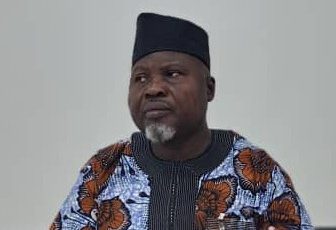
*Says untrained officials, internal auction depts undermine transparency, revenue generation
*Argues auctioneers can help recover billions in trapped assets
By Nnamdi Ojiego
Auctioneering is often associated with distressed assets, court orders and the sale of property. But Dr Ayodeji Fred Mafikuyomi, Chief Executive Officer of Unicorn Auctions Limited, says the profession has a much wider role in the economy. He argues that professional auctioneers can help businesses and government recover value from obsolete, surplus and seized assets.
In this interview, Mafikuyomi discusses the growth of auctioneering in Nigeria, the role of licensed auctioneers, asset disposal by government agencies, the challenges facing practitioners and the potential of online auctions.
How would you describe the state of auctioneering in Nigeria today?
It is an aberration to say that auctioneering practice is not popular. Maybe, compared with professions like law, banking and finance, architecture or engineering, it is not as popular. But auctioneering has been there for a very long time. In Nigeria, you may say it is still developing, but in Europe, America and Canada, auctioneering is very popular. It is an established method of disposing of goods and assets because you advertise what you have and give people an opportunity to bid.
Today, we are trying to build up the profession in Nigeria. I have been in real estate for 36 years, and we used auctioning as another method of disposing of properties that we could not sell ordinarily. Auctioneering is simply the act of offering an asset for sale and allowing interested people to bid and buy.
What gap did you see in the market that led to the establishment of Unicorn Auctions?
The gap was very wide. People have furniture, vehicles, machinery and other items they no longer need, but they often do not know how to dispose of them. If you want to acquire new furniture, for instance, you cannot keep the old furniture and the new one together forever. You have to dispose of the old one. The problem is that many people do not have a platform through which they can reach potential buyers. That is the gap we are filling. We serve as a bridge between the seller and the buyer.
I actually got the idea many years ago when I travelled to South Africa. I was looking at a financial website and came across the idea of disposing of old inventory. The principle was simple. If you had materials that had not been used for six or seven months, there was a possibility that you no longer needed them. By putting them on a platform for sale, somebody else could acquire them while you cleared your inventory. When I returned to Nigeria, I decided to try it. We established a website called StuffOnline.com. It was an e-commerce platform before online commerce became as popular as it is today. People brought old goods to us and we tried to connect them with buyers.
At the time, however, online payment and social media were not as developed as they are today, so we eventually closed it down. When auctioneering started becoming more established within our institution, I saw an opportunity to return to that idea. We initially used our real estate company to list properties and other assets. Later, we decided to establish Unicorn Auctions Limited as a dedicated auctioneering company.
For someone who has never participated in an auction, what is the process?
Auctioneering is very simple. First, when a client approaches us, we inspect the asset. We may bring in engineers, estate surveyors and valuers, depending on what is being sold. If it is a vehicle, for example, we look at the year of manufacture, mileage, condition of the engine, whether it has been involved in an accident, whether it has been repainted and whether it was used privately or commercially. You cannot compare a car used by a bank manager with one that has been used as an Uber vehicle. They have different levels of wear and tear.
We gather all that technical information because we must represent the asset truthfully to the public. We then value it and determine the reserve price with the client. After that, we advertise the asset. It could be through newspapers, social media or other platforms. The description must be accurate. You cannot have 10 Toyota Corolla vehicles and advertise 15 because you think people prefer Corolla. If somebody travels from Abuja to Lagos based on a false description, you can be held liable.
There is also a period for inspection. Potential buyers inspect the assets before the bidding date. On the auction day, the lots are called and bidders compete. The highest bidder wins. Depending on the conditions of sale, the winner may be required to pay a deposit immediately, usually 10 per cent in some of the auctions we conduct, and complete the payment within the stipulated period. The conditions are clearly stated. Once you buy, you are expected to take possession within the agreed period. If you leave the item beyond that period, demurrage may apply.
What kind of assets does Unicorn Auctions handle?
We handle different categories of assets, including real estate, vehicles, machinery and industrial equipment. For us at Unicorn Auctions, industrial assets and machinery are a major area of specialisation. Our parent group has been involved in real estate for more than three decades, and our real estate practice has particularly focused on industrial real estate. If somebody wants to dispose of an industrial property, a factory, warehouse or the machinery inside it, that is an area where we have considerable experience.
In fact, if you look at our auctions, a very large percentage of the work we have done involves machinery and industrial assets. Machinery auctioneering is not easy. You need technical knowledge to understand what you are selling and who the potential buyers are. There is also a very strong scrap-metal industry in Nigeria. Old vehicles and machinery may have lost their value to the original owner, but they can still have significant value in the scrap market. Some steel companies depend heavily on scrap metal as raw material. So when a factory is closing down or replacing its machinery, there is a market for those assets. Our job is to identify that market and help the owner recover value.
Do you conduct online auctions?
Yes. We are developing our online platform, but our model is hybrid.
You cannot compare every asset with a car. People can buy a car online because they understand what they are looking at and can inspect it. But if you are buying industrial machinery, you may need to physically inspect it. For example, if you are buying a generator or a machine, you want to know its capacity, condition, weight and other technical details. Some buyers also need to know whether the machine can be dismantled and transported. So we put the information online, but we also allow physical inspection. That is why we use a hybrid model.
How are Nigerians responding to auction purchases? Is there still scepticism?
People are gradually becoming more comfortable with it. We provide an opportunity for buyers to acquire things they ordinarily may not be able to buy new. We also have a network of professionals and business partners who are interested in different categories of assets. Before we even advertise some items, people are already asking about them. The important thing is trust. You have to provide accurate information and allow people to inspect what they are buying. You cannot tell somebody that an asset is in perfect condition when you know it is not.
Auctioneering is about giving the buyer confidence while also helping the seller obtain the best possible value.
What contribution does auctioneering make to the Nigerian economy?
One major contribution is unlocking trapped capital. Take the banking sector. A bank may have taken possession of a property, vehicle, vessel or another asset because a borrower defaulted. Until that asset is sold, the value remains tied down. Auctioneers help convert those assets into money. That is why institutions such as banks and AMCON use auctioneers. We also provide services to insurance companies, schools, manufacturers and other businesses that have obsolete or surplus assets.
A company may have raw materials worth billions of naira that it cannot use. It may have old vehicles or machinery. Instead of allowing those assets to remain idle, a professional auctioneer can find buyers and turn them into value. There is also employment. Somebody who retires from banking, for instance, can be trained as an auctioneer. People can also use auctioneering as a source of additional income. Every home has something that is no longer needed. There may be an old generator, vehicle, furniture or equipment. The question is how do you connect that item with somebody who needs it?
What are the biggest challenges facing auctioneers in Nigeria?
One major challenge is when organisations create internal auction departments instead of engaging professional auctioneers.
We have experienced situations where staff members who are supposed to manage assets begin selling them themselves. The problem is that there can be a conflict of interest. I had a case where a company engaged us to auction its assets. The staff had been selling some of those assets themselves. If a generator was worth N20 million, for example, they could sell it for N20 million and declare N10 million. When a professional auctioneer comes in, the asset may eventually sell for much more.
Some staff then see the auctioneer as a competitor instead of a professional service provider. There is also the problem of clients withdrawing assets after the auction process has started. You can spend money inspecting, valuing and advertising an asset, only for the owner to suddenly say, “Don’t sell this one again.” All the effort and resources you have put into the process are wasted. Logistics can also be difficult, particularly with industrial auctions. You may have a generator in one location, machinery hundreds of metres away and other assets somewhere else. If the items are not properly arranged, it can take much longer to complete the inspection and auction.
There are also issues concerning ownership. We have to be sure that the person offering an asset for sale actually has the right to sell it. We normally request evidence of ownership. Then there are taxes and fees. Every item sold is subject to applicable taxes, including VAT, and some clients or buyers do not want to pay them. These are some of the practical challenges in the business.
Is auctioneering properly regulated in Nigeria?
The profession has its own regulatory and professional structures. I belong to the Certified Institute of Auctioneers in Nigeria, CIAN. There is also the National Association of Auctioneers, NAA. Within the institute, there is an arm responsible for professional conduct and discipline. But when you talk about the relationship between government and professional auctioneers, there are still serious problems. Sometimes, if you are too professional, you may not get the job. They may tell you that you will be paid your professional fee, but then they want to determine how the money will be shared. That is one reason I personally do not participate in some government jobs.
What should government do differently?
Government has a duty to regulate its ministries, departments and agencies and make sure they use the services of licensed auctioneers. Take the Ministry of Justice. It deals with seized and forfeited assets arising from court proceedings. There are many assets that need to be disposed of.
The same applies to other government agencies that have seized vehicles, vessels, machinery and other assets. Government agencies should not simply appoint somebody internally and call that person an auctioneer. The person should be a licensed professional who is accountable to a recognised professional body. If you want transparency, you need an independent auctioneer.
Are you saying it is wrong for government agencies to auction seized or forfeited assets themselves?
Yes, I believe independent auctioneers should be used. Even where government agencies have the capacity to organise an auction, there is a question of transparency. If an agency appoints one of its own people to conduct the auction, how independent is that process? In some establishments, they appoint one person as an auctioneer who may not even belong to CIAN or NAA. That person becomes a point man for the establishment. Government needs to stop that practice.
I think government has a duty to compel its ministries and agencies to do the right thing by using the services of licensed auctioneers. That will bring more money into government coffers through professional asset valuation, proper disposal, taxes, VAT and other revenue. The issue is not that auctioneers want government to give them jobs. We are providing a professional service. Valuers are paid for valuation. Lawyers are paid for legal services. Auctioneers should also be paid for professional asset disposal. If you use a professional auctioneer, you are likely to get better value because the auctioneer has access to a wider market of potential buyers.
What about seized vessels and other specialised assets?
There are vessels that are seized because of different offences. There are also vessels used as collateral for loans that become subject to recovery proceedings.
These are specialised assets. You need people who understand their value and know the market. Government agencies should bring professional auctioneers into the process rather than trying to handle everything internally. The same principle applies to AMCON and other institutions holding large inventories of assets. It is not just about land and houses. It can be machinery, vessels, vehicles and other specialised equipment.
Where do you see Unicorn Auctions and the auction industry in the next five to ten years?
For us, five years is too long. We are already strong in machinery auctions. Other auctioneers come to us for training because machinery auctioneering is very specialised and tedious. We are also building our online platform. In the next two or three years, we intend to become a formidable competitor in the online auction space. Our advantage is that we already have more than 30 years of business experience through our group. We are also training people and helping to develop auctioneering as a profession. We see it as professional empowerment. We want more people to understand the power of auctioneering and the role it can play in the economy.
Apart from auctioneering, what other businesses are you involved in?
Unicorn Auctions is an arm of Unicorn Holdings, a group with interests in several sectors. I started in real estate agency at the age of 23. I studied Law and later International Relations. At different times, I dreamt of becoming a Senior Advocate of Nigeria or an ambassador. But along the line, I fell in love more with becoming a business owner, a manufacturer, a value creator and a human developer. I wanted to be a junior Dangote, starting from zero and becoming a colossus. I wanted to build factories and create employment. One of the things that gives me the greatest satisfaction is walking into a factory and seeing people working and earning a living. If God gives you the opportunity to provide livelihoods for 1,000 or 2,000 people, that is a great privilege.
We have interests in construction, real estate development, agriculture and manufacturing. We have also built a factory where we assemble tractors for farmers, and we have farms in Ido, Ibadan, Oyo State. Our real estate business has evolved into property development and joint ventures. Instead of tying up our capital by buying land and developing everything ourselves, we work with landowners. If a landowner has land and we have the funds and expertise to develop it, we agree on how the completed development will be shared. We are also members of the Real Estate Developers Association of Nigeria. So, auctioneering is one part of the larger group, but it is an area we believe has enormous potential in Nigeria.
Beyond business, what other things are important to you?
I am a father of four children, two boys and two girls, but I consider myself a father to many more. I am also a pastor in the Redeemed Christian Church of God. I hold traditional titles as the Mogaji of Ibadanland and the Ààre Bobasua of Ipara-Remo in Ijebuland, Ogun State. I love travelling around the world. I have visited about 58 major countries and I hope to complete the world before I am called home. I enjoy seeing different places, meeting people and understanding different cultures. If I were an animal, I would probably be a bird because I love to travel.
You mentioned human development, tell us about your foundation and what you hope to achieve through it.
The MAF Foundation is one of the ways I want to contribute to society. We are building a platform to educate less privileged children, give a second chance to people who did not have opportunities for education and provide vocational training. For me, business should not only be about making money, it should also be about creating value and developing people.
If you can give somebody an opportunity to learn a skill, get an education or become economically independent, you have changed that person’s life. That is part of the legacy I want to build. I wanted to become a SAN or an ambassador when I was younger, but life took me in another direction. Today, I want to build businesses, create jobs, develop people and contribute something meaningful to society.
Disclaimer
Comments expressed here do not reflect the opinions of Vanguard newspapers or any employee thereof.