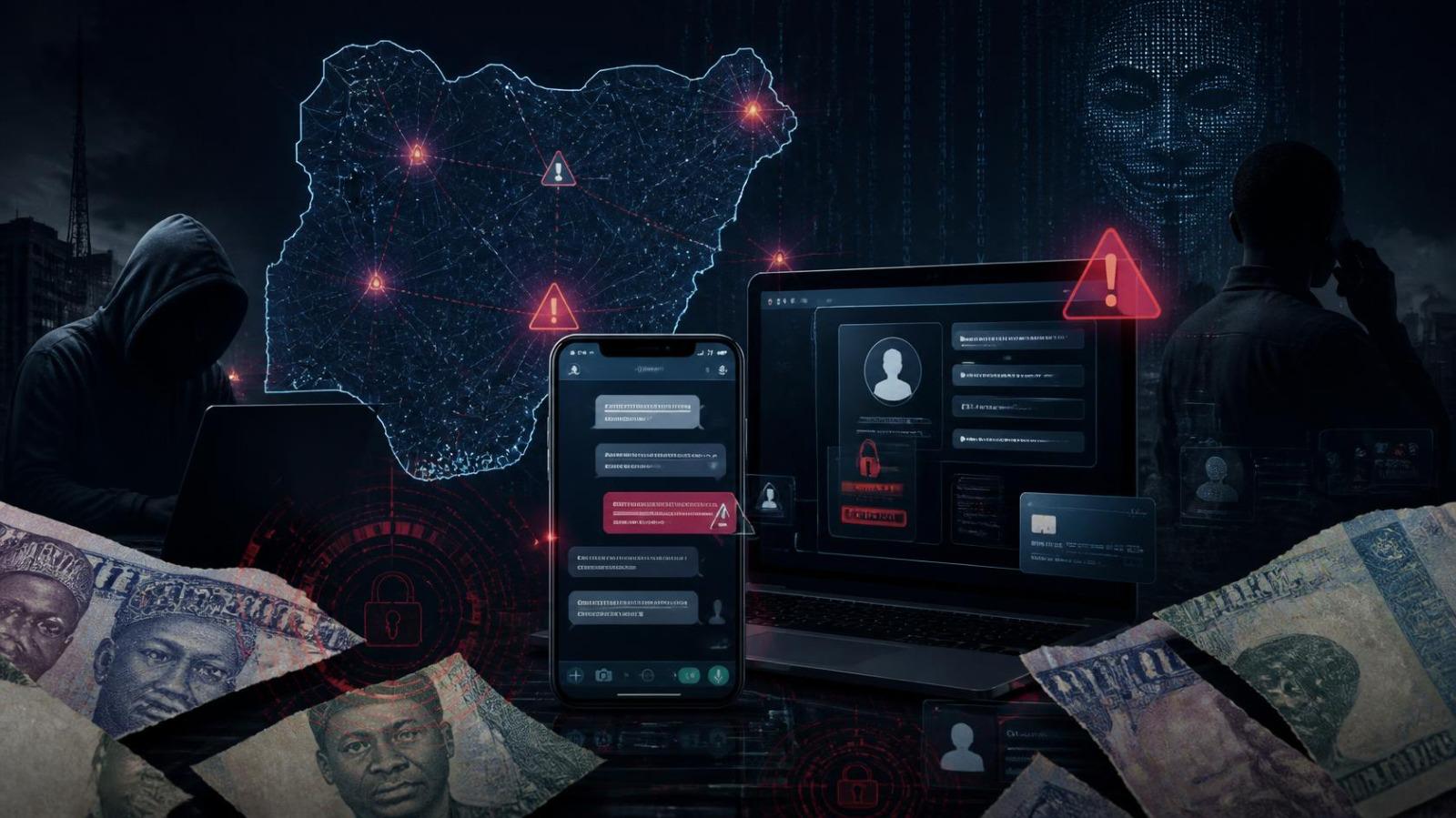
Nigeria’s digital landscape is evolving fast; mobile banking, e-commerce, and digital payments have expanded rapidly in recent years, reshaping how millions of people manage money and access services.
That growth has brought real convenience, but it has also opened the door to a wave of increasingly sophisticated online scams, according to researchers at CTM360, a cybersecurity firm.
Following the broader assessment of Nigeria’s evolving digital threat landscape, CTM360’s Fraud Navigator provides a structured view of the most prevalent scam activities observed across the region.
This section examines the top scam categories identified through threat intelligence analysis, highlighting the tactics used by cybercriminals, the platforms they exploit, and the methods employed to target individuals and organizations. By mapping these scam trends, we aim to better understand the key risks facing users, identify emerging patterns, and provide greater visibility into the techniques driving online fraud campaigns in Nigeria.
Online scams are getting smarter, and they all lead to the same result: your money disappearing. It often starts with something that looks completely normal, a bank ad, a chat message, a mobile app, a new online friend, or an investment opportunity promising quick riches. In one common version, scammers set up a fake bank website or chat that tricks people into typing in their login details, which are then used to drain their account or rack up card charges. In a more advanced version, criminals hide harmful software inside what looks like an ordinary app, such as a game or a flight booking tool, and get people to download it from a fake app store page. Once installed, the app quietly watches the phone in the background until the owner opens their real banking app, at which point it steals the login information and can even take over the transaction itself, all without the victim noticing until the money is gone.
Another popular trick involves fake investment or crypto trading platforms that promise huge, guaranteed profits. They start small, letting victims see fake earnings grow, encouraging bigger deposits, and then blocking withdrawals with excuses or fees before vanishing completely with all the money.
Finally, there are romance scams, where a criminal builds a fake online relationship over weeks or months, gaining someone’s trust and affection before suddenly asking for money, whether it’s for a plane ticket, a medical emergency, or a business deal. Because the relationship feels genuine, victims often send money more than once before realizing it was never real. In every case, the pattern is the same: something looks trustworthy, a connection or urgency is built, and once trust is established, the money disappears. And according to cybersecurity researchers at CTM360, this is only scratching the surface, these are just some of the tactics they’ve uncovered, and the full scale of these scam operations is likely much bigger.
As Nigeria’s digital economy keeps growing, so will the scams designed to exploit it. CTM360’s research is one of several efforts tracking how these patterns shift over time, offering a useful reminder that the tactics evolve even when the underlying goal, getting someone to hand over money or personal information, stays the same. These scams are unlikely to stay still: as people grow wiser to one version, another will likely take its place, dressed up in a new disguise. Staying alert to unsolicited offers, verifying requests through official channels, and pausing before sending money or personal details remain some of the simplest ways to stay a step ahead.
Disclaimer
Comments expressed here do not reflect the opinions of Vanguard newspapers or any employee thereof.