By Onyeka Ezike
The 1914 amalgamation of the Northern and Southern Protectorates of Nigeria by the British colonial administration, under the leadership of Lord Frederick Lugard, is set to receive a fresh interpretation through visual and performing arts. The Mind of the Masters, a Nigerian cultural initiative and curatorial movement dedicated to celebrating and spotlighting iconic African and Nigerian master artists, is set to stage a multidisciplinary exhibition titled The Amalgamation: Woven by Diversity. The exhibition, scheduled to hold from October 1 to 30, 2026, at Art Hotel, Victoria Island, Lagos, will examine the historical significance and enduring impact of the amalgamation through art and cultural expression.
While the 1914 amalgamation has remained a significant reference point in Nigeria’s political and historical discourse, its complex narratives and legacies have received comparatively limited exploration through multidisciplinary artistic expression. The exhibition will provide a platform for artists and creatives to interrogate themes of identity, diversity, cultural heritage, unity and the complexities that have shaped Nigeria since the amalgamation.
Through a combination of artistic disciplines, The Amalgamation: Woven by Diversity aims to encourage public engagement with Nigeria’s history while creating room for fresh perspectives on the country’s diverse cultural identities. The exhibition is also part of the broader vision of Mind of the Masters Creative Art Gallery to preserve, promote and reinterpret African artistic heritage while creating platforms for conversations around the continent’s history, identity and cultural evolution.
Speaking in an interview, the founder of Mind of the Masters Creative Art Gallery, Larry Segun-Lean, said the exhibition seeks to review Nigeria’s journey from the 1914 amalgamation to the present day. He said Nigeria’s journey since the amalgamation had been shaped by the country’s diverse cultures and ethnic groups, adding that the exhibition would highlight the strength inherent in the nation’s diversity. “The journey of the amalgamation is woven by diversity, with different cultures and ethnic groups. This exhibition seeks to promote the strength in our diversity, which is key to our continuity as a nation,” he said.
According to Segun-Lean, the decision to commence the exhibition on October 1 was deliberate, as the date provides an opportunity to reflect on the history and consequences of the amalgamation, as well as Nigeria’s journey to independence.
He said, “We need to stop the agitation for division and promote peace and unity among us. The actual theme is ‘Woven by Diversity’. The exhibition will feature visual arts, spoken-word poetry, performing arts and fashion. It will also showcase works by Lenrie Preks, a first-class graduate from Auchi Polytechnic, and others, who will present 36 acrylic paintings.” He explained that the theme of the exhibition was designed as a teaser for the audience to connect the artworks with Nigeria’s journey since the amalgamation.
Segun-Lean added that the exhibition would also reference initiatives and institutions such as the Federal Unity Schools, the National Youth Service Corps (NYSC) and the 1977 Second World Black and African Festival of Arts and Culture (FESTAC ’77), describing them as products of efforts to promote national unity. “These were tools introduced intentionally to weave us together, and we have the responsibility as citizens to resist those who want to destroy us as a nation,” he said.
He further urged Nigerians to embrace dialogue and unity, noting that disagreements were inevitable in relationships and societies. “We need to realise that disagreement will always come in relationships, but that shouldn’t give us the feeling that we can always do it alone. We need to revisit our grievances and the sense of injustice.
“Every smart person should know that we are fellow travellers, and one person’s goodness equals another person’s goodness, just as one person’s badness affects the other. Some of us believe that if one region had gone, they would have been better, but that is just based on human conceptual thoughts,” Segun-Lean said.
Among the artworks to be showcased at the exhibition is an oil painting titled The Debate: Post-Amalgamation Meeting, which depicts the post-amalgamation debate and the movement for Nigeria’s independence. According to the description accompanying the work, the debate and motion were part of the efforts of Nigeria’s nationalist leaders towards independence, including the late Chief Anthony Enahoro.
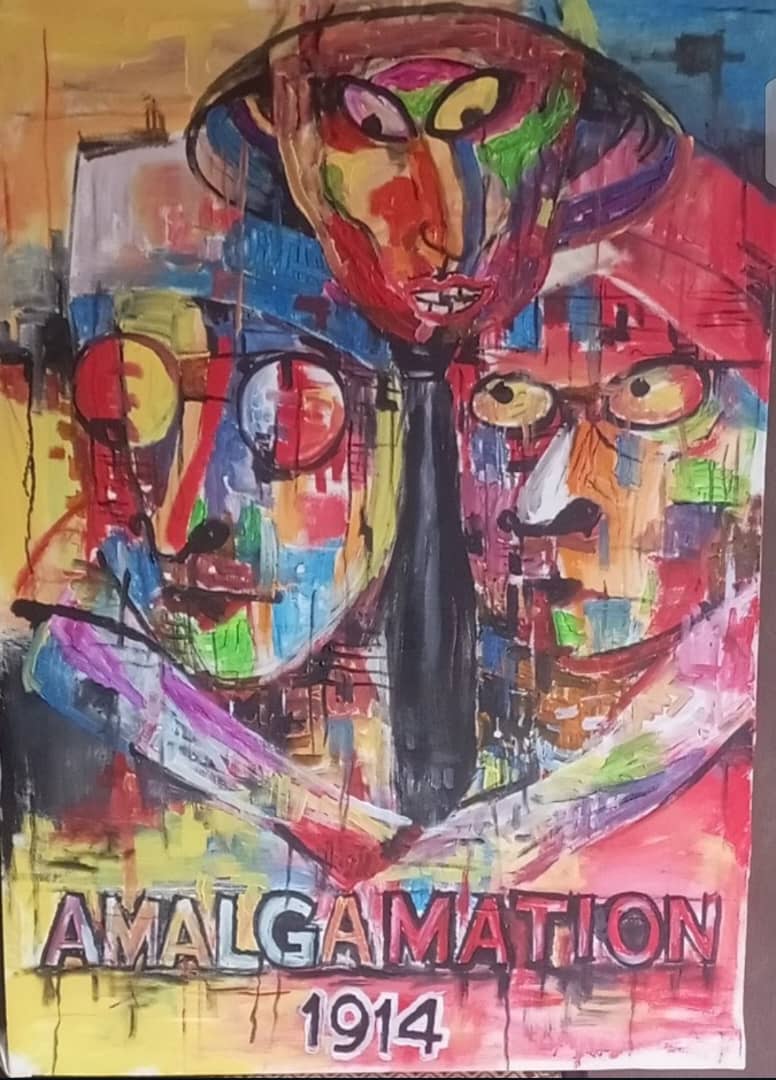
Another artwork, titled 1914 Amalgamation, depicts two individuals and explores the decision by the British colonial administration, led by Lord Lugard, to unite the two protectorates despite their different social and cultural backgrounds. The exhibition will also showcase Nigeria’s rich fashion heritage, featuring traditional styles associated with ethnic groups including the Fulani, Yoruba, Igbo and Ibibio. According to the organisers, the exhibition will tell the story of the complexities of Nigeria through fashion, visual art and performing arts, including spoken-word poetry.
The curator of the exhibition, Dr Mudiare Onobrakpeya, an artist, curator and son of the legendary artist Prof. Bruce Onobrakpeya, described the exhibition as an important interrogation of Nigeria’s journey since the amalgamation. He said, “The exhibition is an important query of the journey so far. As the curator of the exhibition, the event will arrest the heart of the audience because it is important based on its provocative nature.”
Meanwhile, the West Africa Specialty Coffee Association (WASCA), in partnership with Mind of the Masters, is set to organise Spirit of Coffee 2.0 in Abuja. The exhibition and festival will hold from November 18 to 19 at the Abuja Cultural Centre and will highlight the economic potential of Nigeria’s coffee industry. The event is expected to bring together stakeholders from the art community and government officials to deliberate on the economic importance of coffee production and export.
Segun-Lean, who is also an ambassador of WASCA, said coffee was an ecosystem cultivated in 15 states across Nigeria but noted that the country was yet to fully harness its commercial potential. He said, “The Spirit of Coffee is related to the amalgamation as part of the amalgamation effect. The British imposed a European lifestyle of tea consumption, depriving us of our natural heritage, which was coffee. Coffee has huge health benefits and significant economic potential.”
The festival will showcase artworks inspired by coffee and feature interactive sessions focused on the economic importance of the commodity and ways the government and private sector can tap into coffee production for the export market.
According to available industry data, Brazil remains the world’s leading coffee exporter, while Uganda recorded strong coffee export performance in 2025, surpassing Ethiopia as demand for its locally produced coffee increased in the international market. The organisers said Spirit of Coffee 2.0 would use art and cultural expression to draw attention to Nigeria’s coffee heritage and the opportunities available in the sector.
Disclaimer
Comments expressed here do not reflect the opinions of Vanguard newspapers or any employee thereof.