By Olawumi Ojo
Across Nigeria and West Africa, the search for modern, pragmatic solutions to evolving security threats has never been more urgent. From regional banditry to terrorism, the region stands at a critical juncture — one that demands both operational frontline experience and strategic policy vision.
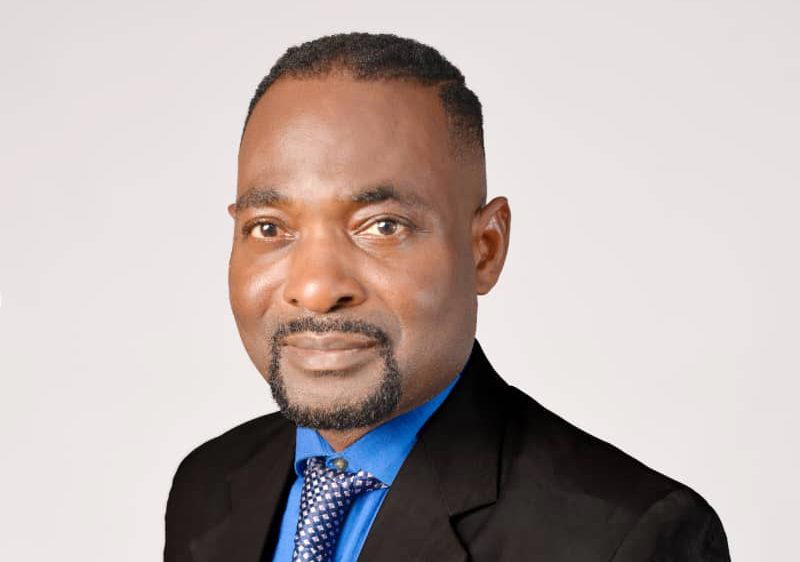
It is at this intersection that Abiodun Ramon Oseni, a military veteran, former American law enforcement officer, and Fellow of the Institute of Security Nigeria, has been playing a selfless role, helping to bridge the gap between global defense tactics and local security reform.
Born on February 6, 1980, in Epe, Lagos State, Oseni’s roots run deep into Nigerian tradition. Hailing from the royal Idisewe ruling compound of Idasho, Ibeju Lekki — the principal host family to major infrastructural hubs like the Dangote Refinery and Lekki Deep Seaport — he is also a first cousin to the King of Epe, Oba Kamorudeen Ishola Animashaun.
Yet, despite his royal heritage, Oseni dedicated his early life to public safety and academic rigour. After completing his foundational education in Apapa and Sari-Iganmu, he graduated from Adeniran Ogunsanya College of Education in 2003 and Lagos State University in 2009.
Seeking to master the mechanics of modern defense, he expanded his horizons overseas, earning a Master’s degree from American Military University alongside International Security graduate certifications from Harvard University.
Oseni’s operational capabilities were tested on the global stage through his service in the United States Armed Forces. As a U.S. Army veteran, he gained hands-on expertise in tactical logistics, counter-insurgency operations, and homeland defense.
Transitioning into U.S. civil law enforcement, he served as a police officer, gaining firsthand experience in community policing models and tactical threat response — lessons he now seeks to bring home.
Today, Oseni is applying that global exposure directly to Nigeria and West Africa’s pressing security dilemmas. As a Fellow of the Institute of Security Nigeria, his policy research targets regional banditry, counter-terrorism, and decentralised defense strategies.
He has emerged as one of the region’s most prominent advocates for state policing, championing models that ensure local forces are community-oriented, well-trained, adequately compensated, and free of corruption.
Beyond policy tables, Oseni is deeply committed to capacity building and public education. As an instructor at Lagos State University, he teaches Entrepreneurship and Innovation Strategy (ENT 1000), embedding risk management within the academic framework for the next generation of African leaders. He teaches at the University pro bono, driven by his passion for security, safety, and community development.
His insights on security architecture — ranging from active shooter response protocols to strategic reviews of U.S. Africa Command (AFRICOM) operations — frequently appear at major regional gatherings, including conferences hosted by the Nigeria Security and Civil Defence Corps (NSCDC) and at regional defense summits. His commentary continues to be republished across international platforms, including DefenseWeb and Eurasia Review.
Oseni is happily married to Rachelle C. Oseni — a scientist with the U.S. Centers for Disease Control and Prevention (CDC)— and, despite their children, remains deeply tied to Africa’s future.
In an era when security challenges respect no borders, leaders who can bridge tactical field experience with high-level academic policy remain vital to the continent’s stability.
*Ojo, a social affairs commentator, writes from Lagos.
Disclaimer
Comments expressed here do not reflect the opinions of Vanguard newspapers or any employee thereof.