By Peter Egwuatu
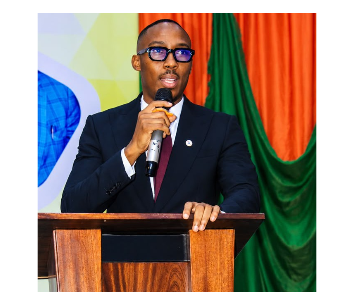
Engr. Uzo Nwajie, Managing Director/ Chief Executive Officer, Finlab Group, in an interview with Vanguard, is advocating the application of science, infrastructure, innovation and people in engineering a stronger Nigeria and Africa in general.
As the Managing Director and Chief Executive Officer of Finlab Group, he has spent over four decades delivering laboratory solutions, infrastructure and technology across Nigeria and several African countries. Under his leadership, Finlab has grown from a respected manufacturer of laboratory furniture and equipment into a diversified group with interests in turnkey laboratory construction, engineering services, agricultural technology and international investment.
What is your perspective on Nigeria’s economic issues?
I believe Nigeria has everything required to build a very strong economy. We have the population, the resources, the talent and, most importantly, very hardworking and entrepreneurial people. Our challenge has always been how to convert these advantages into real economic development.
For me, we need to move from being largely a consuming economy to becoming a productive economy. We import too many things that we should be producing ourselves.
Having been in business and manufacturing for many years, I have seen the opportunities that exist in Nigeria. I have also seen the difficulties businesses face every day. I believe that if we make it easier for businesses to produce locally, invest and employ people, the Nigerian economy can grow significantly.
Economic growth should ultimately be measured by what it does for the people; are businesses growing, are we creating jobs, are incomes improving and are we producing more as a country?
What are the things needed to enhance the economy?
We need to get some basic things right.
Power is very important. You cannot seriously discuss industrialisation when manufacturers are generating a large percentage of their own electricity.
We also need better infrastructure, easier access to finance, improved security and a stable business environment. Government policies should encourage people to invest for the long term rather than constantly trying to adjust to changes in policy.
Another important area is education and skills development. We have a very young population. If we properly train these young people in engineering, technology, manufacturing, agriculture, construction and other technical areas, they become an economic asset. I commend the steps the World Bank has taken over the years to advance education & skills in Nigeria through its IDEAS, Agile and other initiatives.
The government needs to encourage Nigerian businesses. When our companies grow, they employ more people, pay more taxes and reinvest in the economy.
What are the challenges facing the manufacturing sector in Nigeria?
I am a manufacturer, so this is something I experience directly.
The cost of manufacturing in Nigeria is simply too high. Power is expensive, financing is expensive, logistics is expensive, and many manufacturers still depend on imported machinery, components and raw materials, so foreign exchange also affects production costs.
Sometimes, after going through all these challenges to manufacture locally, you are still expected to compete with an imported finished product.
Another issue is government procurement. The government is probably one of the biggest buyers of goods and services in Nigeria. If we are serious about developing manufacturing, then government institutions should deliberately patronise Nigerian manufacturers where the required products can be produced locally and meet the necessary standards.
I am not saying we should buy Nigerian products simply because they are Nigerian. Quality must come first. But when a Nigerian company can meet the required standard, we should give that company the opportunity to compete.
That is how other countries developed their industries, and we should do the same.
What can be done to improve manufacturing, create jobs and boost foreign-exchange earnings?
We need to make manufacturing attractive again.
Give manufacturers access to affordable long-term finance. Improve electricity. Develop proper industrial parks. Reduce unnecessary regulatory bottlenecks. Encourage local content and make government procurement support local production.
But we also need to think beyond Nigeria.
At Finlab, for example, we do not see Africa as somewhere outside our market. We see Africa as our market. Nigerian manufacturers should be thinking about Ghana, Cameroon, Côte d’Ivoire, Kenya, Rwanda and other African countries.
My thinking is very simple: produce in Nigeria, satisfy the Nigerian market and then export to Africa and the rest of the world.
If we manufacture something locally that we previously imported, we are already reducing the pressure on foreign exchange. If we then export that same product, we are bringing foreign exchange into the country.
And manufacturing creates jobs at different levels. One factory supports engineers, technicians, accountants, drivers, distributors, suppliers and many other businesses around it. So when you support manufacturing, you are supporting an entire ecosystem.
What can be done to boost the science and technology sector?
This is an area I am very passionate about because science and technology have been at the centre of what we do at Finlab for many years.
We have to start from education.
You cannot teach a child chemistry, physics or biology only from a textbook and expect that child to become a great scientist or innovator. Our schools need proper laboratories. The laboratories need the right equipment, and the teachers need to know how to use them.
The same thing applies to our universities and research institutions. We have very intelligent researchers in Nigeria, but they need the infrastructure and funding to turn their ideas into solutions.
We also need stronger collaboration between universities, government and the private sector. Research should not just end as a paper sitting on a shelf. We should be asking: Can this research solve a problem? Can we develop a product from it? Can we manufacture it? Can we commercialise it?
That is where science begins to contribute directly to economic development.
I also believe Nigeria should gradually move away from simply importing technology. We should learn from global technology companies, partner with them where necessary, transfer knowledge to our people and eventually develop our own capabilities.
This is actually part of the bigger vision we have for Finlab Group across Science, Technology, Education and Healthcare. We want to contribute to building an Africa that does not only consume technology but increasingly develops and manufactures its own solutions.
If I had to summarise everything in one sentence, I would say: “We have spent many years consuming what other countries produce. The next phase of Nigeria’s development must be about producing, innovating and exporting what we can make ourselves.”
How can we engineer a stronger Africa?
“In a continent where access to quality healthcare, education and research infrastructure remains a major challenge, we at Finlab Group are proving that African solutions can drive real and lasting change.
“Our work is about people — better facilities, learning, healthcare and a stronger Africa.
“From local expertise to a continental footprint.
Finlab Group operates through several subsidiaries, each focused on a critical part of the development value chain.
It has been manufacturing laboratory equipment and furniture for schools, healthcare and industry for the past 40 years.
Finlab Projects delivers turnkey laboratory construction, equipment supply and installation, with offices and showrooms in Lagos, Abuja, Owerri and Kano.
FEST Engineering Services & Technology designs and constructs laboratories and “intellectual buildings,” and provides engineering services in oil and gas, renewable energy and other sectors, with a strong technology development arm.
Can you comment on Fest Agro Technology?
Fest Agro Technology focuses on agricultural development, agro-product testing and training for teachers and laboratory analysts, while FITI USA, the Group’s American subsidiary, drives investment, technology partnerships and global branding of laboratory equipment.
With over 200 employees across six locations in Nigeria, the Group combines manufacturing, engineering, technology and human capital development to deliver end-to-end solutions.
The Group’s projects can be seen in hospitals, universities, research centres and schools across the continent. A notable example is the Institute of Lassa Fever Research and Control (ILFRC) laboratory at the Irrua Specialist Teaching Hospital in Edo State, delivered in partnership with international stakeholders.
In education, the Group has equipped science laboratories in numerous secondary schools, helping to improve STEM learning and prepare the next generation of African scientists.
Through Fest Agro Technology, it is supporting agricultural value chains and export readiness, while FEST is expanding into renewable energy and industrial engineering services.
Let know how the people contribute to your service
Sustainable development is not possible without people. Finlab Group places strong emphasis on training, skills development and technology inclusivity. The company runs capacity-building programmes for teachers, laboratory analysts and young professionals, and is exploring a large-scale industrial skills acquisition partnership to train one million Nigerian youths over three years, focused on practical, job-ready skills in manufacturing and related industries.
What about your strategic partnerships with other entities
Strategic partnerships, both local and international, remain central to the Group’s growth. Through FITI USA, Finlab is expanding its global reach, attracting investment and building technology partnerships that support Africa’s development.
We are building quality facilities for better learning, healthcare and a stronger Africa.
Disclaimer
Comments expressed here do not reflect the opinions of Vanguard newspapers or any employee thereof.