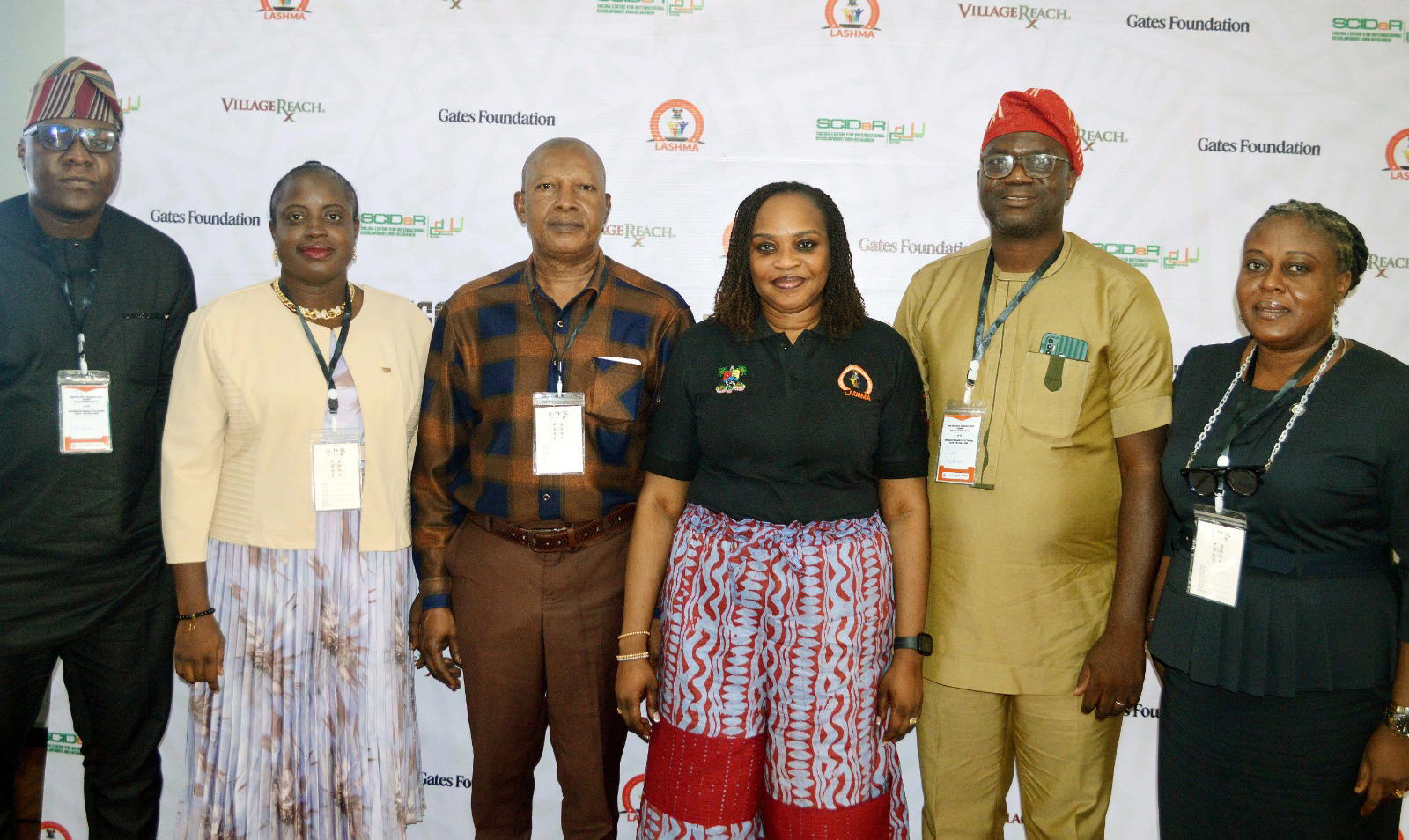
From Left: Principal/ Project Director, Solina Center for International Development&Research, Dr Oluwaleke Jegede; Senior Manager, Research, Evidence and Learning, Village Reach, Dr Funke Ogwa; Director of Statistics, Lagos State Ministry of Economic Planning & Budget, Mr Kehinde Olowu; Permanent Secretary, Lagos State Health Management Agency, Dr Emmanuella Zamba; State Consultant, Gates Foundation, Mr Daramola Olukunle; and Director Healthcare Planning Reserch&Statistics, Lagos State Ministry of Health, Dr Olajumoke Oyenuga, at the event
…as agency partners foundations to refine telemedicine in Lagos
By Dickson Omobola
Lagos State Health Management Agency, LASHMA, has urged residents to tap into the opportunities that telemedicine offers, saying it is almost as good as talking to the doctor physically for specific scope of services.
LASHMA said although more people, especially those in underserved and vulnerable communities were subscribing to it, there was a need to intensify awareness to deepen public trust in telemedicine.
Permanent Secretary of LASHMA, Dr Emmanuella Zamba, said this on the sidelines of the Implementation Research to Test Equitable Telehealth, PDSA Wave One Report, a project carried out by LASHMA in collaboration with Gates Foundation, Solina Centre for International Development and Research, SCIDaR, and VillageReach in Lagos.
Zamba stated that all the organisations that collaborated on the research were concerned about deploying various models of telemedicine to help in complementing the gaps in access to healthcare, especially for the underserved in hard-to-reach areas.
She said: “It is like an 18-month project, although there were delays. The objective is for us to, at the end of the day, be able to integrate it into what we are doing as health insurance to fit into the design that we already have on ground. We do have telemedicine embedded in the standard general plan, that is the current social health insurance plan, but all the learnings from here will help us to refine what we do so that it is now sustainable and it is a complementary access to care for people, especially those that need it.
“People who don’t have the immediate fortune of having a doctor at their doorsteps can use it. If you look at the cost of having to enter a vehicle to the hospital, the queue, from the comfort of your home or your shop, you can speak to the doctor. Yes, it does not offer everything, but at least for the basic primary healthcare, you can get it.”
On his part, Project Director for SCIDaR, Mr Oluwaleke Jegede, said the implementation research was carried out to see how best to adopt existing telehealth solutions in catering to the unique needs of vulnerable persons in Lagos.
Jegede said reasons for sharing for sharing findings for the implementation research were to align stakeholders on the most critical adaptations of the telehealth models and their implications.
He said: “We want to obtain inputs to design a sustainability plan to enhance underserved populations access to telehealth. Beyond the implementation research, we need to start to think about the measures to be implemented where the underserved populations in Lagos won’t be left behind.”
Disclaimer
Comments expressed here do not reflect the opinions of Vanguard newspapers or any employee thereof.